
I am definitely aware of the pitfalls of certain materials and design elements. I recently started making a mental list of which ones I would likely not use in my own home, and I thought I’d share with you today.
Now, this does not mean I would never use these in certain spaces in limited amounts or that I wouldn’t use them for a client’s project if that matrerial met their needs. Every project has its own requirements and parameters, so if I’m saying I wouldn’t use it in mine, it doesn’t mean it is off limits for everyone.
Matter of fact, along with my reason I wouldn’t use these, I will post a few of the ways I’ve used these materials and elements in homes that worked for those clients.
Here’s a quick overview of these materials and design elements.
Stained concrete floors or counters
Porcelain tile floors in major living areas or bedrooms
Porcelain slabs as countertops
Schluter edging for tile
Polished chrome plumbing fixtures
Touch latch kitchen cabinet hardware
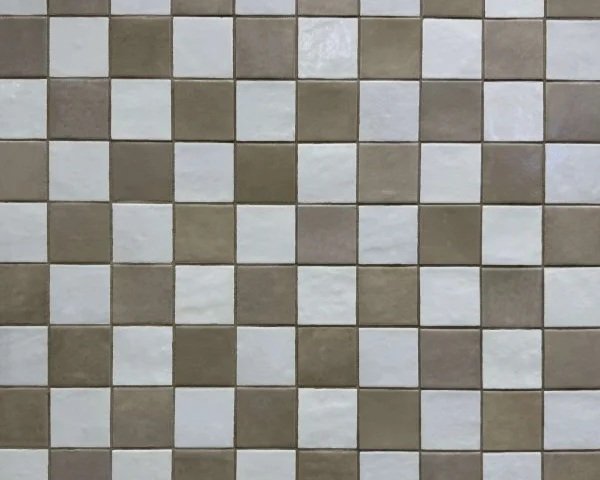
Checkerboard patterns not on the diagonal
Book matched highly figured slabs
White marble kitchen countertops
Stained Concrete
While you might think this material would be hard as a rock and would be super durable, the fact is concrete cracks and stains.
Not only that, polished concrete can wear down and be slippery. If you have rolling chairs (like I did in my office), you will have the concrete literally torn up underneath the chair.
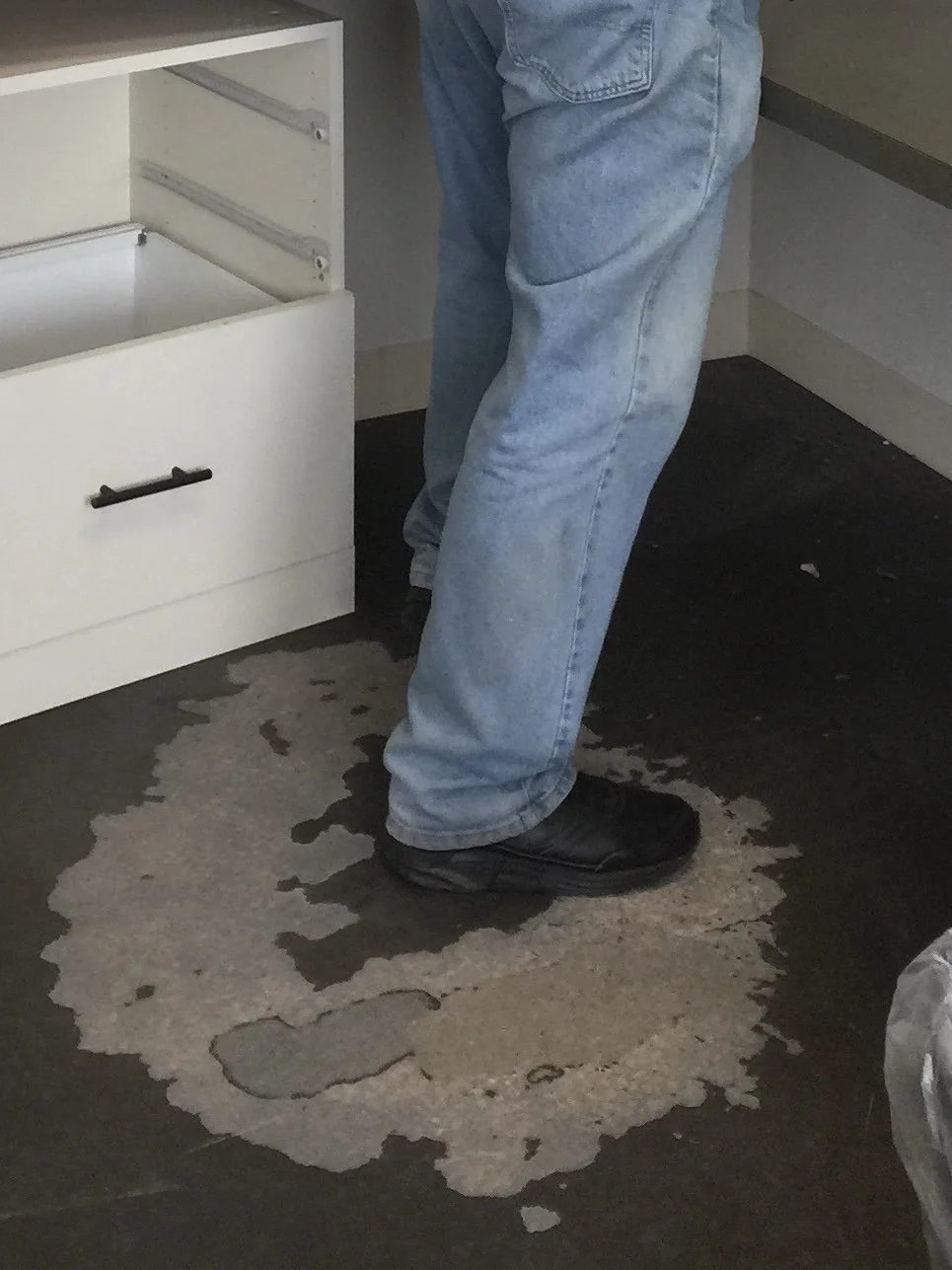
My former office with stained concrete floors the day we were moving out. We wore down the concrete under our chairs over the seven years we were there.
Comparing this to my home office, where I have a wool, patterned loop rug, under the same rolling chair I had in my studio office, the wool carpet wears much better! You can hardly tell, if you move the chair, that a chair rolls there.
With concrete, if you ever want to change the color of the stain, it requires a terribly dusty process of sanding and refinishing. It is awful, believe me. In my office, they prepped the floor for the stain (because they stained it the wrong color the first time) with this acetone solution that is basically nail polish remover. Oh the smell! It was so toxic.
But let’s say you survive the finishing process and it looks beautiful and 10 years down the road you want to do some remodeling. Maybe you want to move a doorway, take down a wall, tear out some cabinetry…..do anything to the footprint of the house that was in before the floor was finished.
If anything was nailed or screwed into the floor at any time after the concrete was finished, once it is out in the open after the remodel, then that would show. It is not possible to patch it where you can’t tell where that wall has been.
Sure, you can put new flooring on top, but if you don’t want new flooring everywhere, then adding a new floor on top of the concrete in one room might look odd and create two different levels.
I have had people request concrete countertops, but honestly, I think you are better off with another material. Again, concrete stains and cracks.
You can get the look of concrete so easily with quartz slabs and large format tile. Go for the more durable material and get the look you want without sacrificing performance.
Porcelain Tile Floors In living rooms and bedrooms
While I know people love the low maintenance of tile and I can see how, in tropical, hot climates, this would be good. A tile floor would be cooling to walk on.
For example, in this luxury home I toured in Las Vegas during KBIS this year. It is definitely hot in Vegas most of the year. I can see how it would be appropriate here.
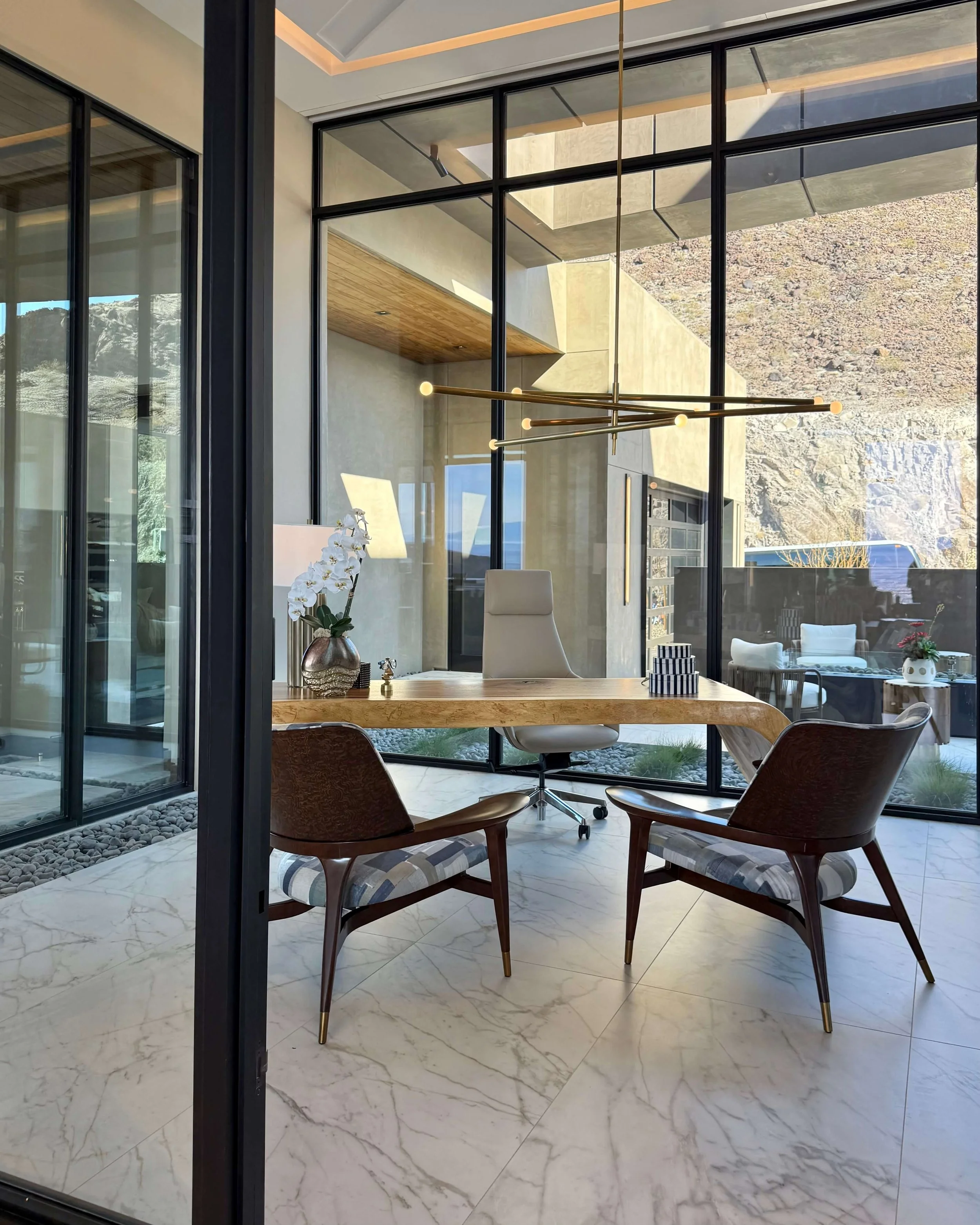
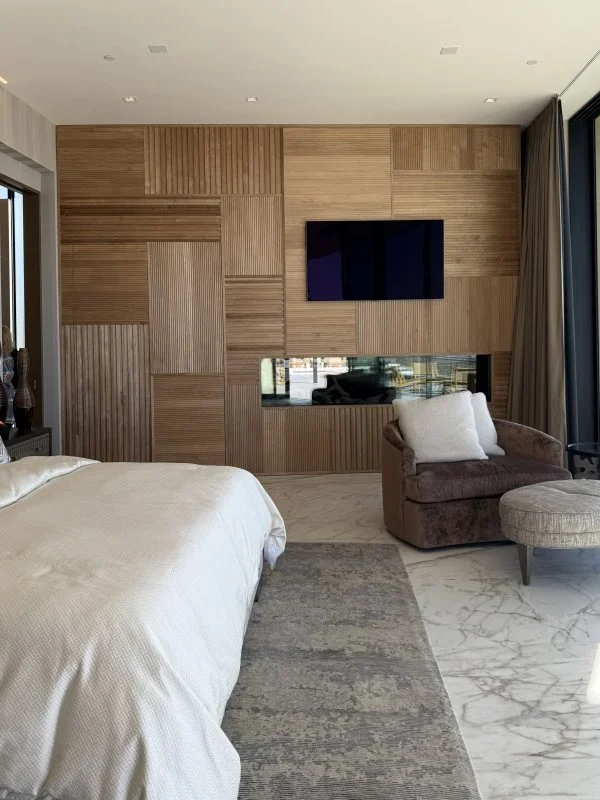
I do think that tile floors throughout the main living spaces of a home is something I would never put in my own home.
There are lots of reasons why.
Porcelain tile floors are cold to the touch.
Sound reverberates more in a tiled home and it takes more soft goods like drapery and upholstered goods to soften the interior.
They are hard on your body if you stand on them a long time.
Things break easily if dropped on them.
If all that isn’t enough of a reason, if you go to remodel or update, you are stuck with a big dusty mess of a redo if you want to take them out. Unlike wood floors, you cannot refinish them if your decorating style changes and you want to lighten or darken them.
Not that refinishing isn’t a dusty mess, but it is less costly than tearing out and replacing a tile floor and feels much more wasteful.
If the tile color you choose goes out of style and you don’t like it anymore, you are stuck with it, unless you want to do a major investment and upheaval in your home.
I’ve had beautiful, high quality engineered oak floors in my house and find them superior to any other kind of flooring for living, dining, hallways, open spaces, bedrooms, etc.
I have done porcelain tile for a few clients who really needed and wanted it for durability.
So, here’s the time when I have done porcelain tile floors in a house, even in the bedroom. I selected this tile for a client who used a wheelchair and had several cats. They needed that hard, indestructable surface to glide easily on the floor and to be able to maintain with their cats.
In that project, we went with a very warm toned porcelain tile that almost looked like leather. We could have gone with a wood look tile, but that homeowner did not prefer that look.
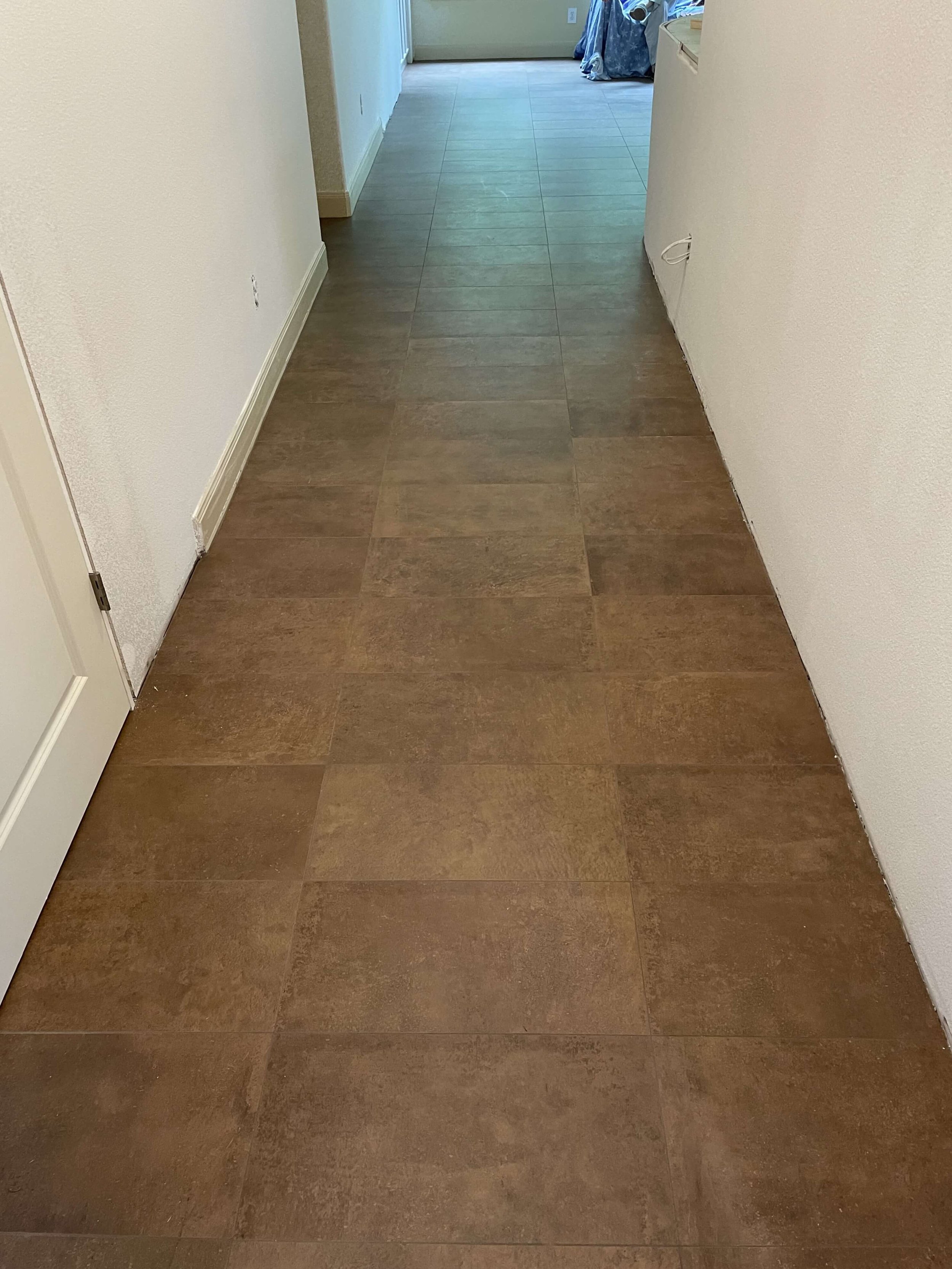
Porcelain tile floor just after installation during construction. The warm brown tone gave the tile a nice look for the project.
I once did a consultation for someone who was about to start a remodel. I was there to answer questions about the kitchen area, in particular the countertop material and kitchen island.
One thing they had already decided on and purchased, was their floor tile that was to run all through the main part of the house. They had selected a large format, polished, white faux marble look porcelain tile. That wasn’t up for discussion in the consultation. She loved it.
They had big dogs. I still wonder to this day how they like those polished white tile floors now.
Porcelain Slabs as countertops
I have not used porcelain slabs as countertops. Yet.
I tried to use them in a bathroom shower but it was so much more costly, mainly due to the installation. They take specialized fabrication and installation, so that is typically more expensive.
I have seen many porcelain slabs on countertops, lots of them at KBIS, the kitchen and bath show.
Porcelain slabs are a thin material, like a porcelain tile, and are not a through-body type of material. You have to miter the edge to get an edge that looks finished.
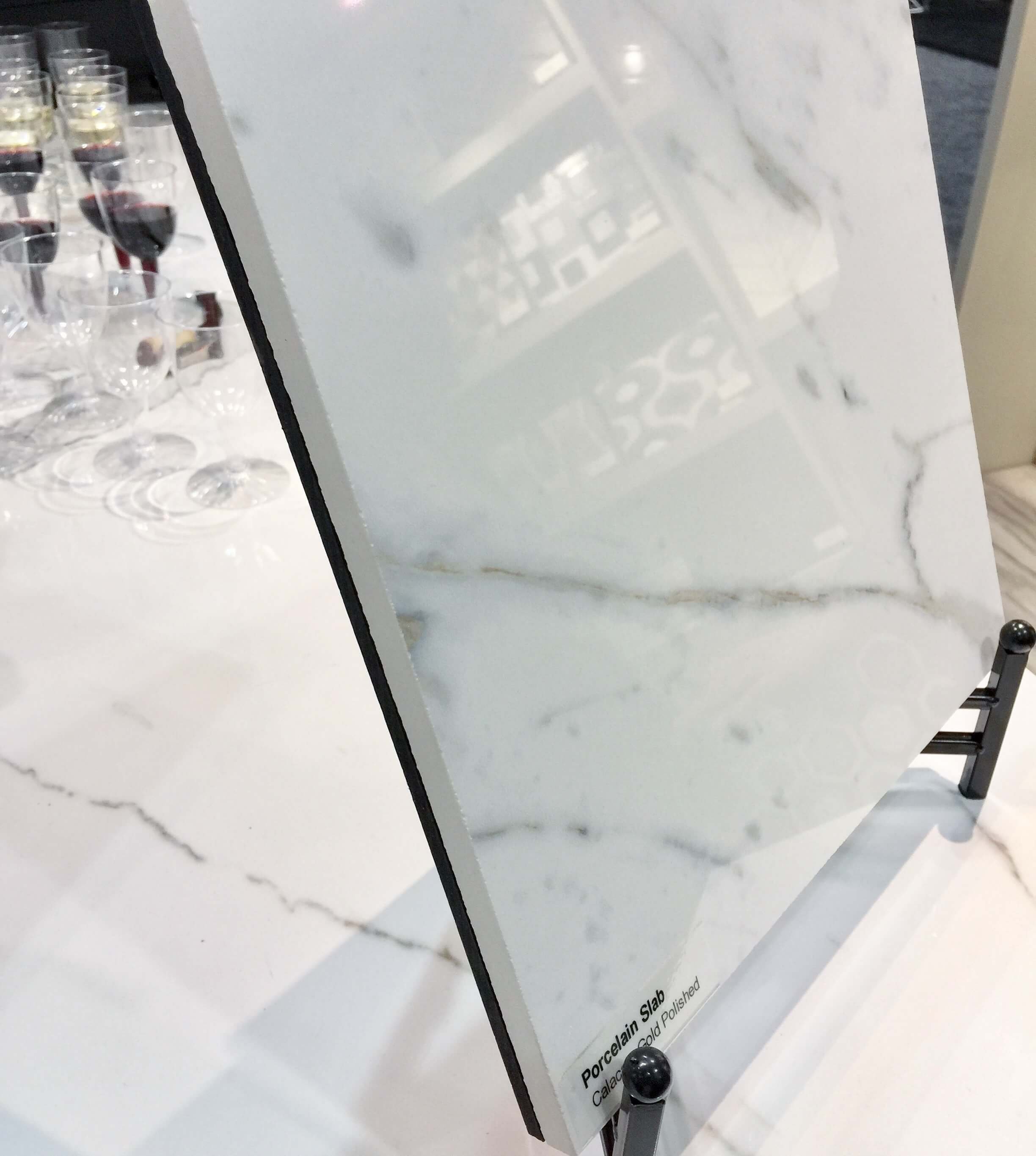
Faux white marble look porcelain slab seen at KBIS.
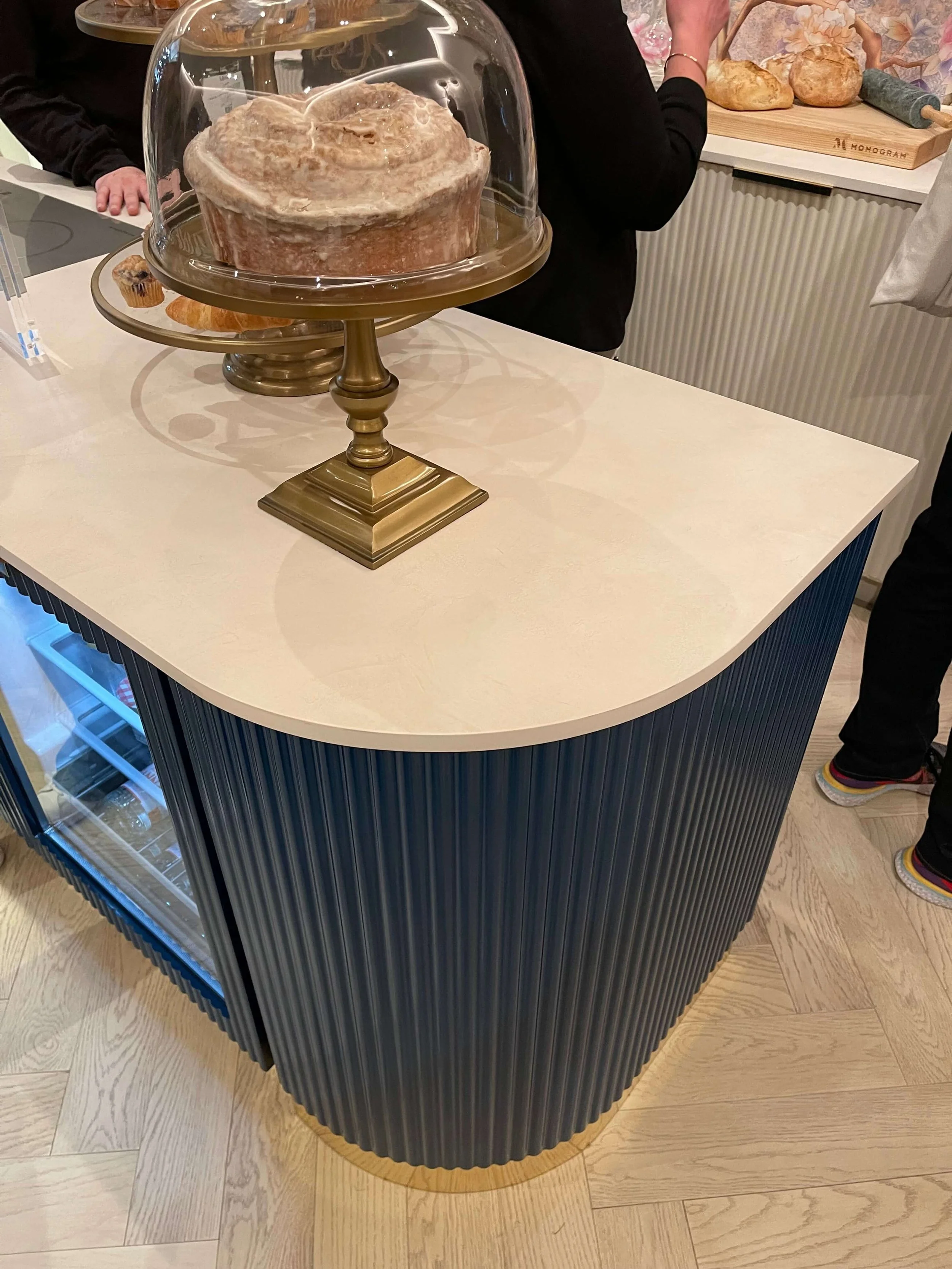
This limits you in your application somewhat and is a problem if you have curves or radius corners at all. A mitered, squared off edge is really all you can do.
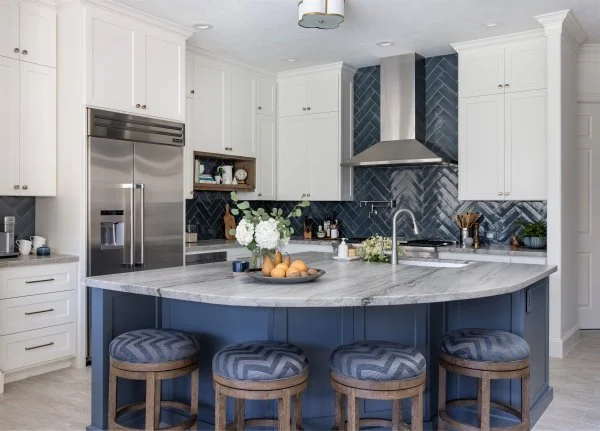
For example, you can’t do a mitered edge with a countertop that has a curve in it like this, pictured below. Even if you wanted a 2” radius to your corners, you could not do it with a mitered edge.
These are best done with a thicker material, like 3cm, or two 2cm slabs laminated together.
Here is a porcelain slab material used as a wall finish and countertop that I saw at KBIS this last February. With a vessel sink, you don’t have to worry about how to finish the edges around the sink and obviously, they’ve mitered the front edges of the countertop.
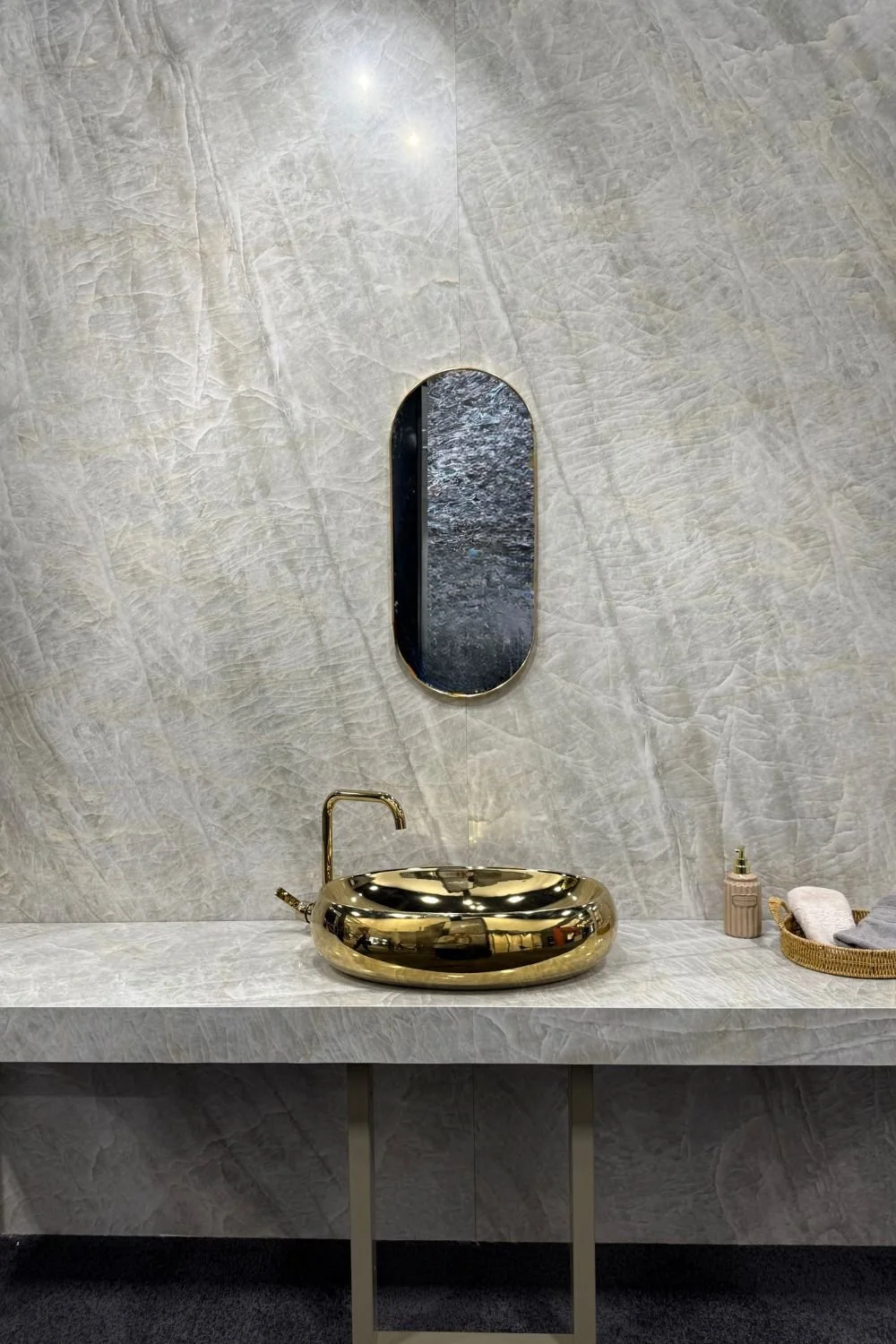
Porcelain slab seen at KBIS 2025.
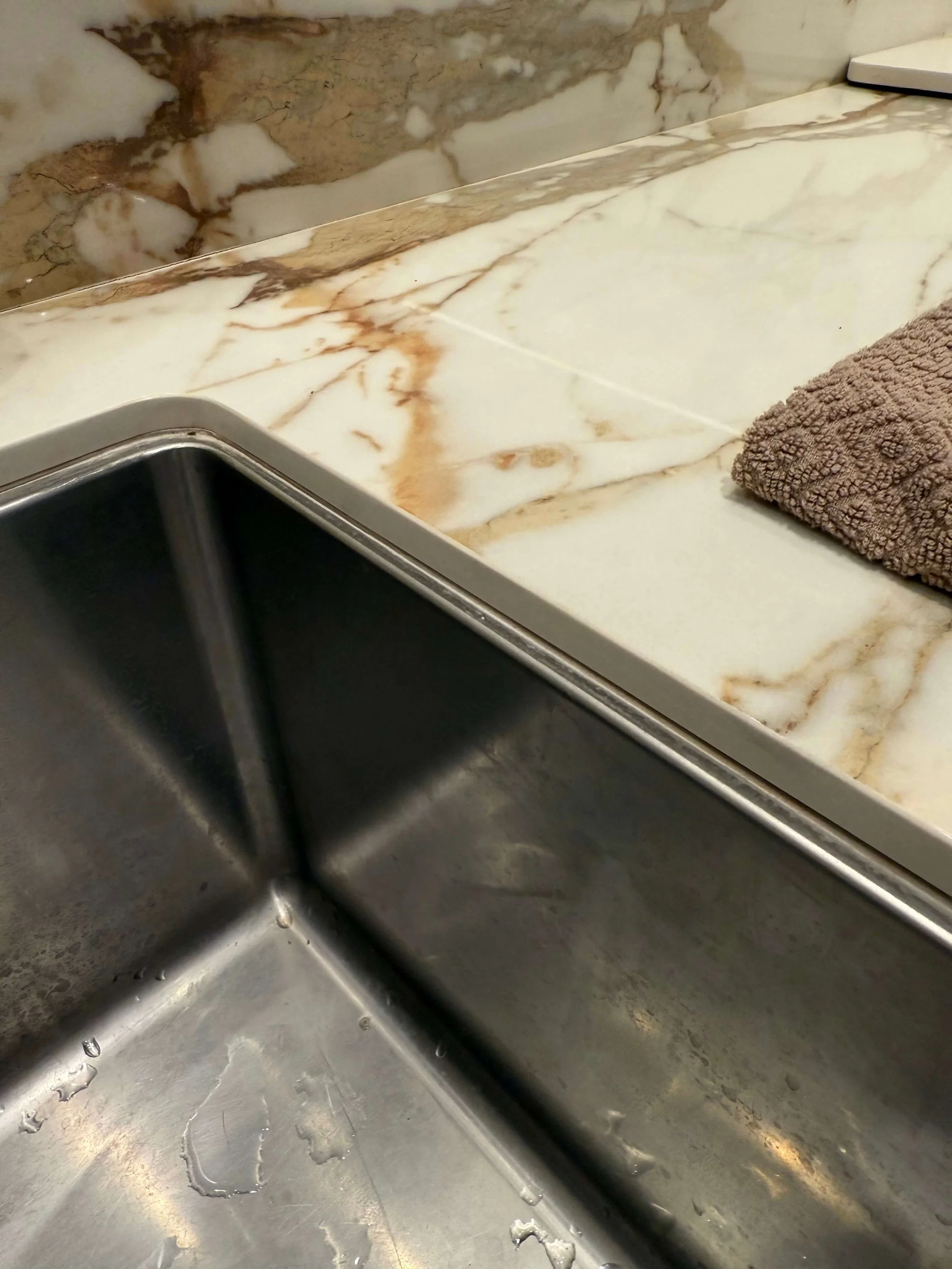
Here’s a porcelain slab with an undermount sink. I don’t like the offset or the thinner material that doesn’t appear through-body at the sink.
Here is a quartz countertop, below, a thicker, through-body material for a countertop.
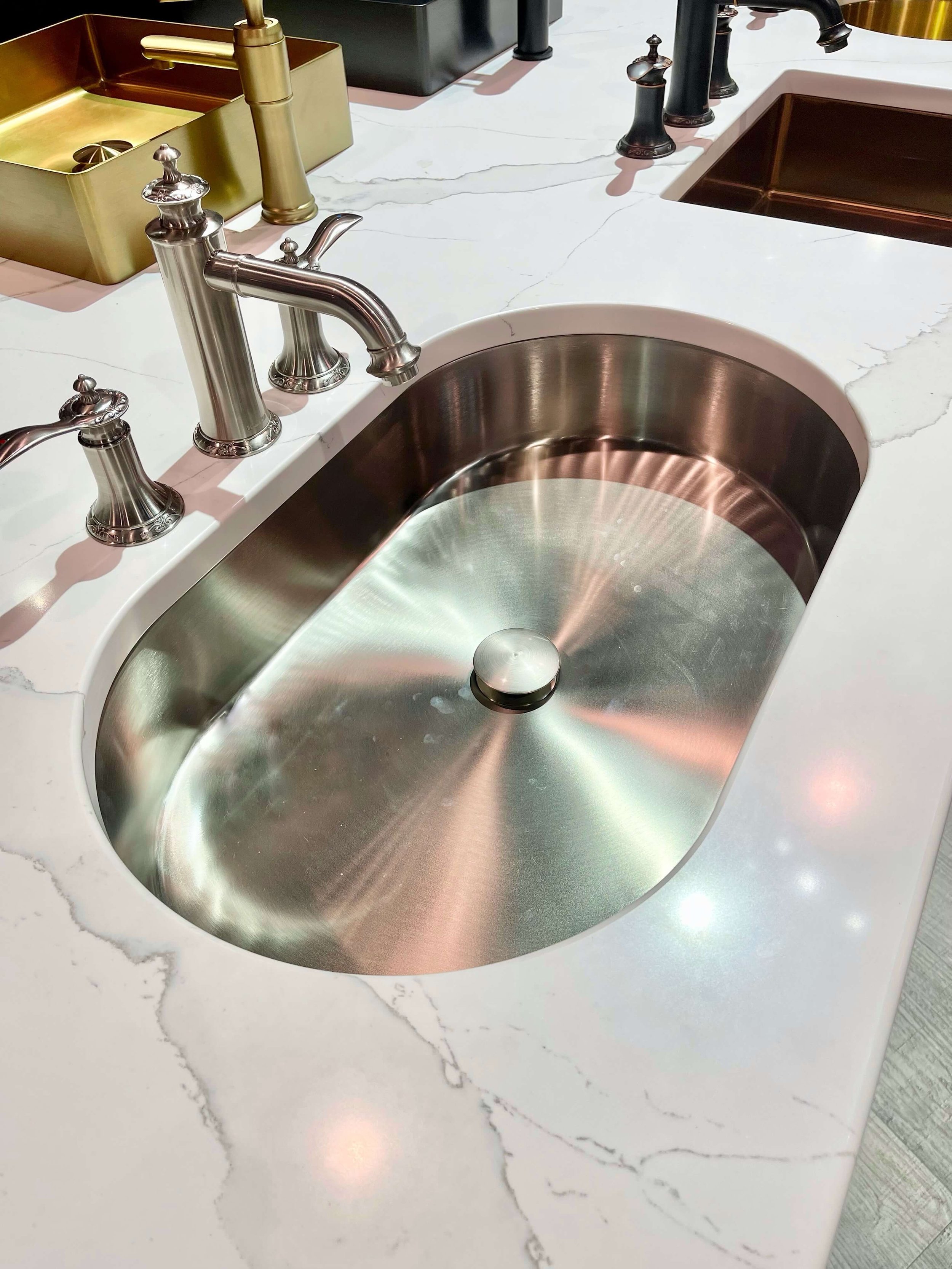
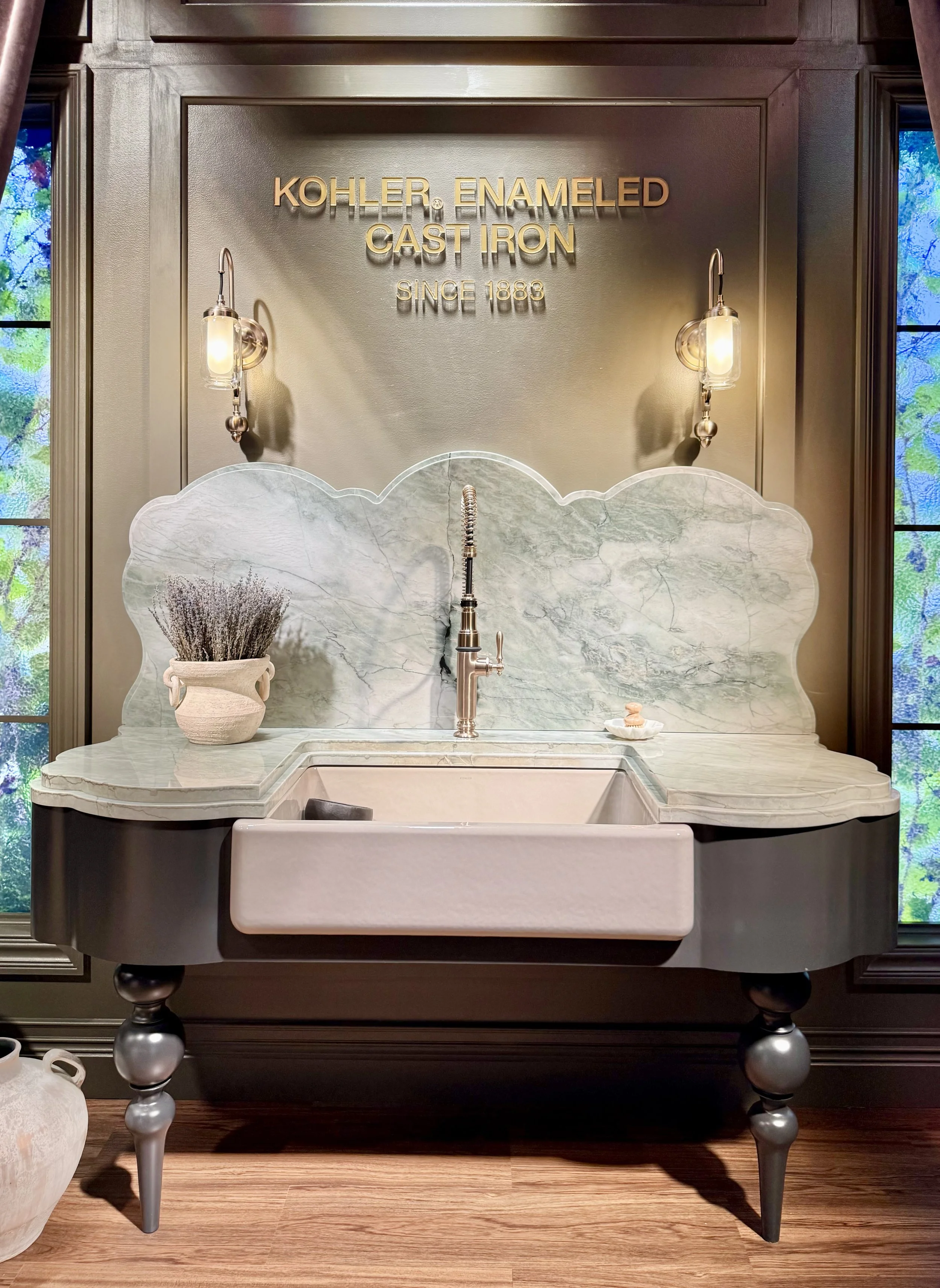
See the pattern and color of the stone in the edge of the material on the countertop? You don’t see this with porcelain slabs unless they have that squared off mitered edge.
And if you haven’t noticed, slab backsplashes are such a hot trend in kitchens now and I would not put a thin porcelain slab on a backsplash where the edge of the material was exposed.
I think a 2cm slab thickness is best for backsplashes. It will have some thickness but not be too chunky looking on the wall. You can see in this installation that the material is through-body so it does make for a finished edge. It was 3 cm material, but we embedded it into the wall to expose only about 2cm of thickness.
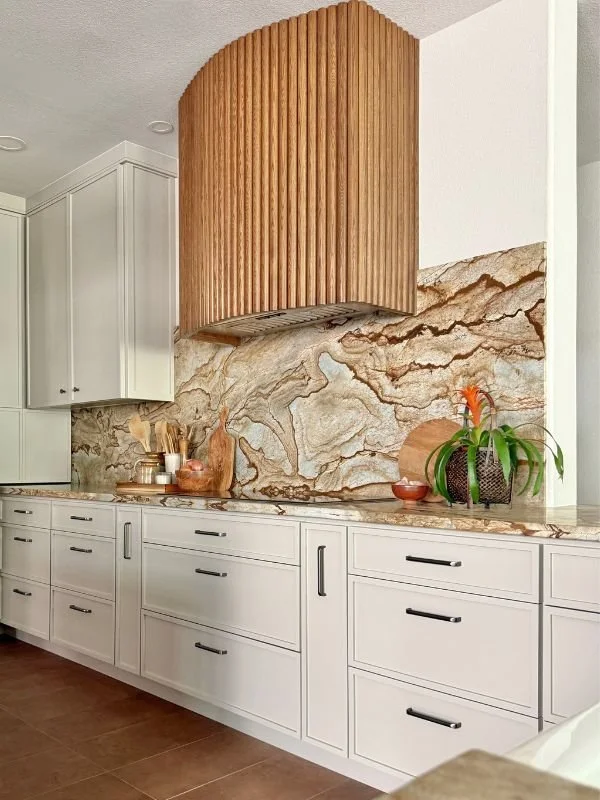
Places I would do a porcelain slab material is on a kitchen hood, a fireplace surround or some other architectural feature where the edges would all be mitered or would die into an inside corner.
A good substitute for porcelain slabs in showers is large format porcelain tile. I am using it in a primary bath I’m working on now, on the floor of the main bathroom and on 3 of the 4 shower walls in a 24” x 48” tile. It creates a less busy look and will be so easy to maintain with few grout joints.
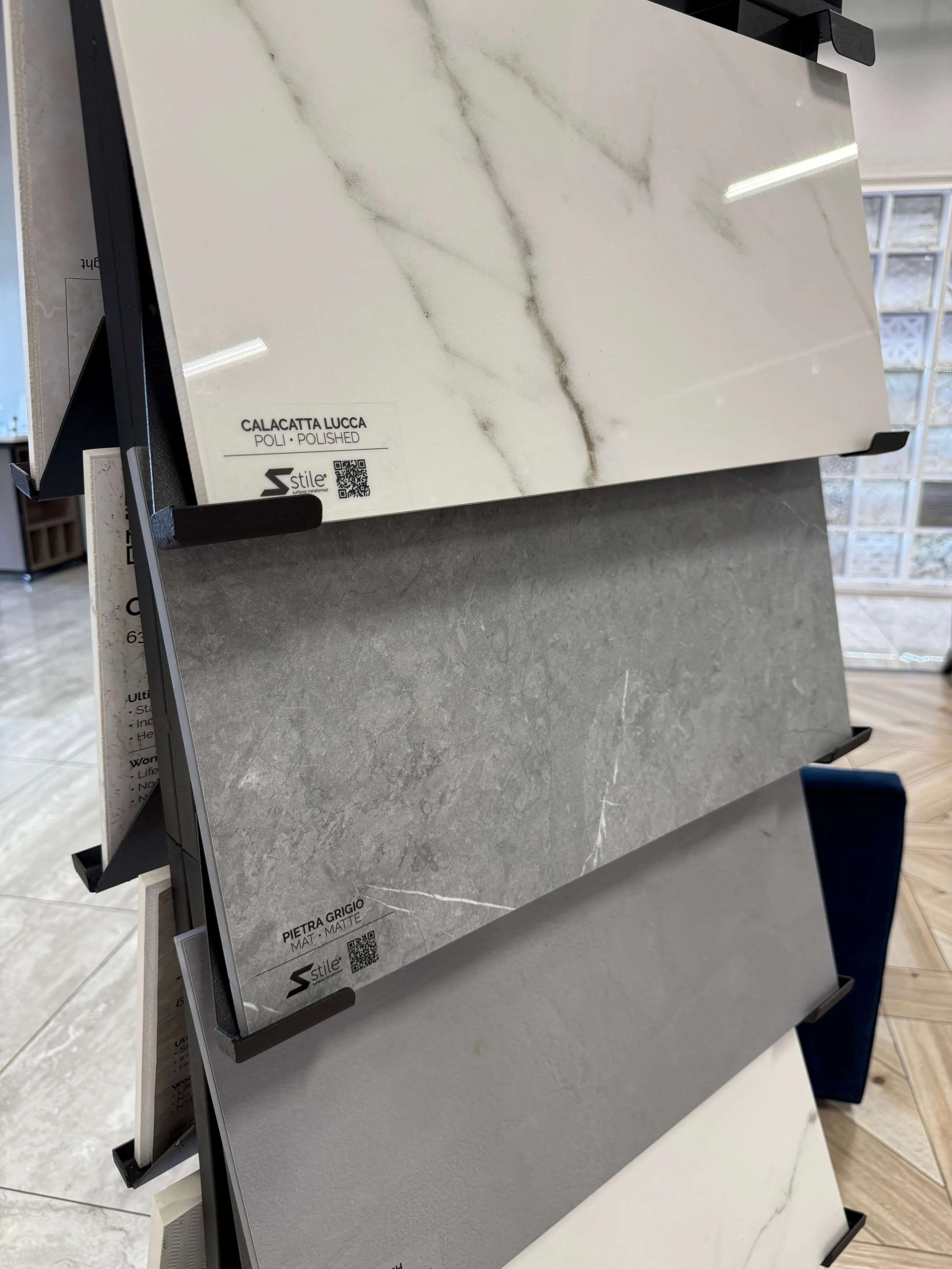
Another aspect that really bugs me about porcelain slabs is that many of them look super shiny in the polished version and then very rough and dull in their matte version. Their finishes are rather in the extremes.
That might not be true with some, but it seems to be an issue with many of the ones I’ve seen. And that tends to make those slabs look more fake, rather like resin has been poured over the top. They just look like shiny plastic to me.
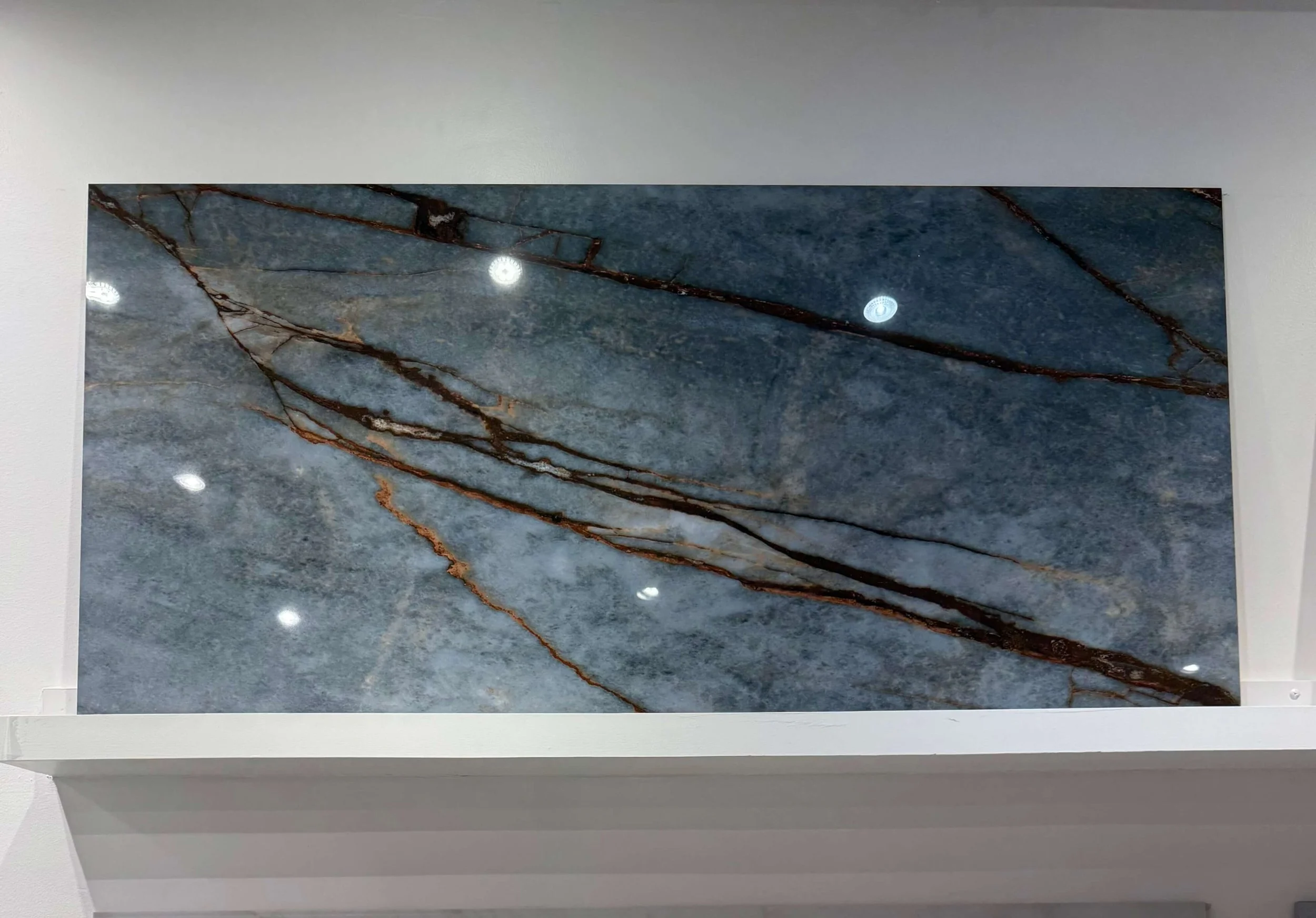
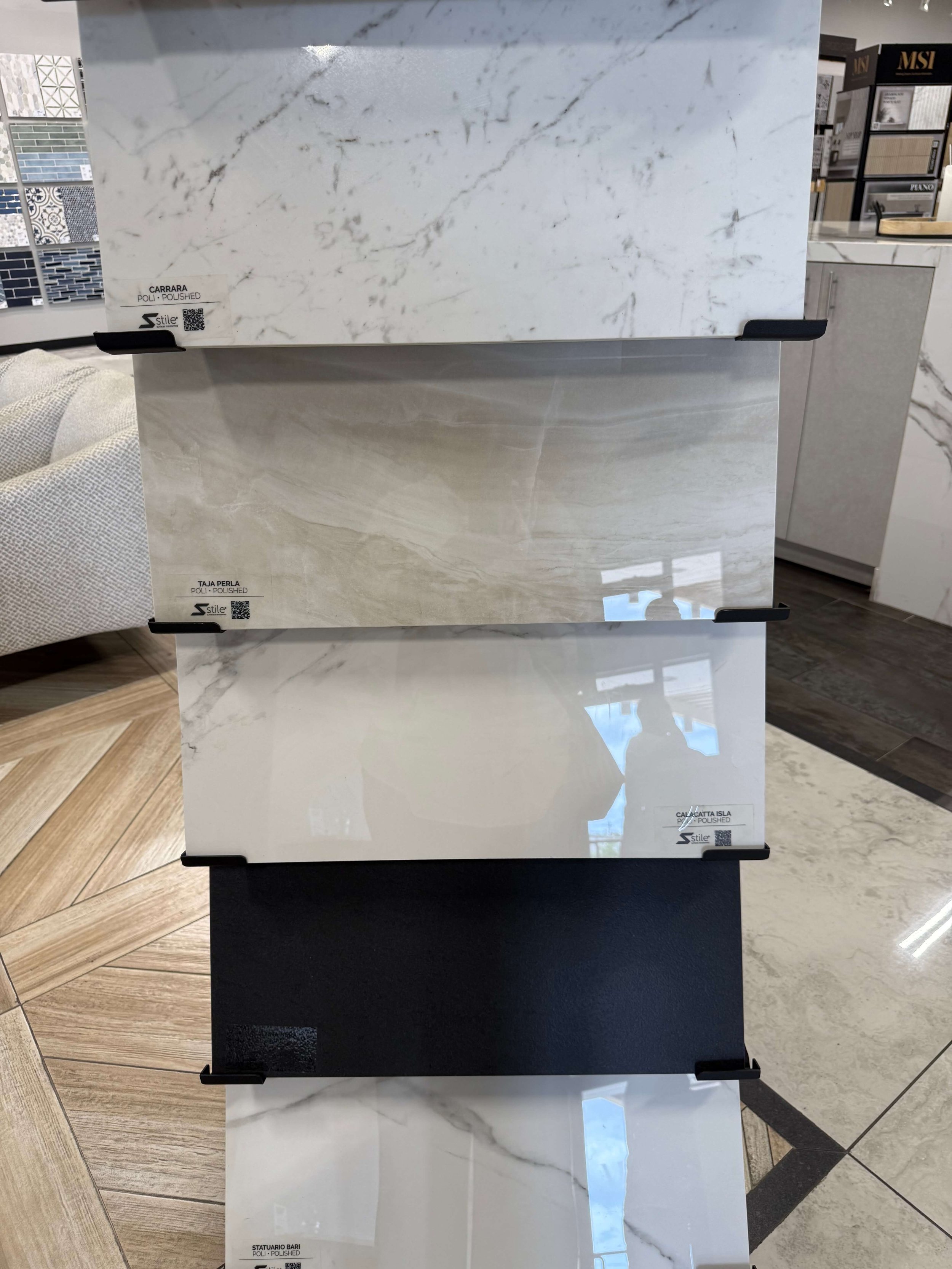
Here’s a very pretty porcelain slab sample but the highly polished finish just ruins it for me.
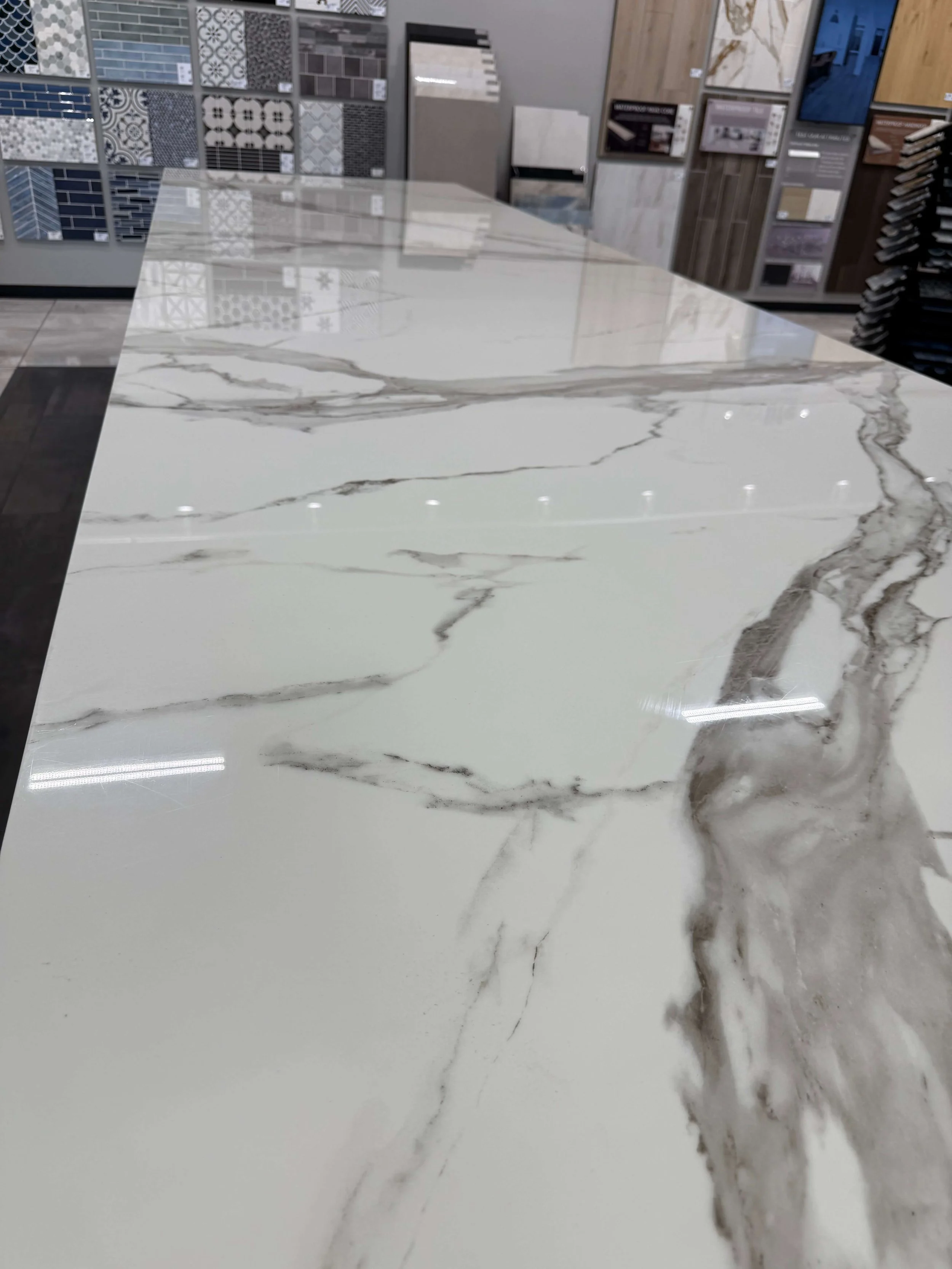
This porcelain slab countertop is way to shiny for me. It almost looks just wet or like it is covered with resin.
Schluter Edging for Tile
Don’t get me started on this. So many designers out there use Schluter, but I do not prefer it at all for ending tile or detailing outside corners in shower stalls, etc. I’ve written a whole blogpost about best ways to end or transition your bathroom tile on the wall from tile to sheetrock.
I find, most of the time, Schluter strips create too much of an abrupt stop to the tile material. It just feels like it has been chopped off. Also, many people use it in metallic finishes so that it stands out even more and becomes even a design feature which looks so cheap to me.
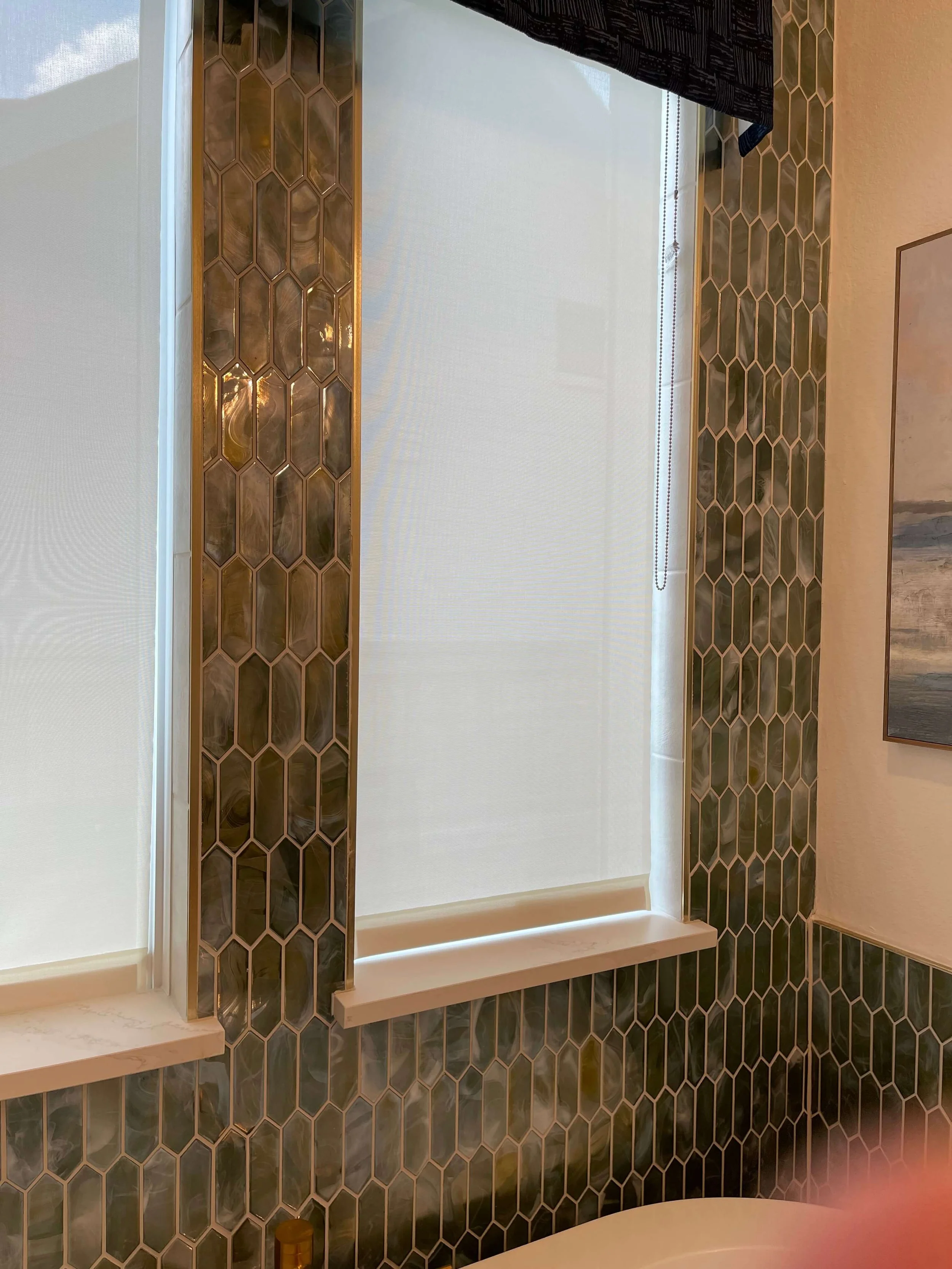
Schluter edging around the windows in this model home stands out and takes away, in my opinion, from the tiled wall look.
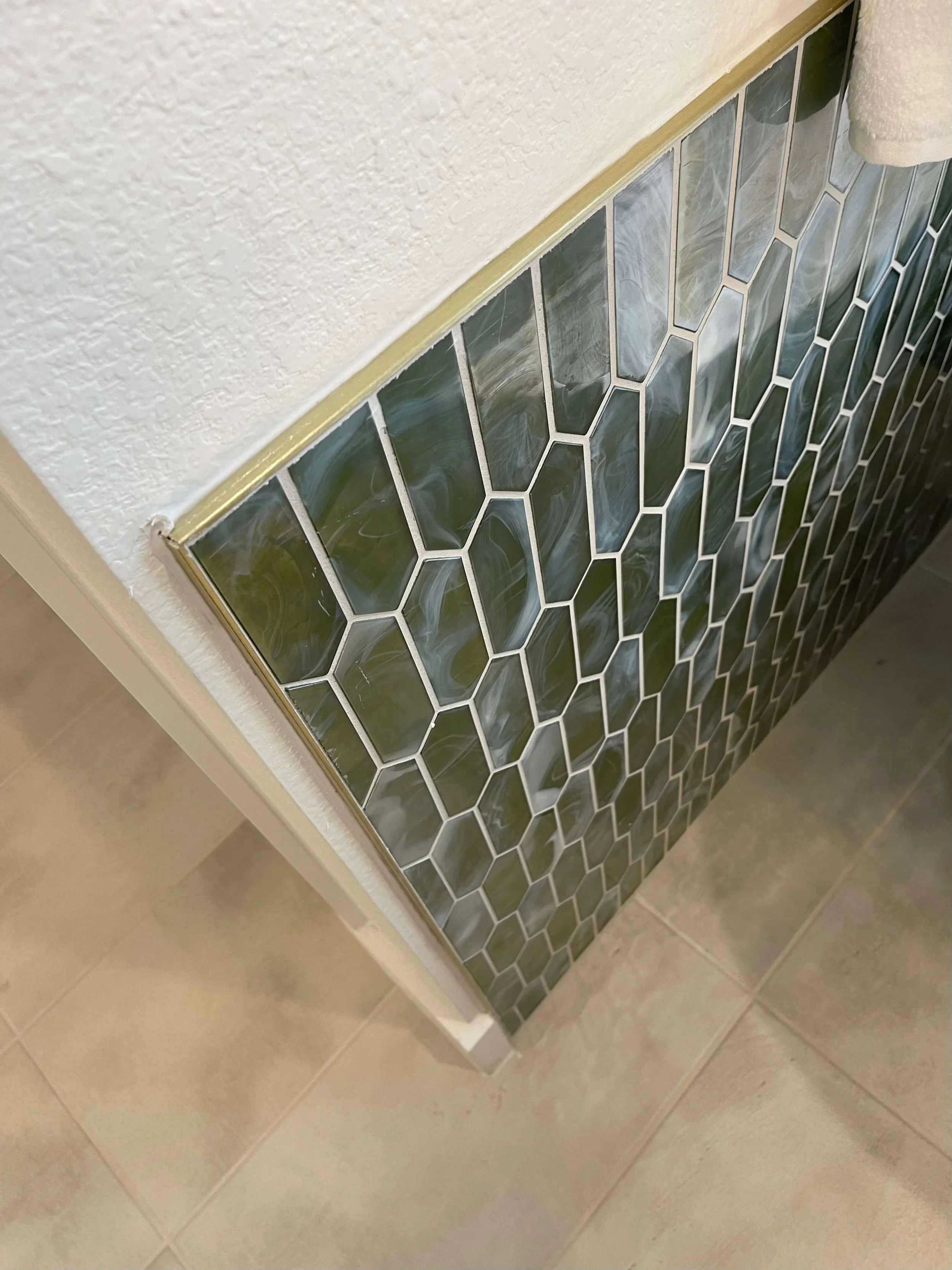
Schluter edging on mosaic tile walls put an abrupt end to the material and create a cut-off look in the transition.
Here’s how I like to end tile, with a tile jolly or 1/4 round bullnose edge tile or with a slab piece that frames out the shower stall. Do you see how the jolly piece is used at the window outside corner too?
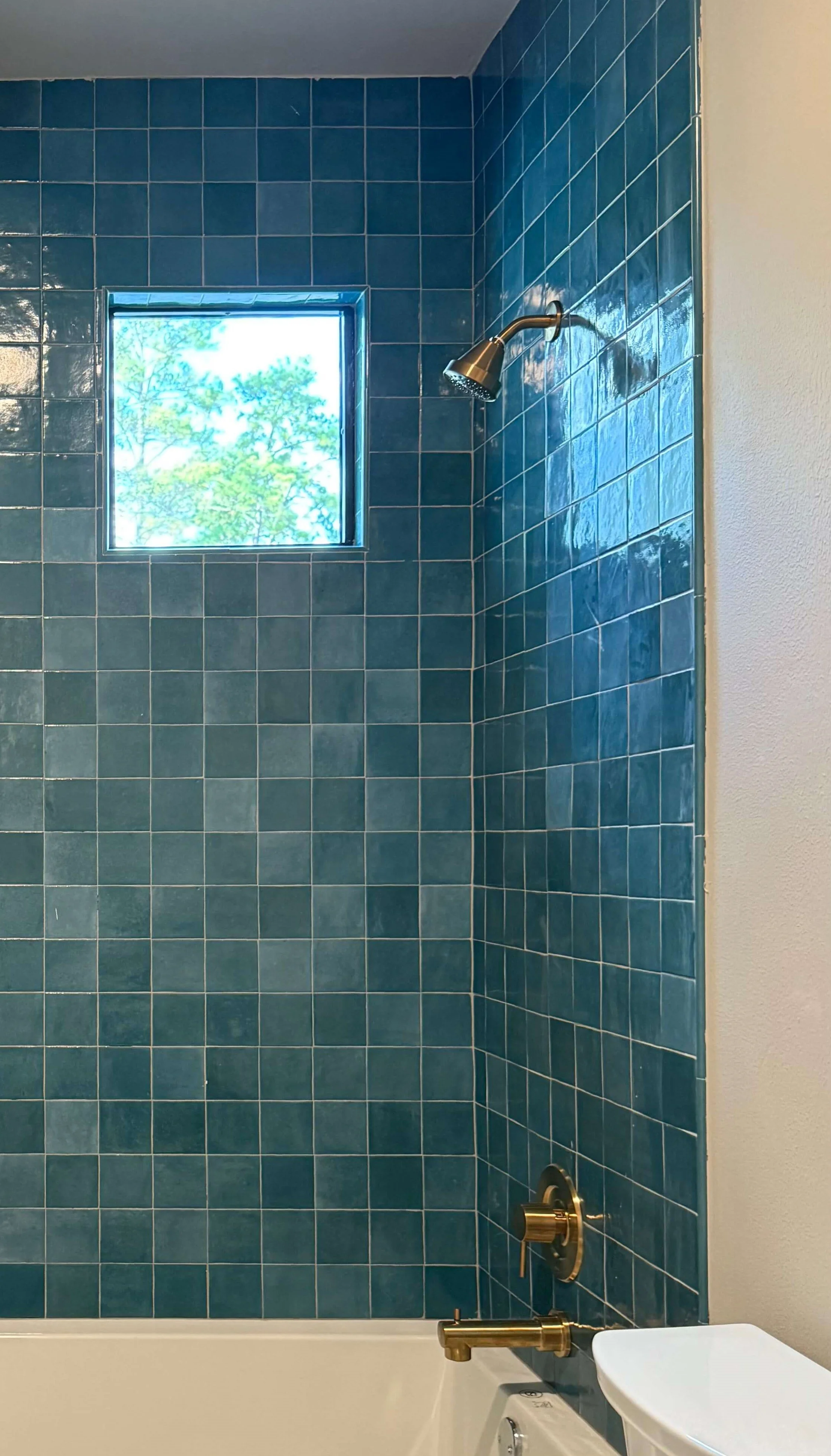
Tile jolly trimpiece is used at the outside edge against the wall and on the outside corner of the window to make for a clean, thoughtful transition.
I also like to frame in shower stalls with slab pieces like in this bathroom below, with slab material on the jambs and curb.
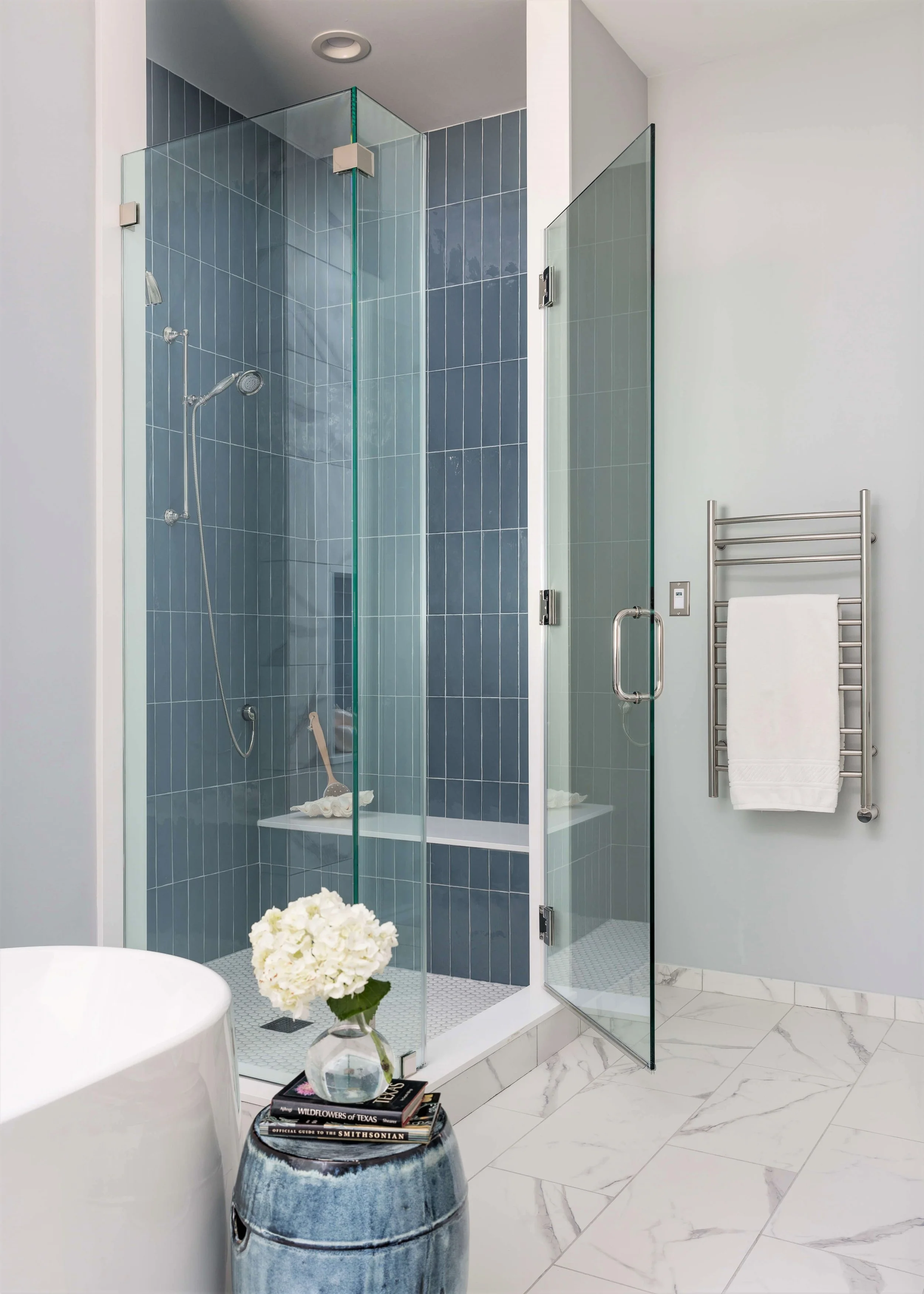
I’ve written more about how to end shower tile in this popular blogpost.
Polished Chrome
Maybe if I was doing a mid-century modern home, I might use some polished chrome on some lighting or something, but never as plumbing fixtures in a bathroom or kitchen.
For one, I do not like the cold look that it has.
I do use polished nickel on some projects, it has a warmer tone overall and it feels so much more high quality. I have polished nickel cabinet pulls in my kitchen and love them and they don’t really show water spots.
Polished chrome really shows water spots. Here’s an example from my hotel in NYC recently. This is a wide, designer-y, polished chrome faucet. Even after just a couple of uses (there was maid service every day) you can see how blotched up it gets.
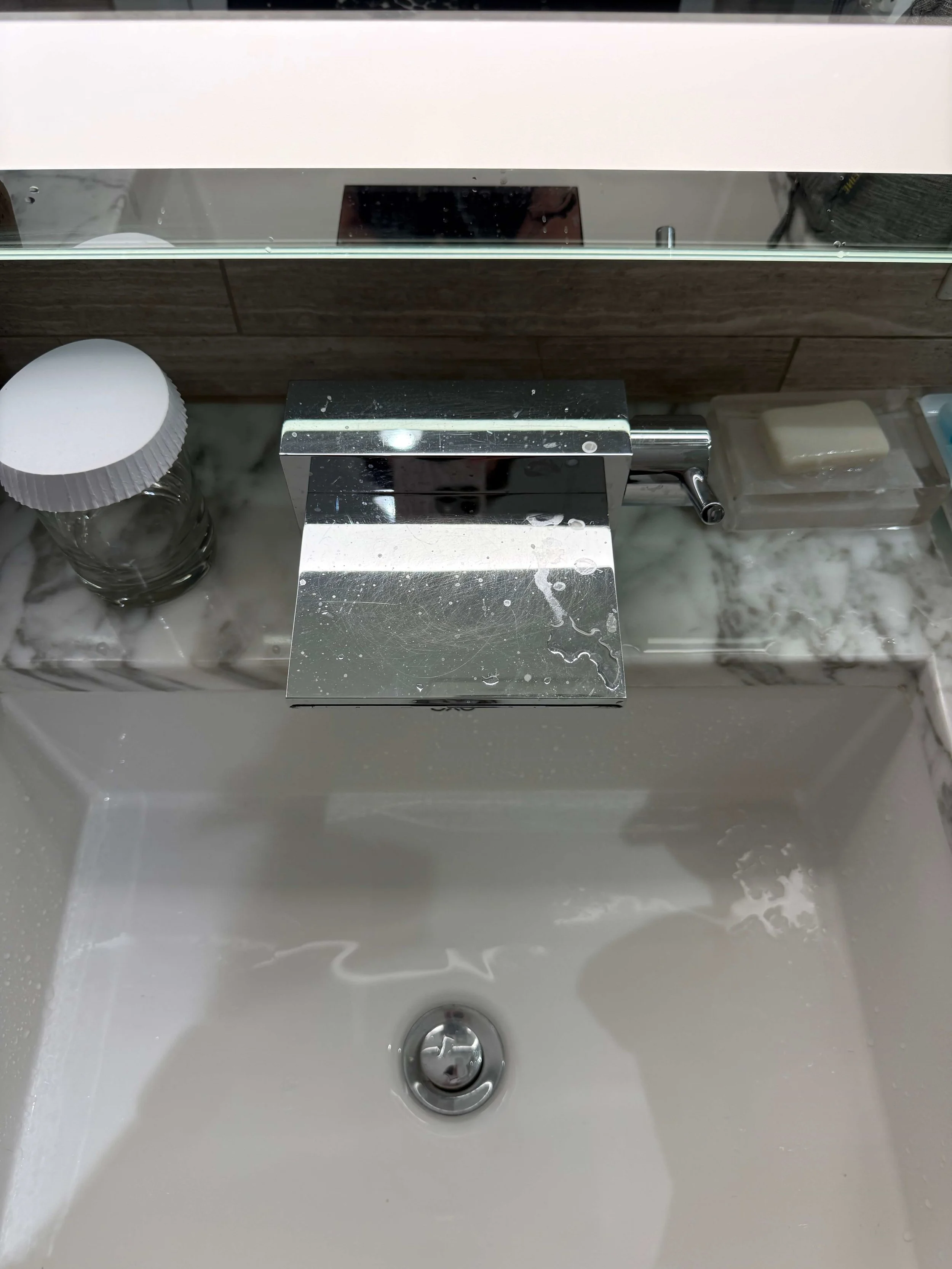
High end hotel with polished chrome faucet that shows every single spot.
Polished chrome just reminds me of cheap fixtures that old apartments have and I just do not like it.
So, if anyone says polished chrome is coming back, I would be rolling my eyes in my mind. Even if it comes back in style, I don’t think it will last.
Touch Latch Kitchen Cabinet Hardware
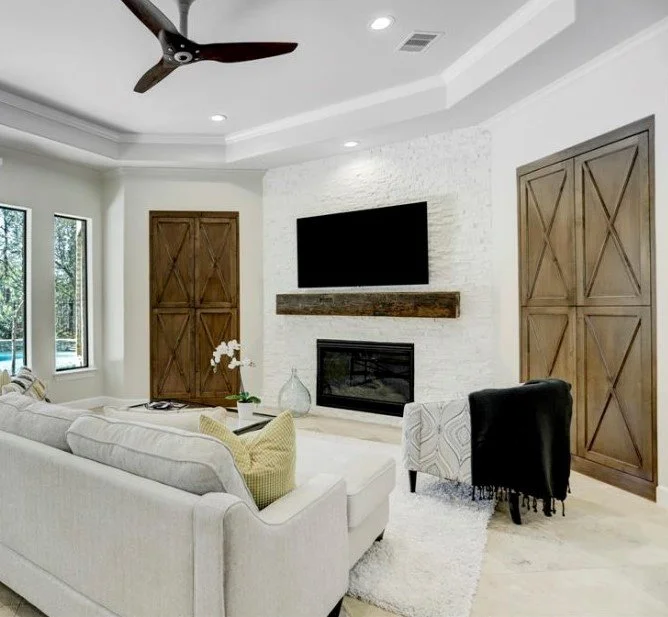
I think there are definitely some places for touch latch cabinet hardware. I’ve used it on the cabinets in this paneling, to disguise the doors and make it all look like paneled wall features.
In kitchens, however, people lean up against the lower cabinets and then, of course, they have to push on the cabinet doors with their hands. If you bump into lower kitchen cabinets, they can accidentally pop open. That happened in this airbnb and it would happen to your home too.
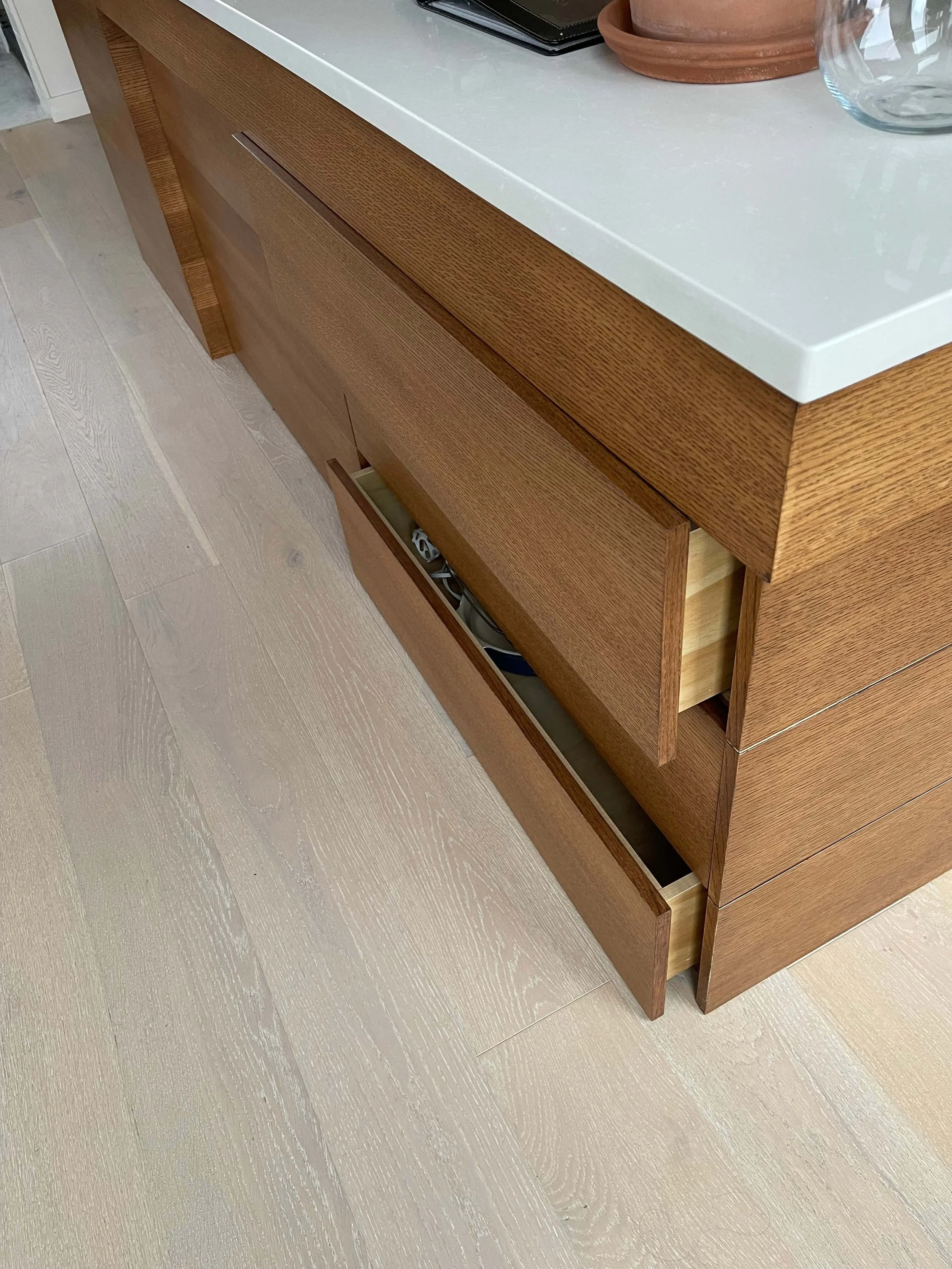
Touch latch drawers in an Airbnb that popped open when we leaned against the kitchen island.
It also means that the door front might get messy looking with fingerprints and such.
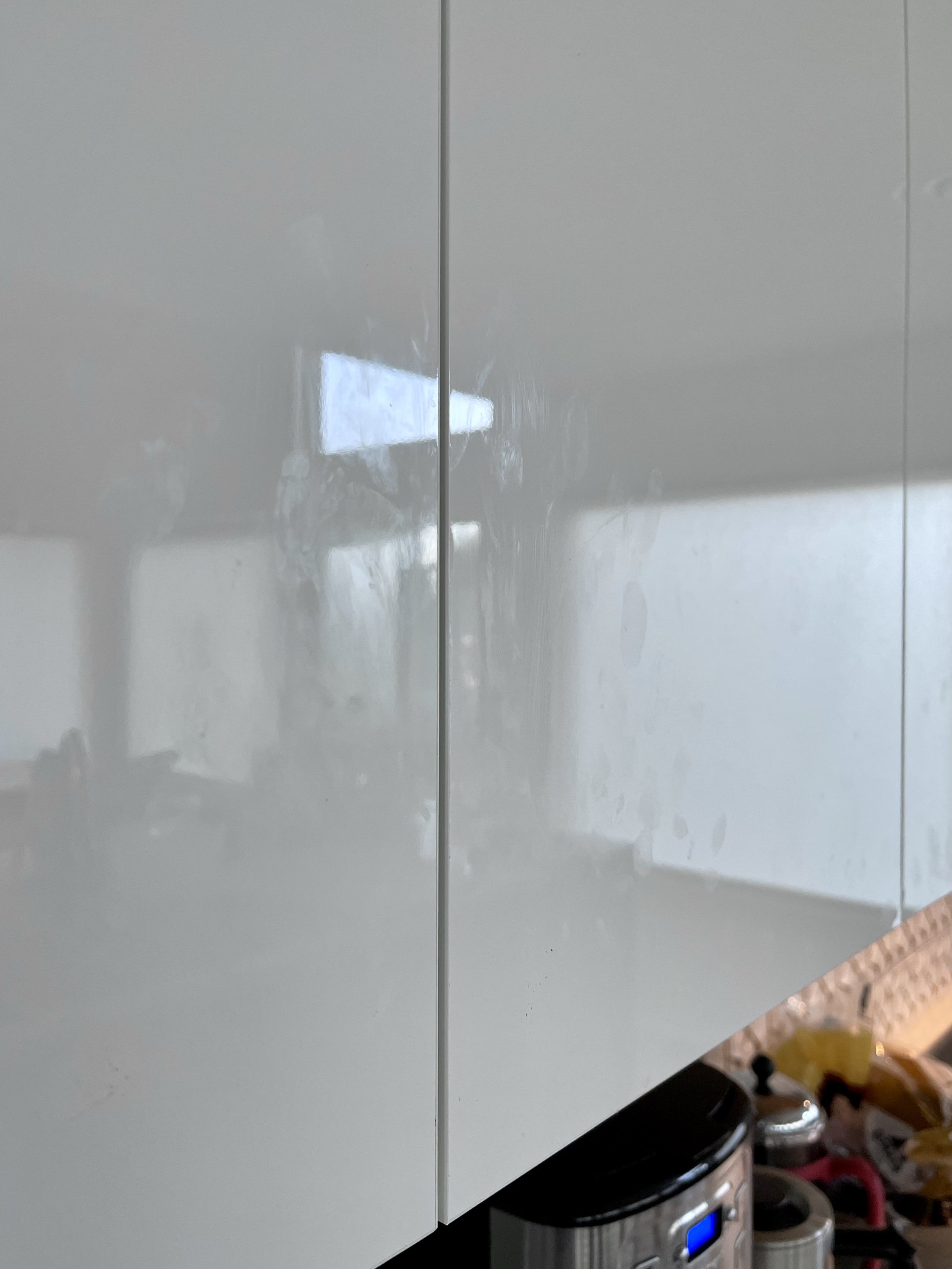
See the smudges and fingerprints from these touch latch cabinet doors in the kitchen of our Airbnb? This was after two days of cooking in this kitchen. They needed constant cleaning.
I remember seeing this stainless refrigeration section in The New American Remodel several years ago.
There was a touch latch type of opener on these stainless refrigerator fronts. Even with the docents in the space constantly wiping things down, there were handprints on the front. See the smudging at the center of these doors?
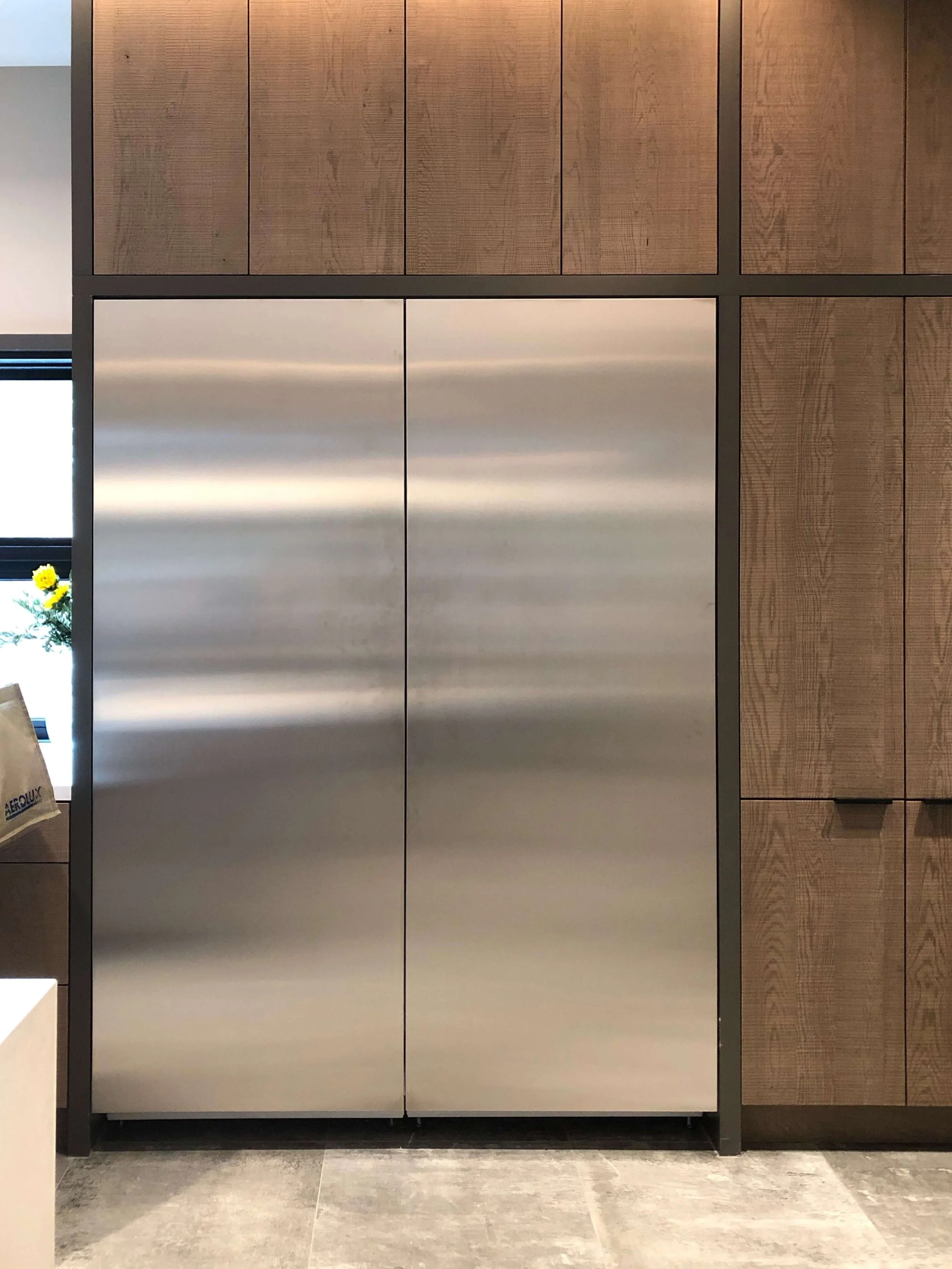
Touch latch stainless refrigerator doors get smudged at the door opening area.
Checkerboard Patterns Not on the Diagonal
The checkerboard tile look is something that I think will look dated really soon. It is busy and not timeless like the checkerboard pattern that you lay on a diagnonal.
These days, it reminds me too much of MacKenzie Childs’ dishware, which is surprisingly popular again and something I’ve never liked. It makes me think of country kitchens with roosters and such, no matter what material you use or what color it is done in.
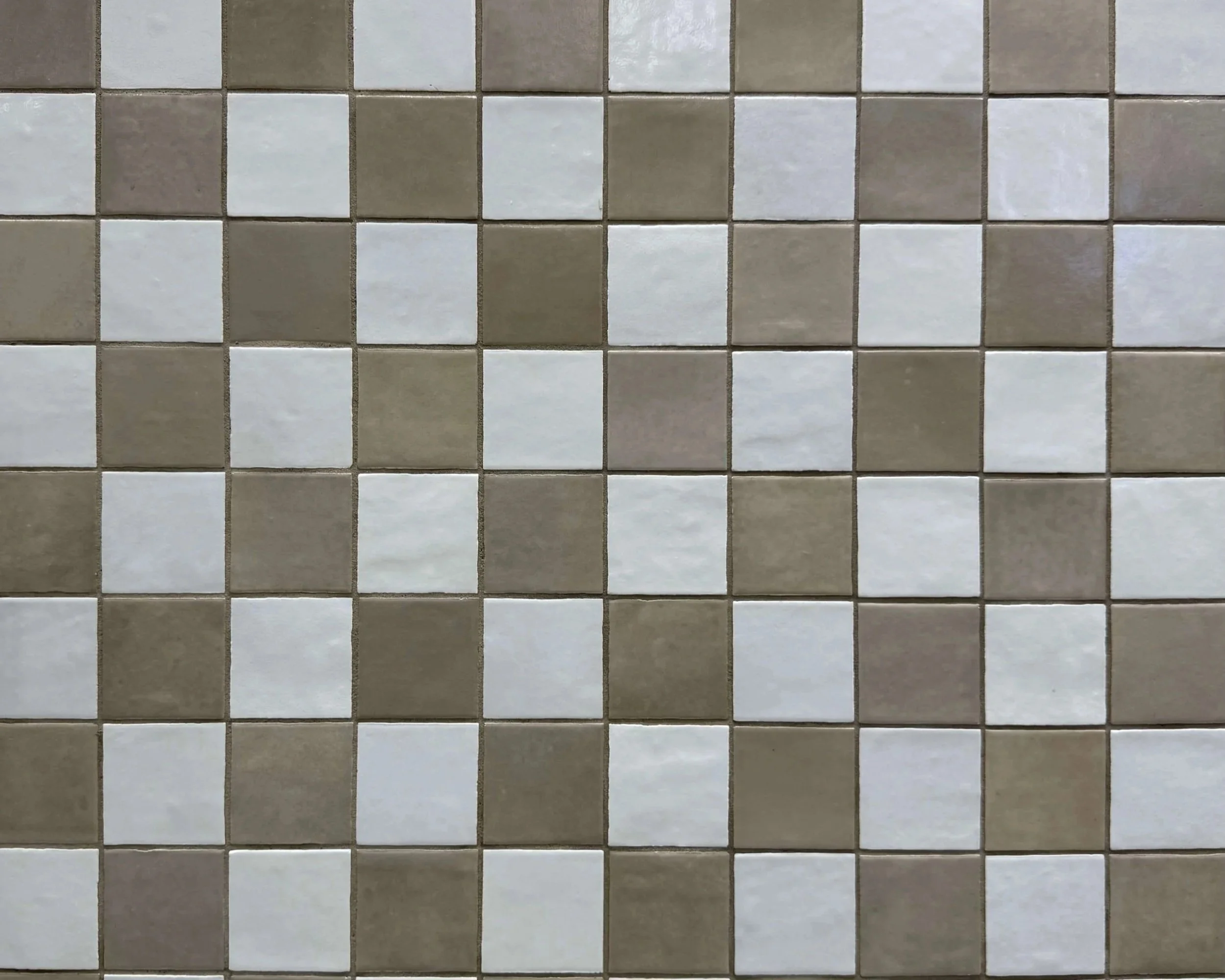
Tile patterns seen at KBIS 2025.
If I had a client who really wanted it, I’d likely use it in a small space like a powder room or on a smaller sized backsplash. I probably wouldn’t be using it as a big floor pattern.
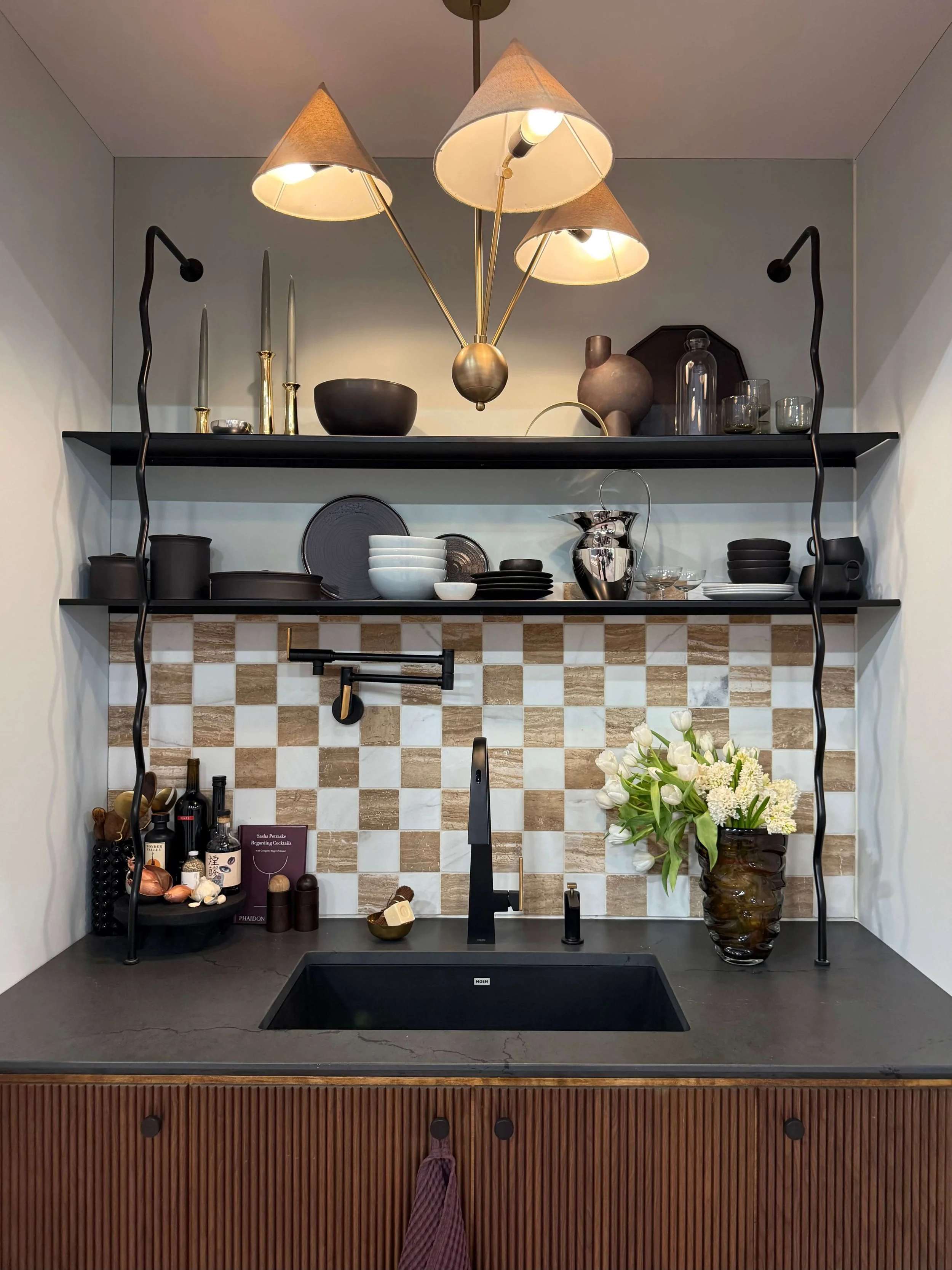
Checkerboard tile backsplash at KBIS 2025.
I do love a checkerboard floor on the diagonal, however, as it has a classic and timeless appeal.
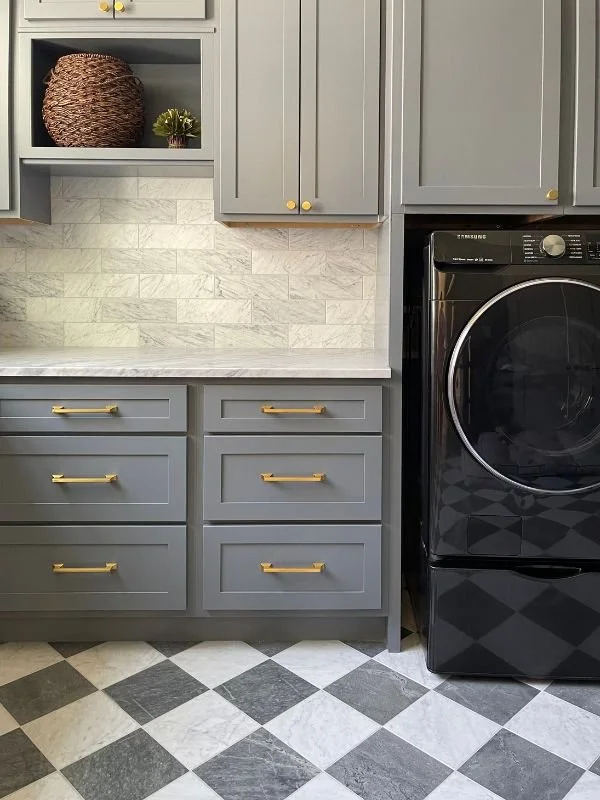
Checkerboard floor, on the diagonal, in one of my projects in the laundry room.
Book matched highly figured slabs
We’ve all seen the dramatic slab walls that are often done in high end installations. Many times they are bookmatched using sister slabs that are cut from the same block, one after the other, so they can look like they are reflecting one another.
For me, this is a hard no. They just remind me of Rorschach inkblot tests and more often, fallopian tubes.
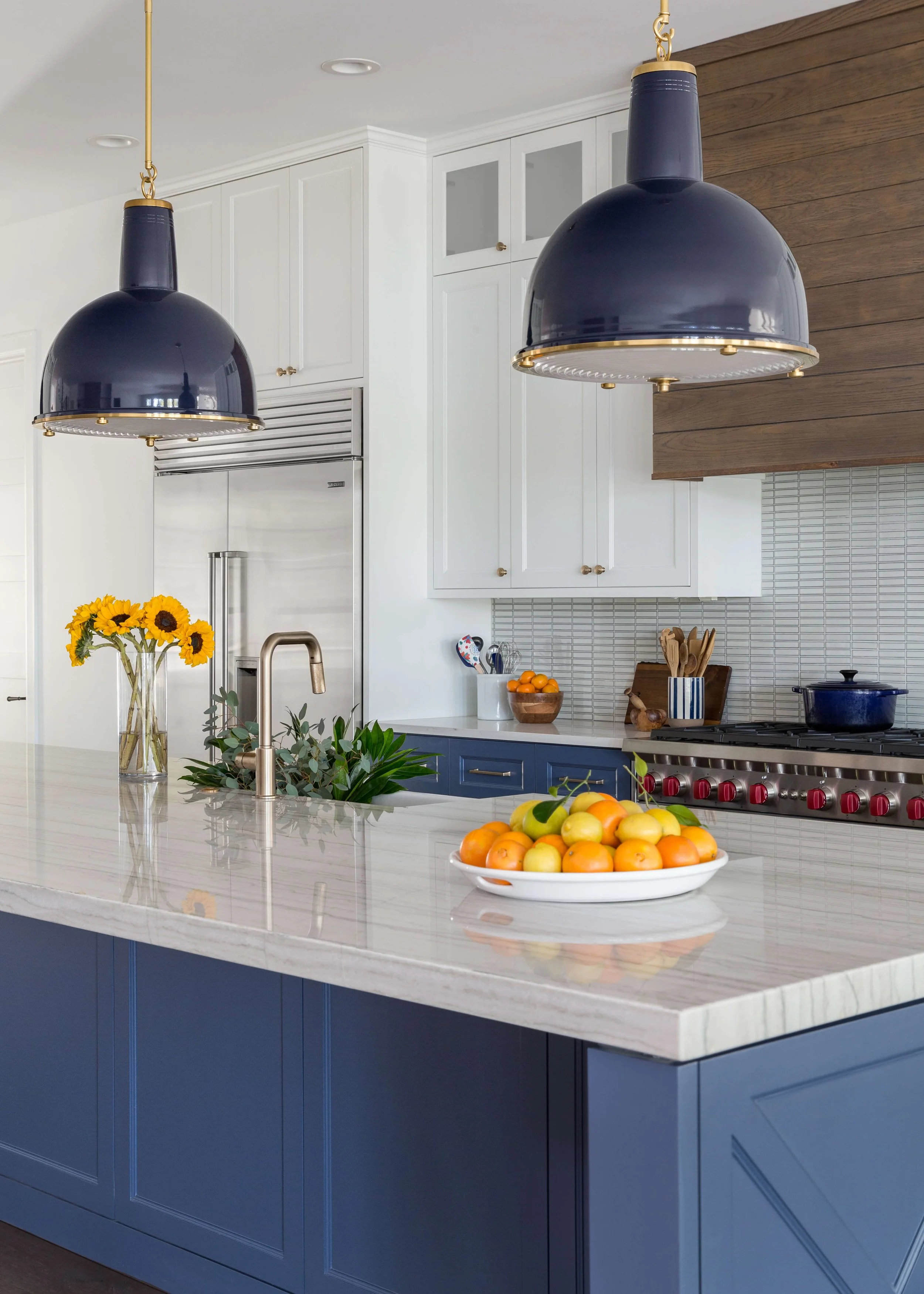
The only time I do a book match is with a linear pattern like in this kitchen where the pattern just continued on all down the 9’ kitchen island.
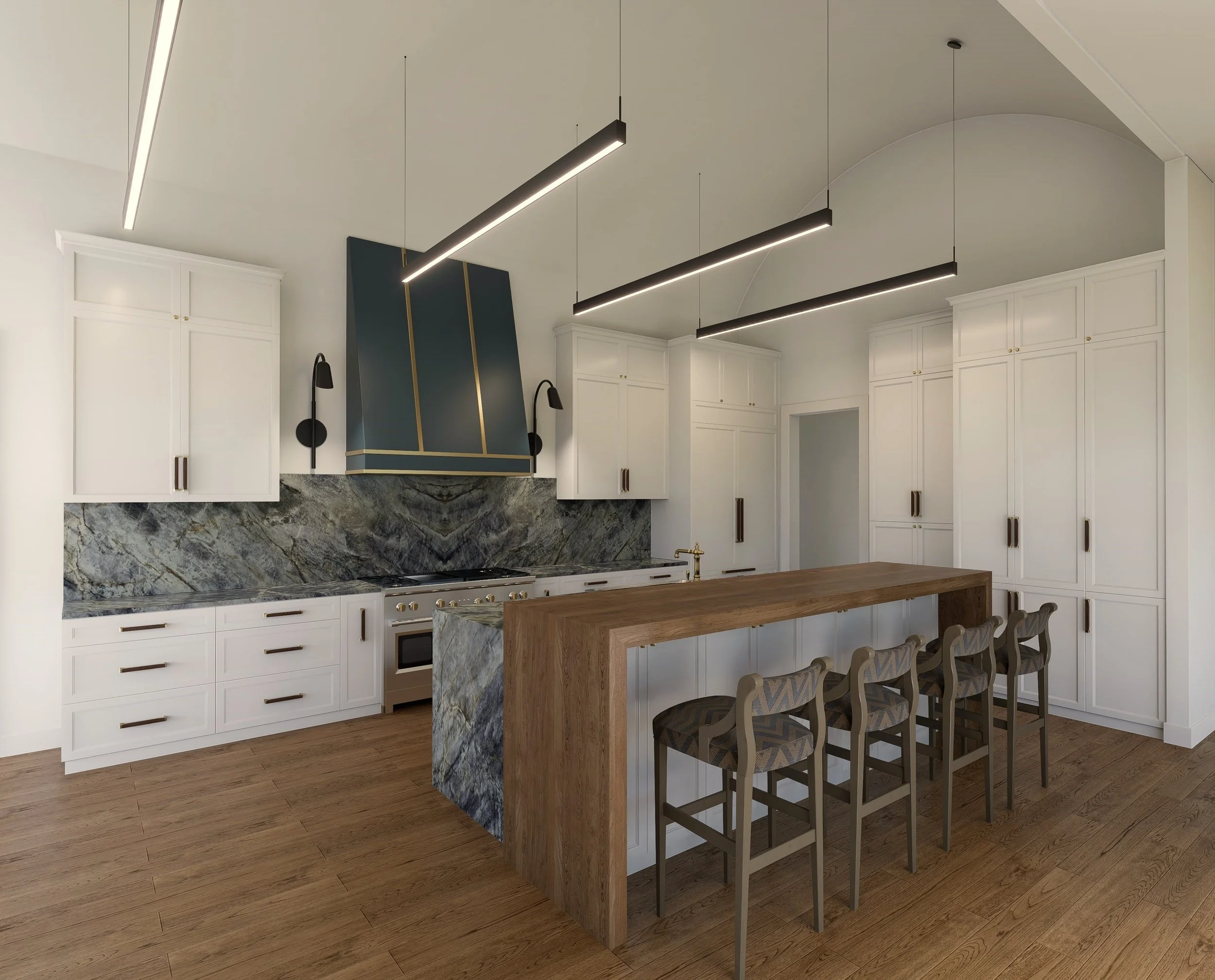
In this rendering of a recent full home remodel, the renderer did a book match look at the range with the slabs. I left it in the rendering as I maxed out my touch ups allowed from the renderer and it was a busy stone.
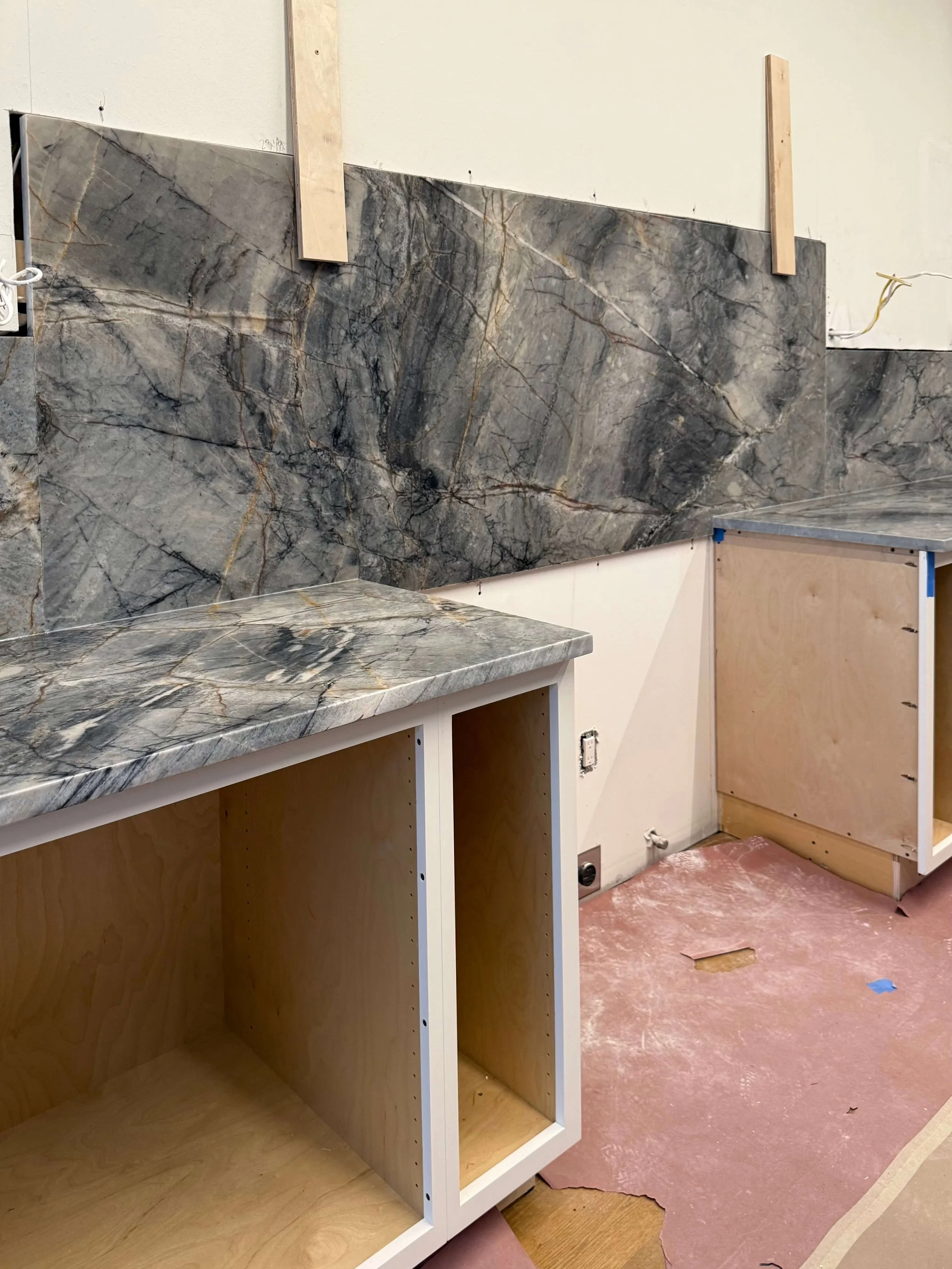
When it came time to lay out this stone backsplash, the contractor and I reviewed it in depth and came up with this layout. I prefer the slab looking like one large solid piece.
(BTW, this kitchen is looking gorgeous and I plan to shoot it in about a month or so!)
white marble countertops in the kitchen
I just don’t have the patience for this.
I currently have marron cohiba, which a black/brown granite in a leathered finish and I love it. It wears so well. I have done nothing to it since 2016 when I put it in and although a have small chip in one place at my sink where I dropped a big, heavy pot, it looks great.
I wish I had the patience for maintaining white marble, but I don’t and I know it. I drink lemon water every day and squeeze lemons where little droplets can shoot away from a cutting board. I would be staring at those etched spots, annoyed, constantly.
Especially since my husband does a lot of the cooking and isn’t that neat about it, there is no way I could live with that.
I know people think Taj Mahal is overused these days, but honestly, it is a lovely stone and in all the kitchens and bathrooms I’ve done where we’ve used it, it has performed beautifully! I would pick Taj Mahal over a white-ish marble countertop in the kitchen any day. (I love the greige tone of it too! So adaptable.)
I wrote this post about Taj Mahal as an option for white marble back in April of 2013!!!! I still believe in Taj Mahal.
More Details To Avoid
Care to see some more of the details I eschew when designing a project? I’ve outlined some below that you can look out for when you are out home shopping or planning your next remodel.


I’m back with more bad details, this time from some model homes I toured recently. :-)