
I’m very attached to the way I work through a design project. While I find materials, details, furnishings and fixtures interesting and inspirational, they are rarely ever the starting place for a design project. They are mostly selected after the schematic design is worked out first, keeping in mind all the parameters and goals set by the client.
The order in which I work on a project is broken down into 5 phases that can overlap but generally are done in this order. I do mostly remodeling design, so this process works well for those types of projects.
Programming
Schematic Design
Design Development
Documentation
Construction Administration / Procurement
After the Programming phase, where I gather the information to start the design, assess goals and desires, measure and photograph the space, I move on to Schematic Design.
Hand Sketching is Part of the Process
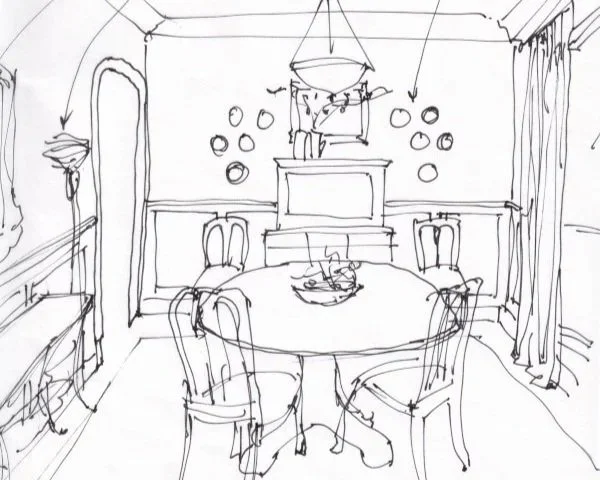
I always start with a floor plan and work my way through elevations, reflected ceiling plans and then sometimes will do perspectives to show the client the Schematic Design. I do these in hand sketch form.
I don’t do fancy renderings at this point, as I want to get some feedback from the client before I invest more time and energy into the design direction.
I will present these hand sketches along with a storyboard and key materials in this phase.
Storyboards will show images of products paired together in a way that gets the overall design across. Materials like a stone slab material, tile, wood color tone, metal finish, a few fabrics or a rug selection, perhaps a key paint color will be presented to give the client something tangible and to see materials in person.
Sketches Presented to Clients
I’m sharing some of my project sketches here today to highlight this part of the project.
I don’t ever want anyone thinking they will start a project with me and get a full blown finished rendering at our first presentation. My sketches are a rough representation of what it will look like, if we move ahead with that design.
Everything gets tightened up after this first look, with CAD and fine-tuning.
No, I don’t use AI to create the design. I’m not against AI. I just prefer to work this way and I’m not up to spending my time learning enough about AI to be effective with it.
I also happen to love this creative phase of the project, it is my favorite part (next to watching it being built out). So, I don’t want to shortcut or cheat through this portion of the work.
Hand sketching is how I think everything out, it is an integral part of the process for me.
Floor Plan Sketches
It all starts with a floor plan, whether it is a simple furniture layout or a complicated rework of interior spaces. I tend to take it room by room, unless I’m affecting a neighboring area, borrowing space from one room for another.
Of course, everything is eventually hardlined, but a sketch like these might be in a first blush look that I show the client.
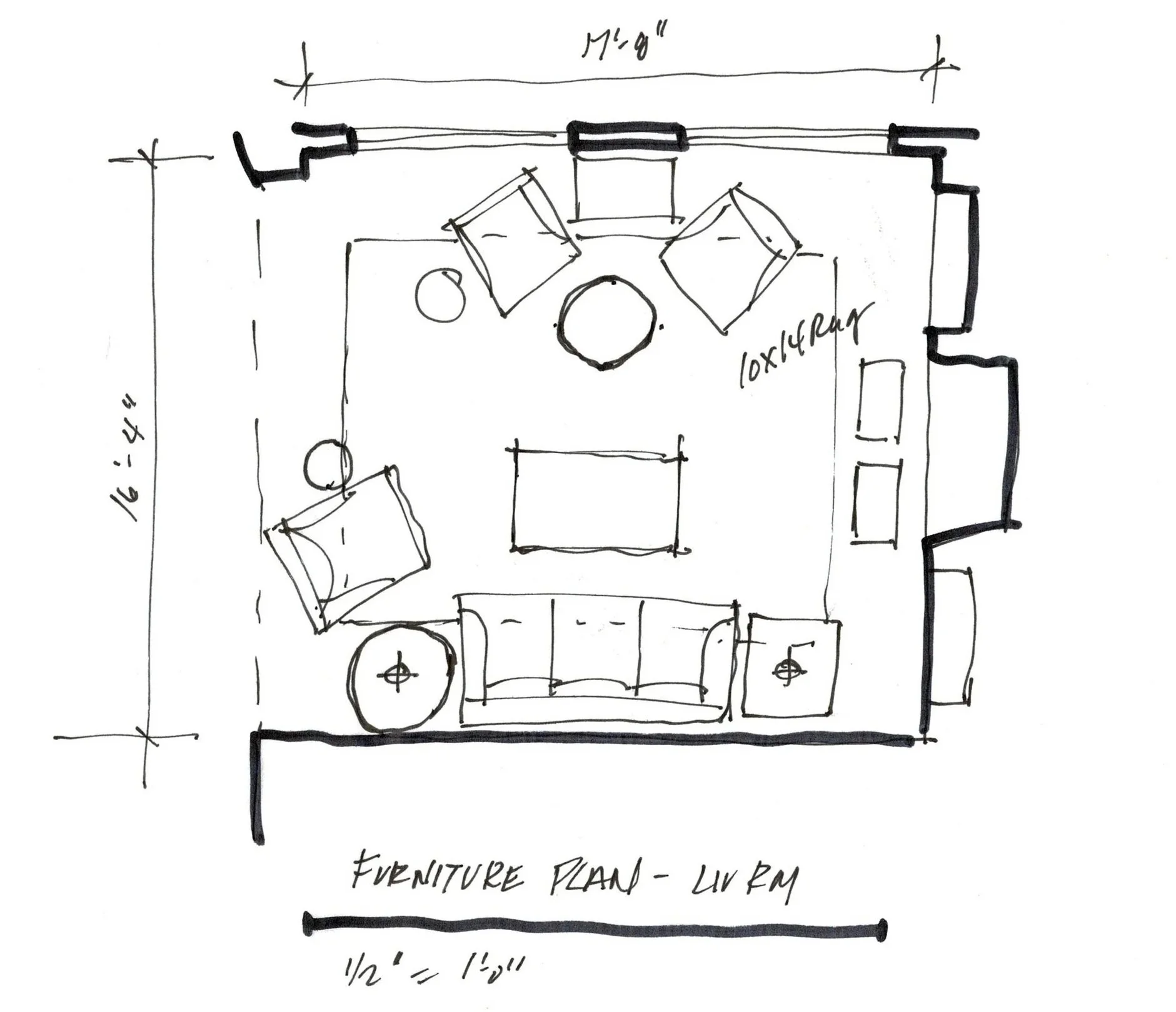
A simple furniture layout, scaling the furniture in the room.
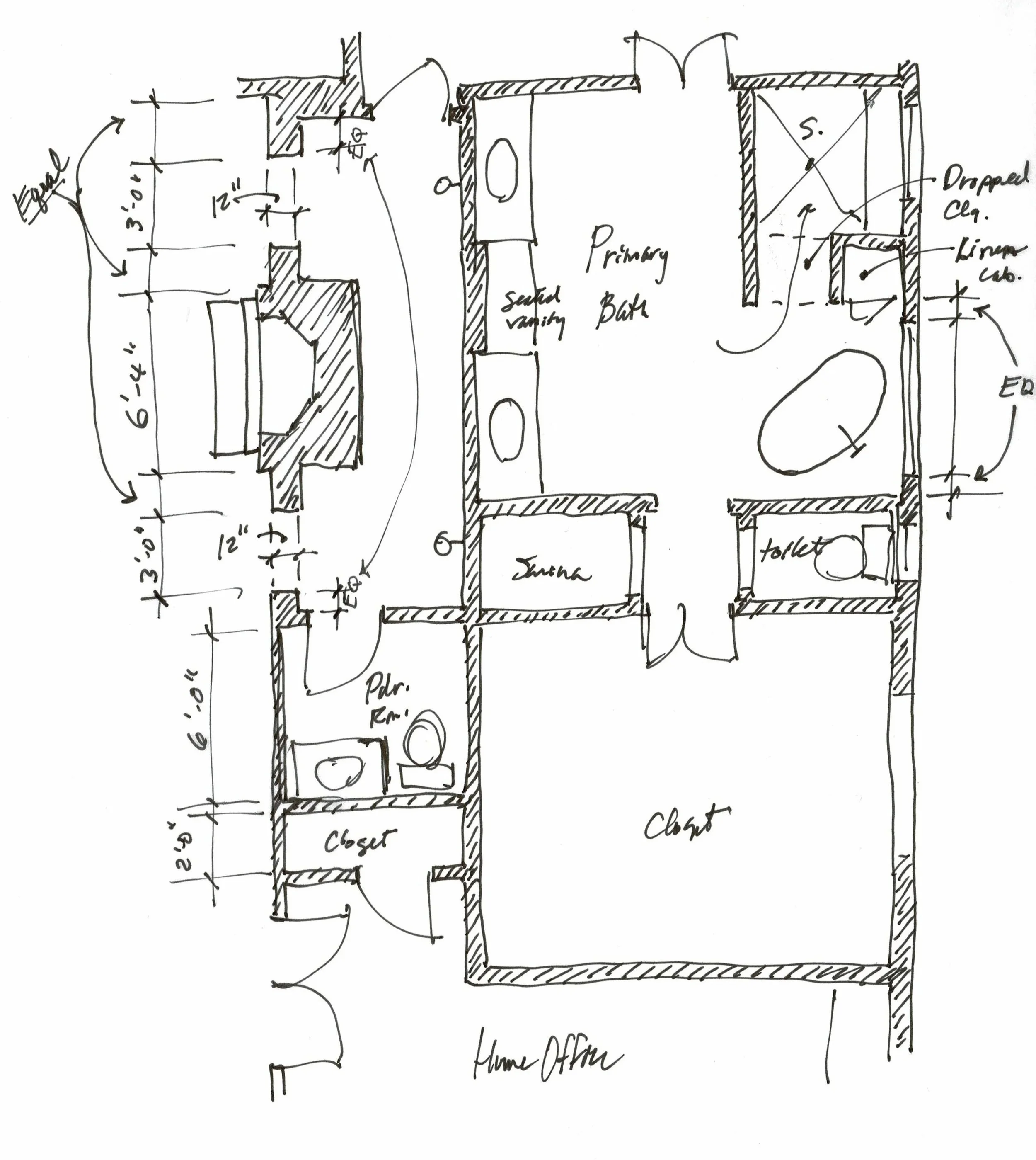
This hallway, powder room, closet space behind the fireplace was reworked for a better flow.
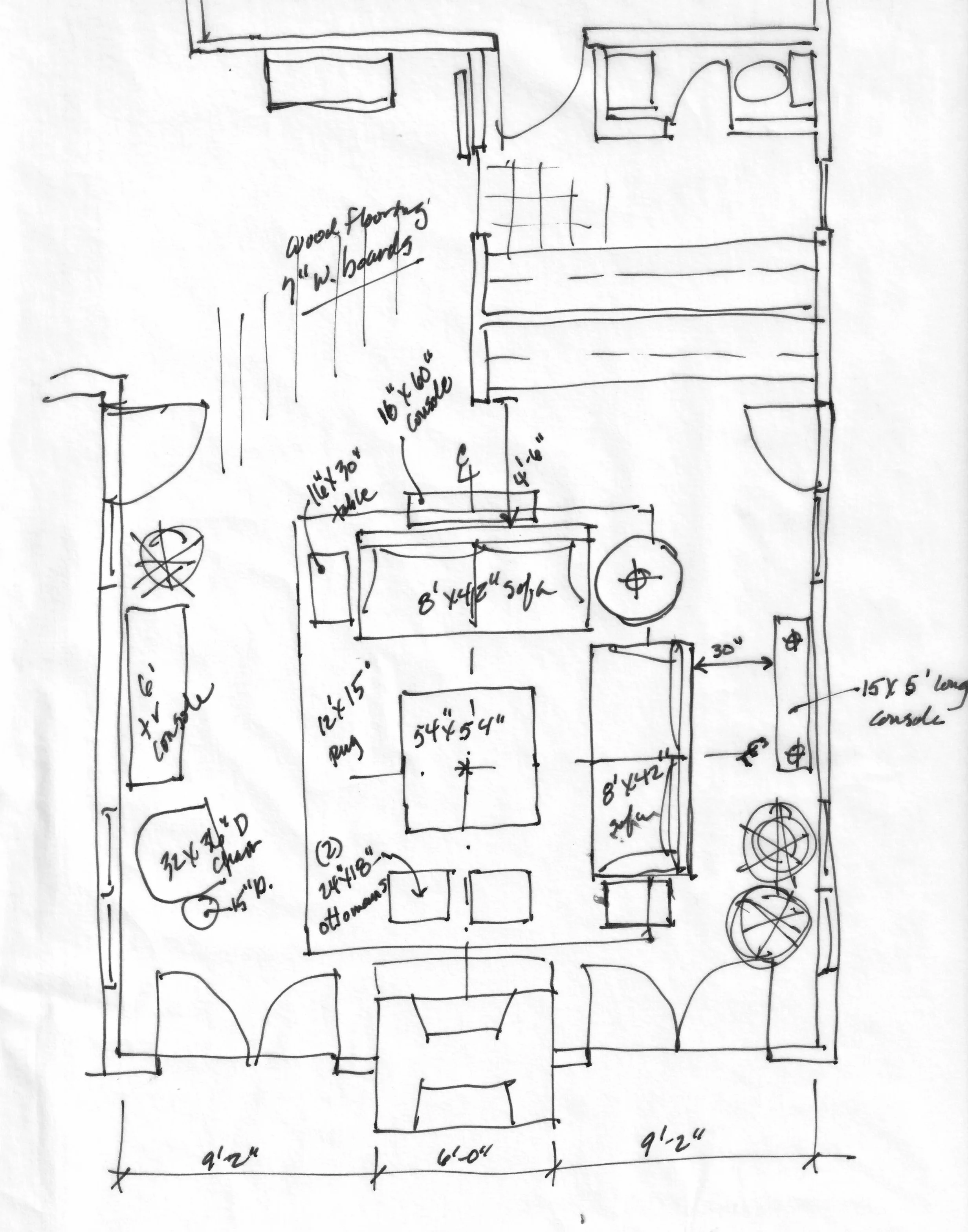
Elevation sketches
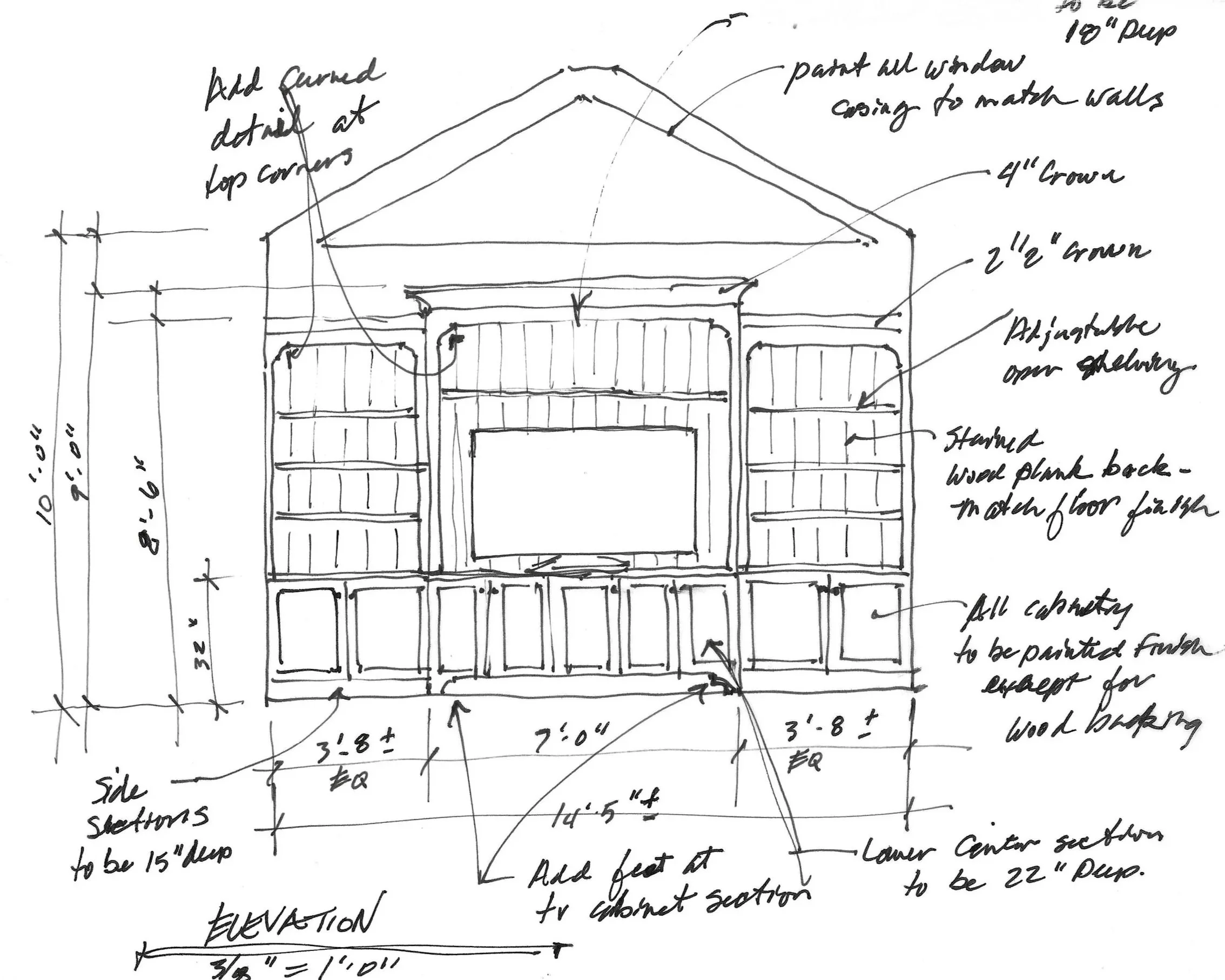
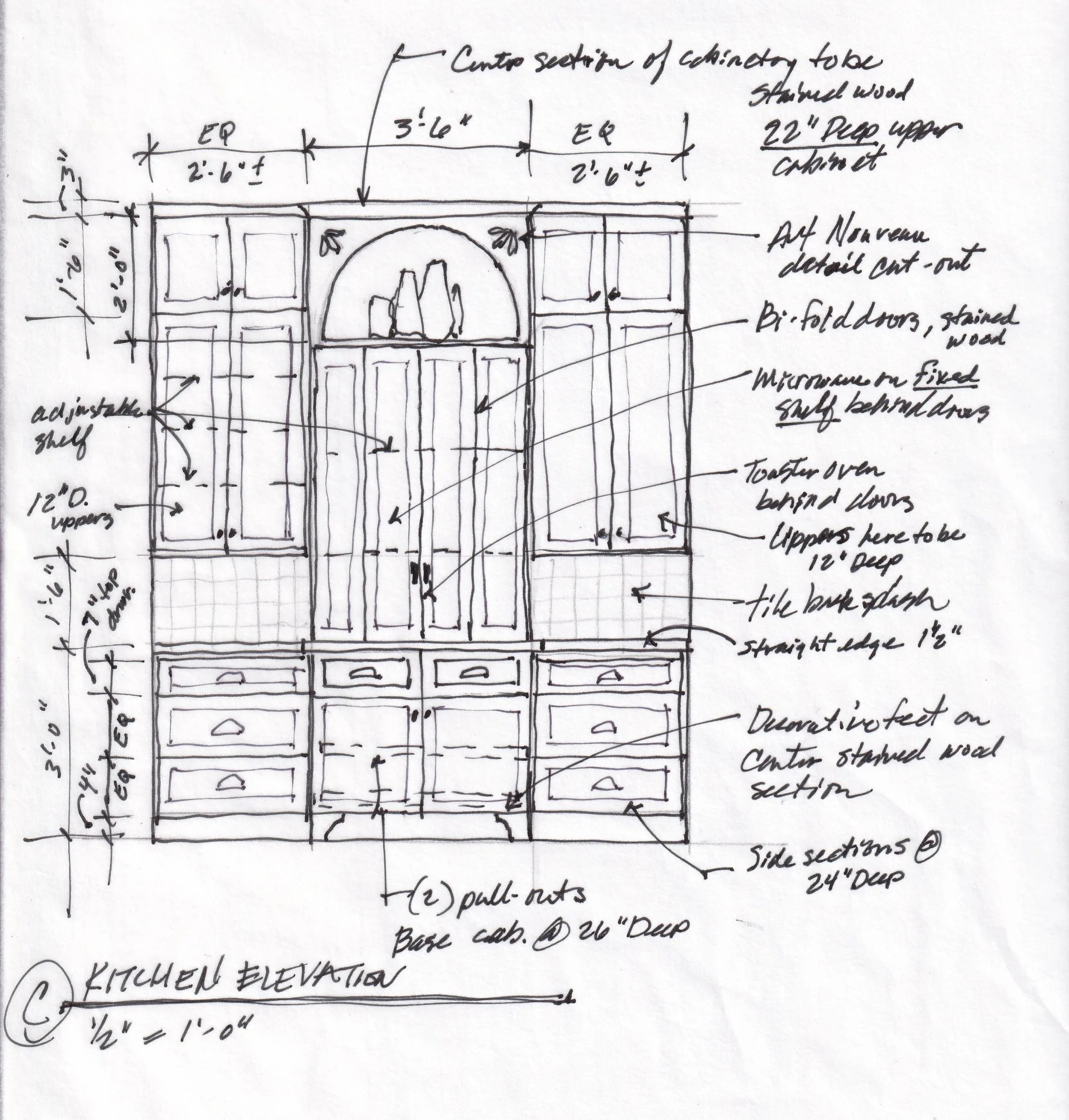
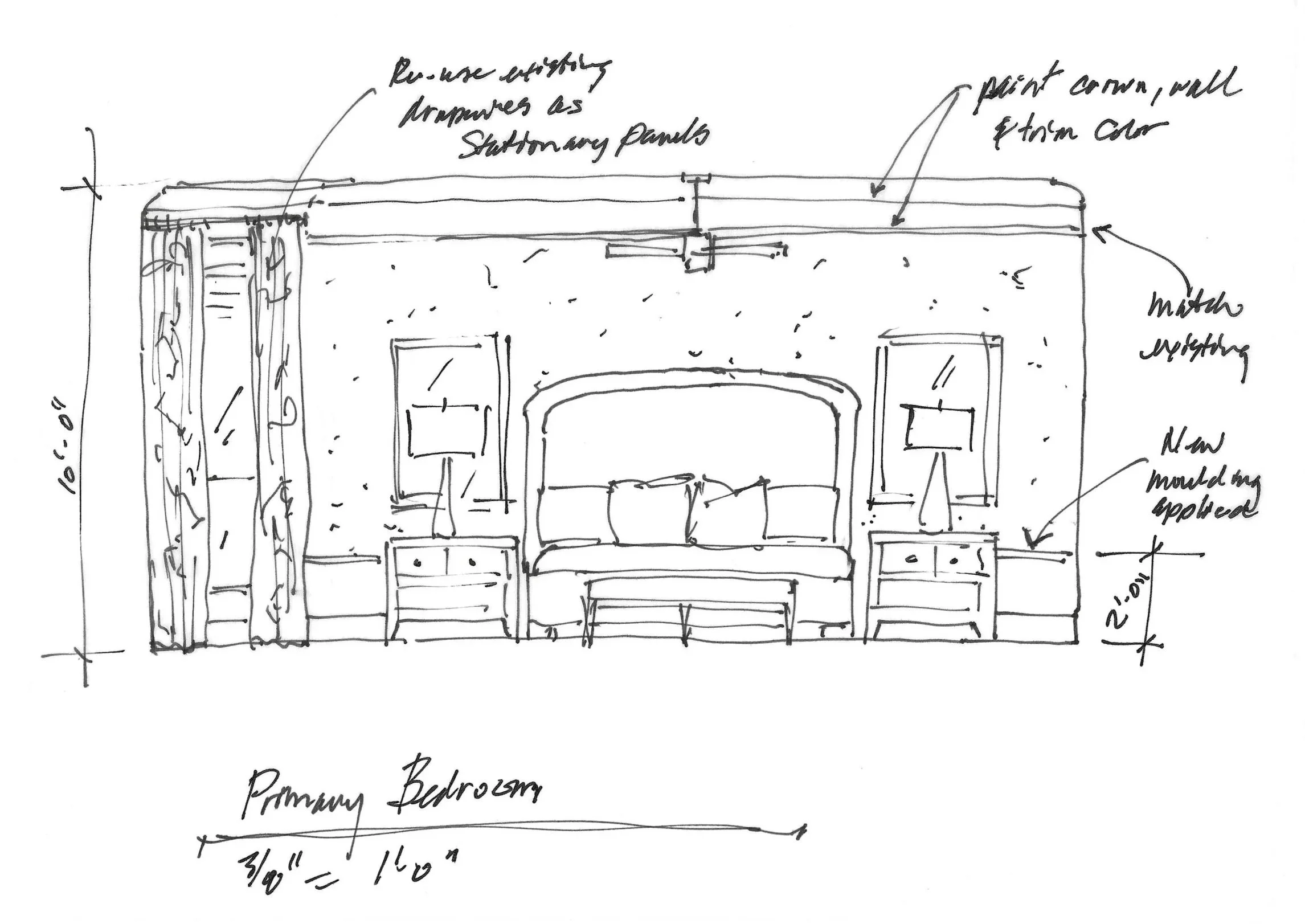
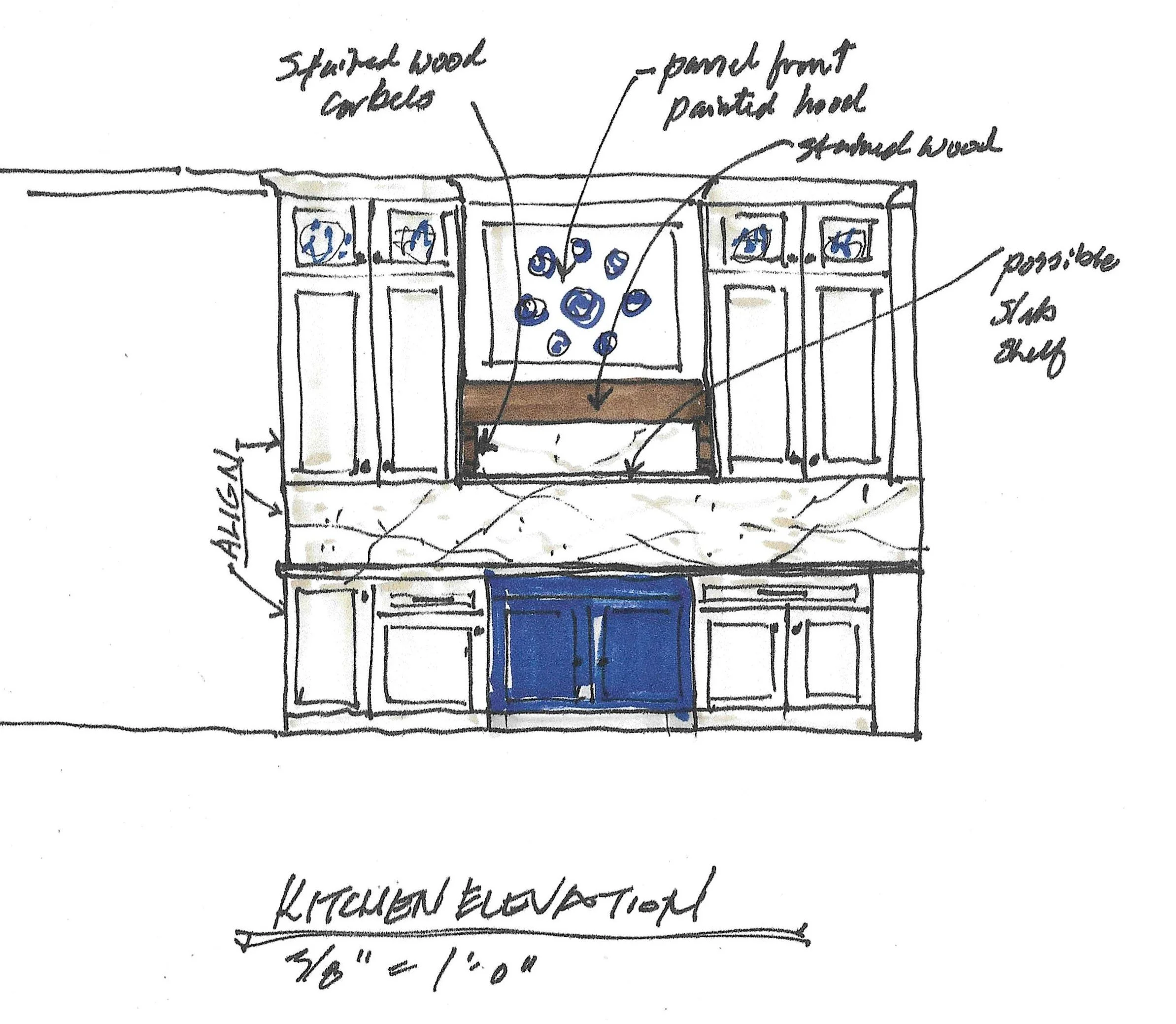
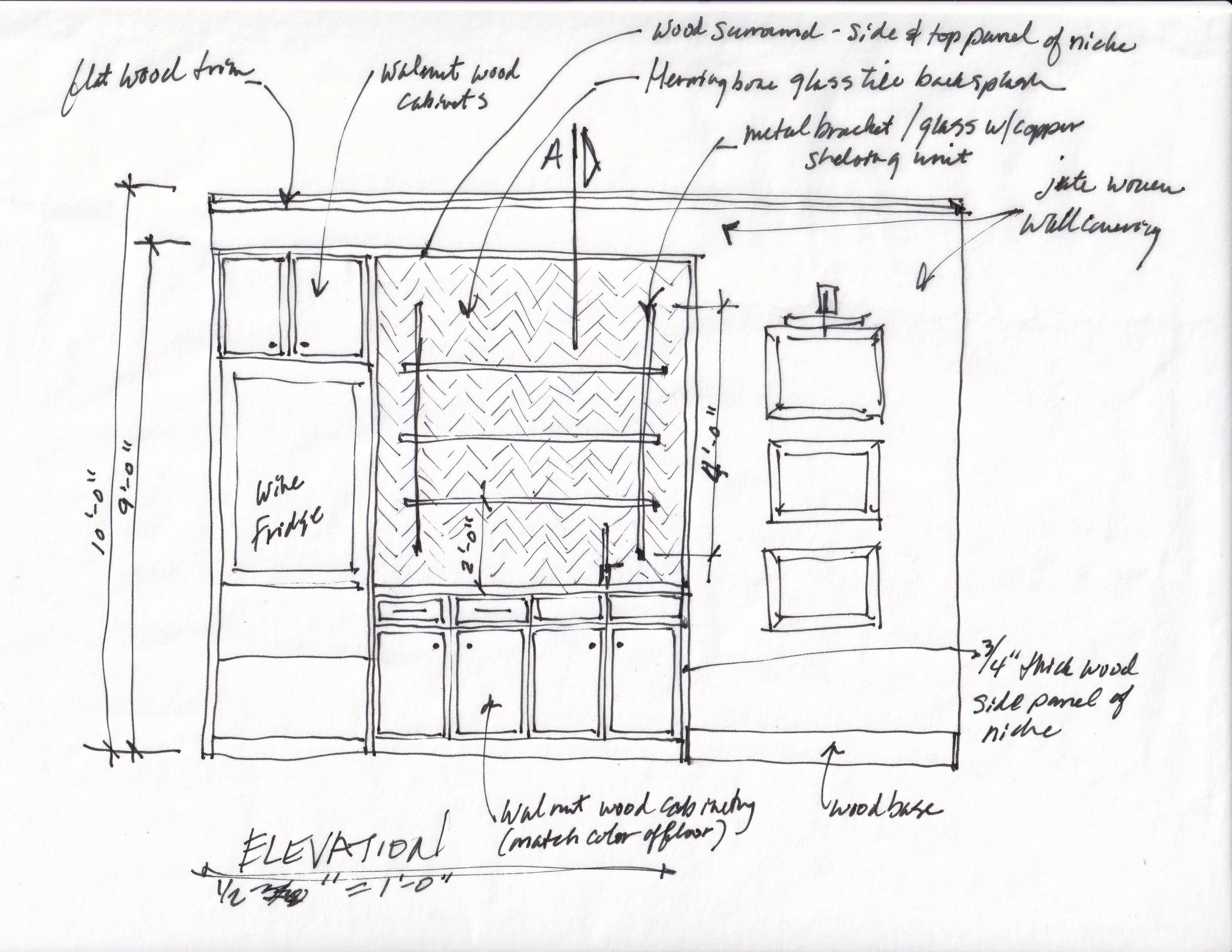
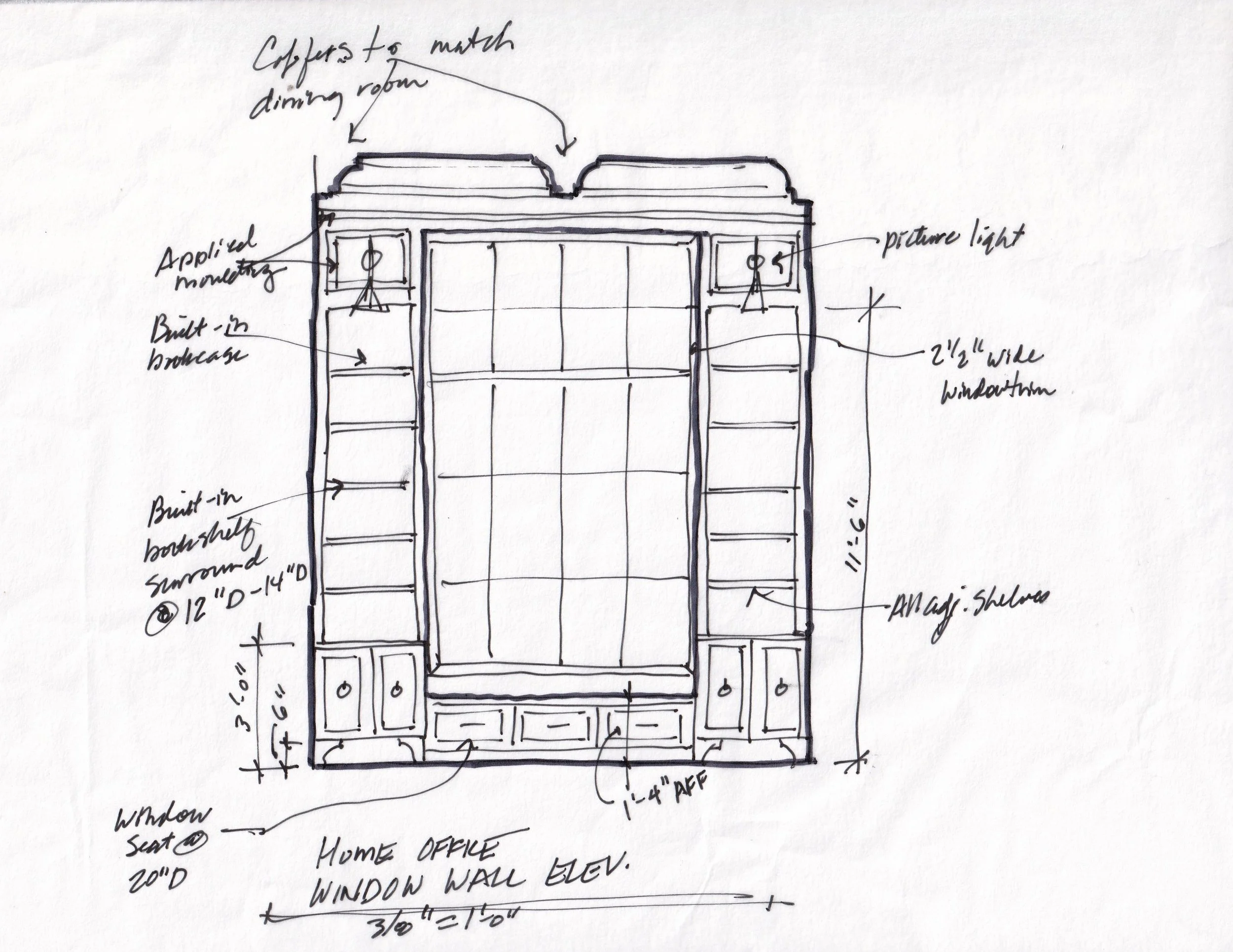
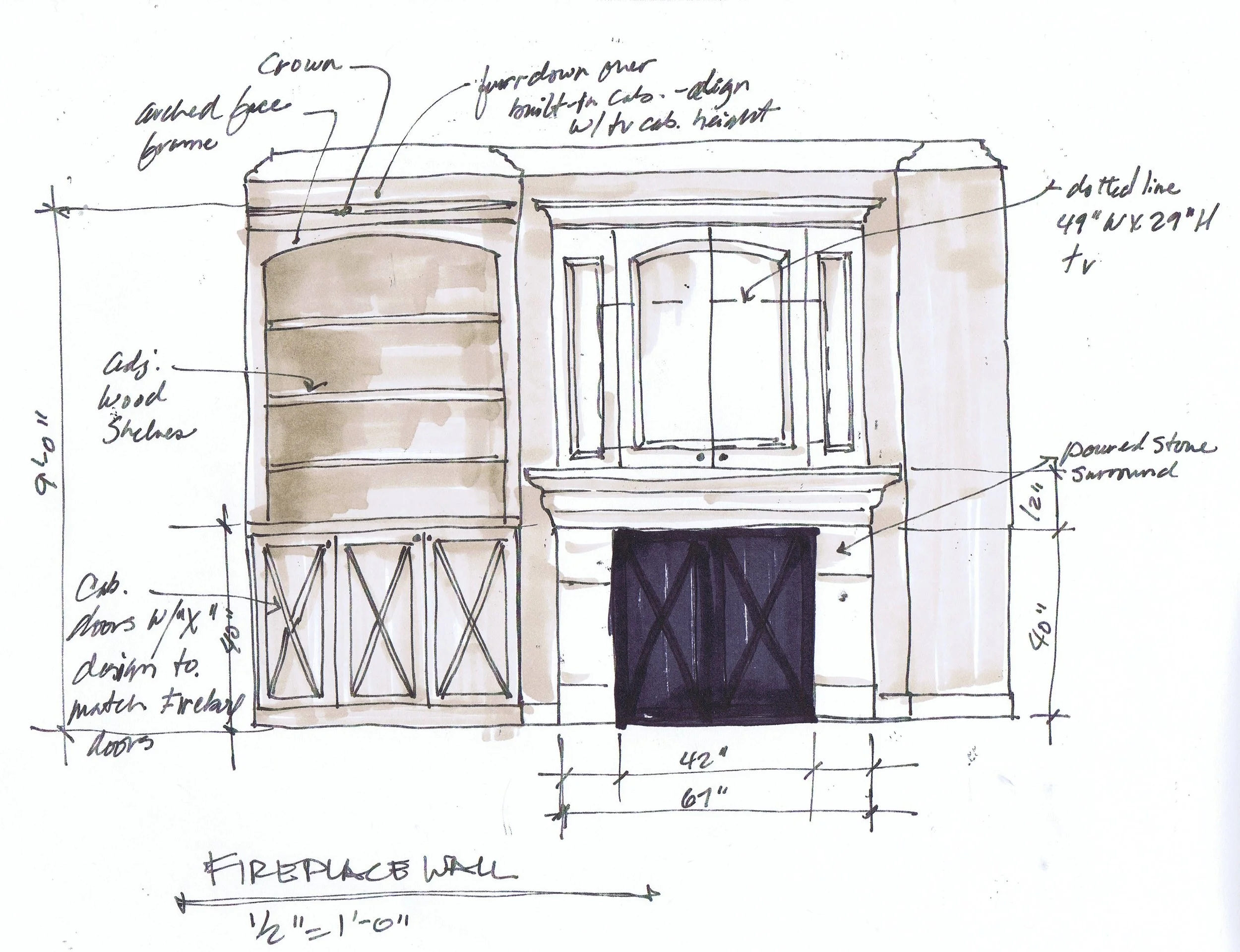
Once the floor plan is figured out, the walls are next. Where are the focal points? Where are the windows and door openings and how do they impact the wall elevations? Where do certain items need to be, like tvs, bookcases, appliances, vanities, beds, etc. I place those and work them in to the overall design.
I label these up typically, as not only will my clients see them but they will go to my drafter for the CAD set. All my drafter needs to do is hardline what I’ve done. I do all the design, detailing and notes.
(Thank goodness she now can read my handwriting!)
Detail Sketches
This is how I work out how it all fits together, how it might be built out. This is where a designer shines, to make transitions meaningful and smooth.
How wide does that banding need to be? How much should one cabinet box come out in front of the adjacent cabinet box. How should the finishes die into each other?
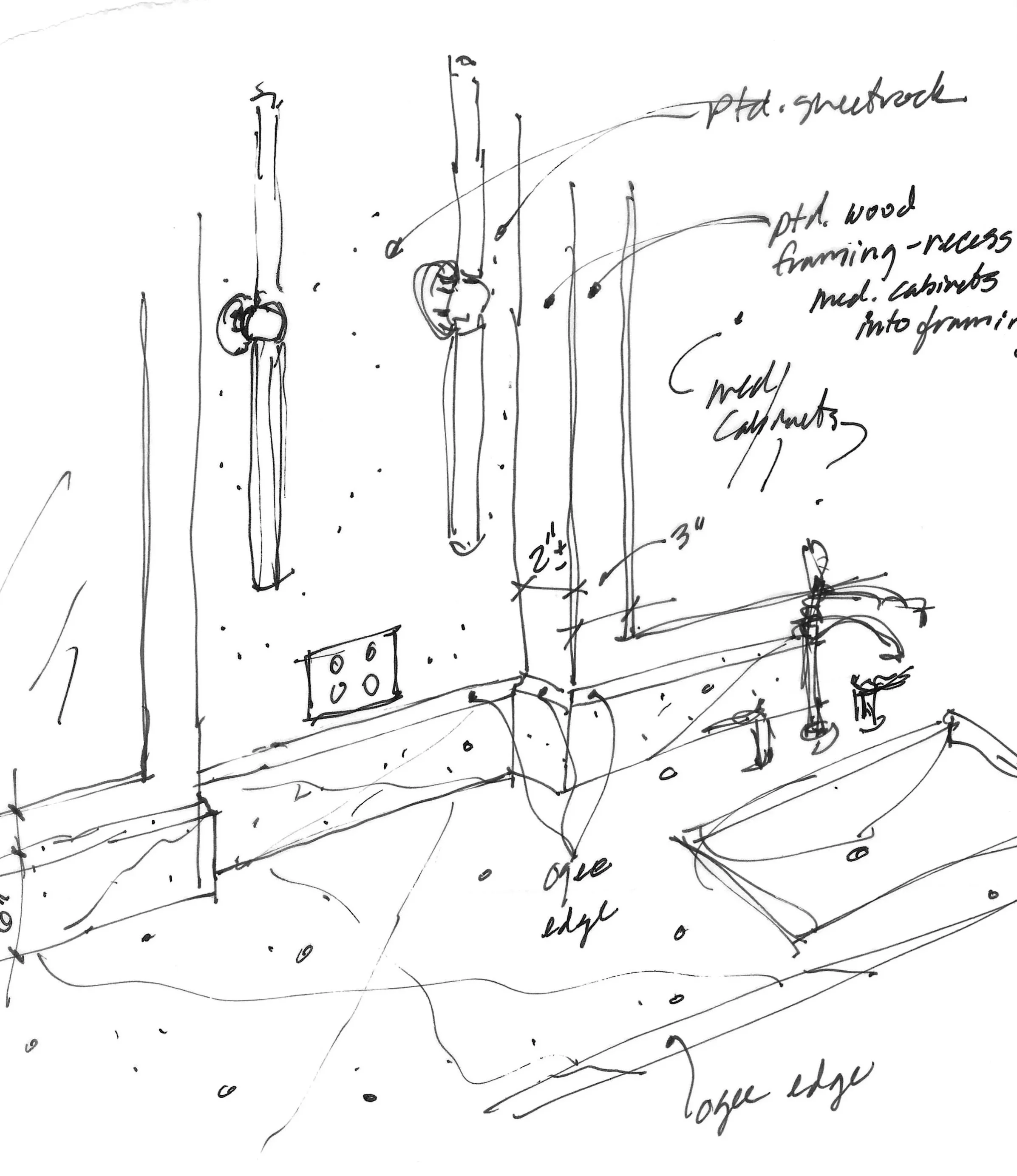
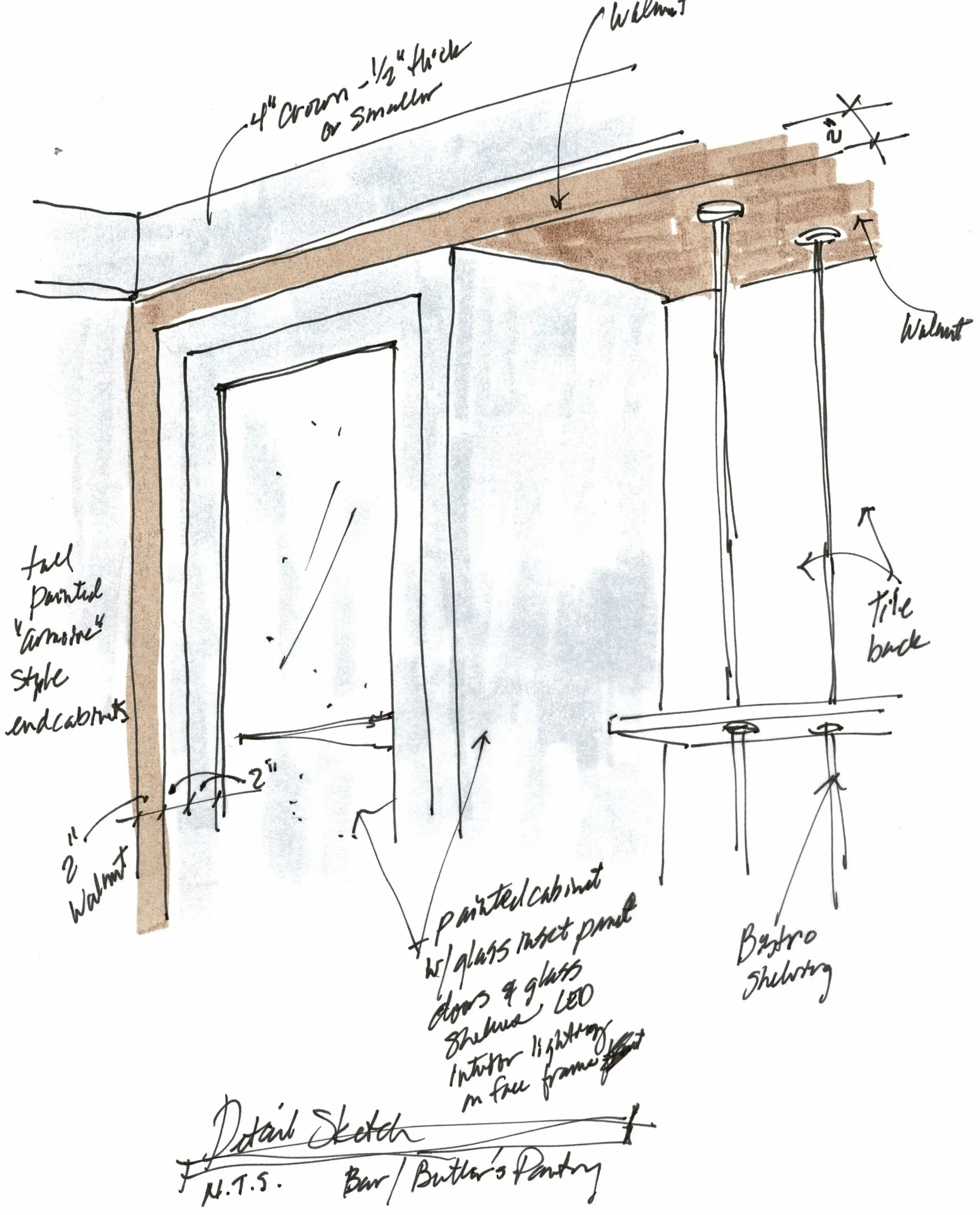
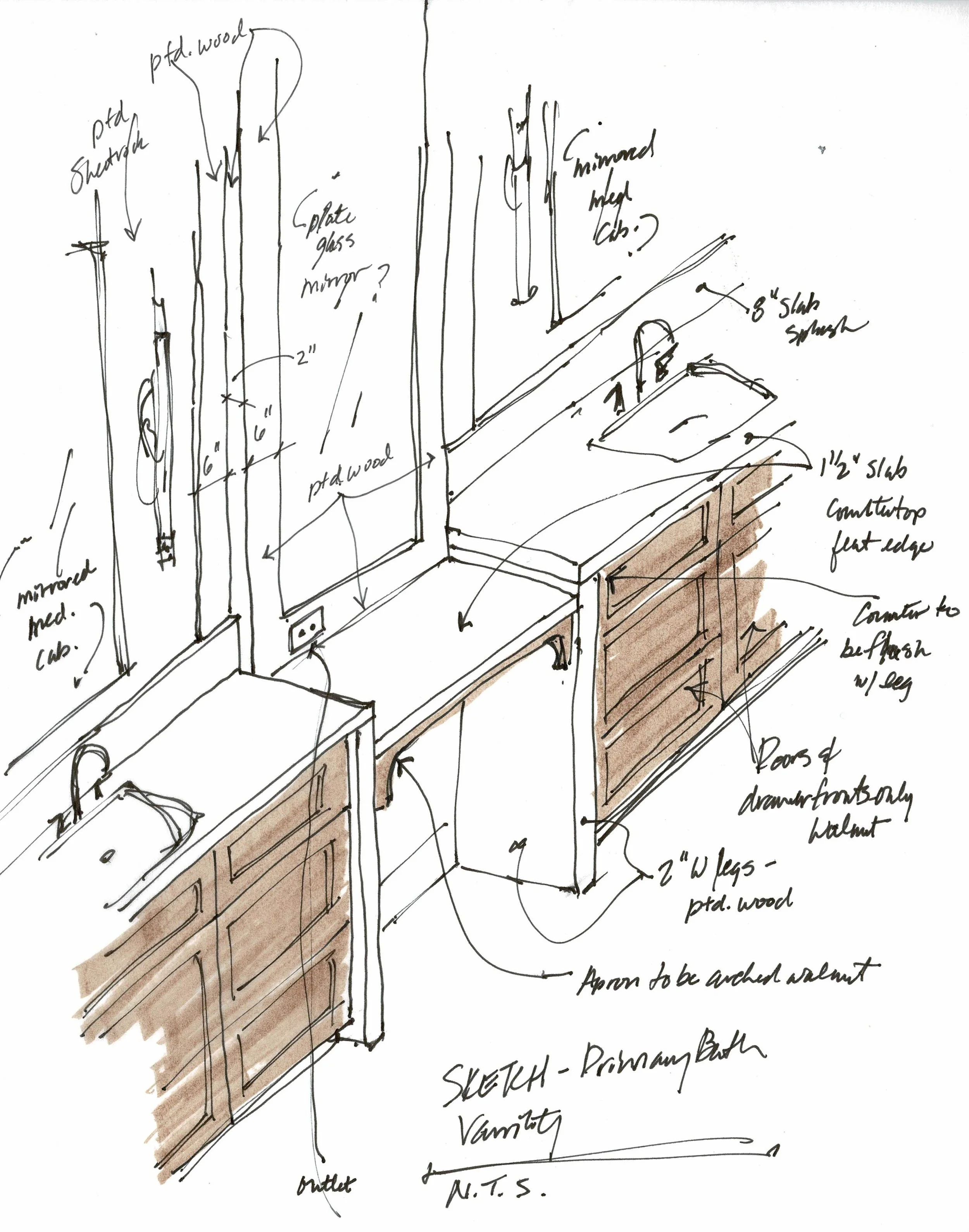
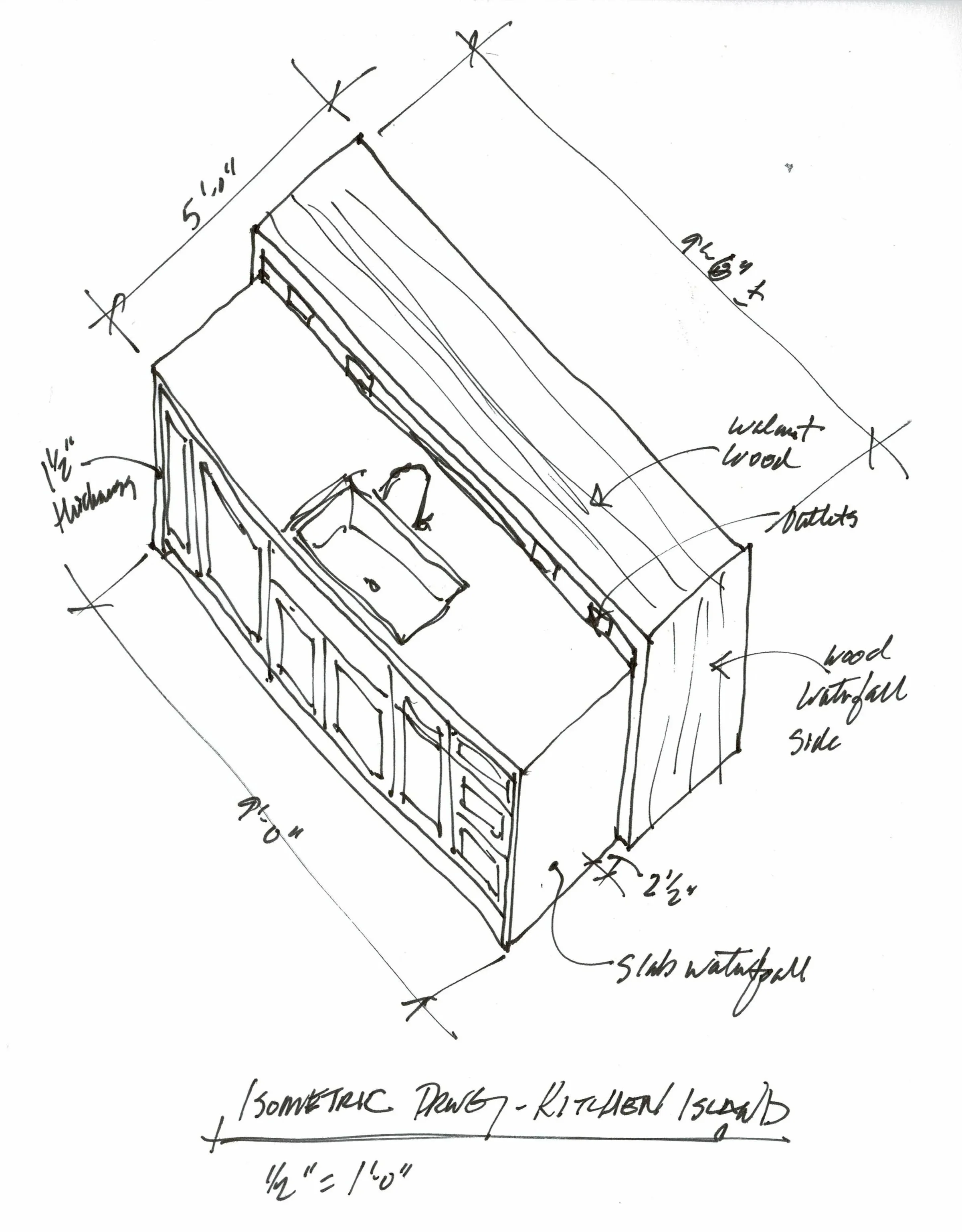
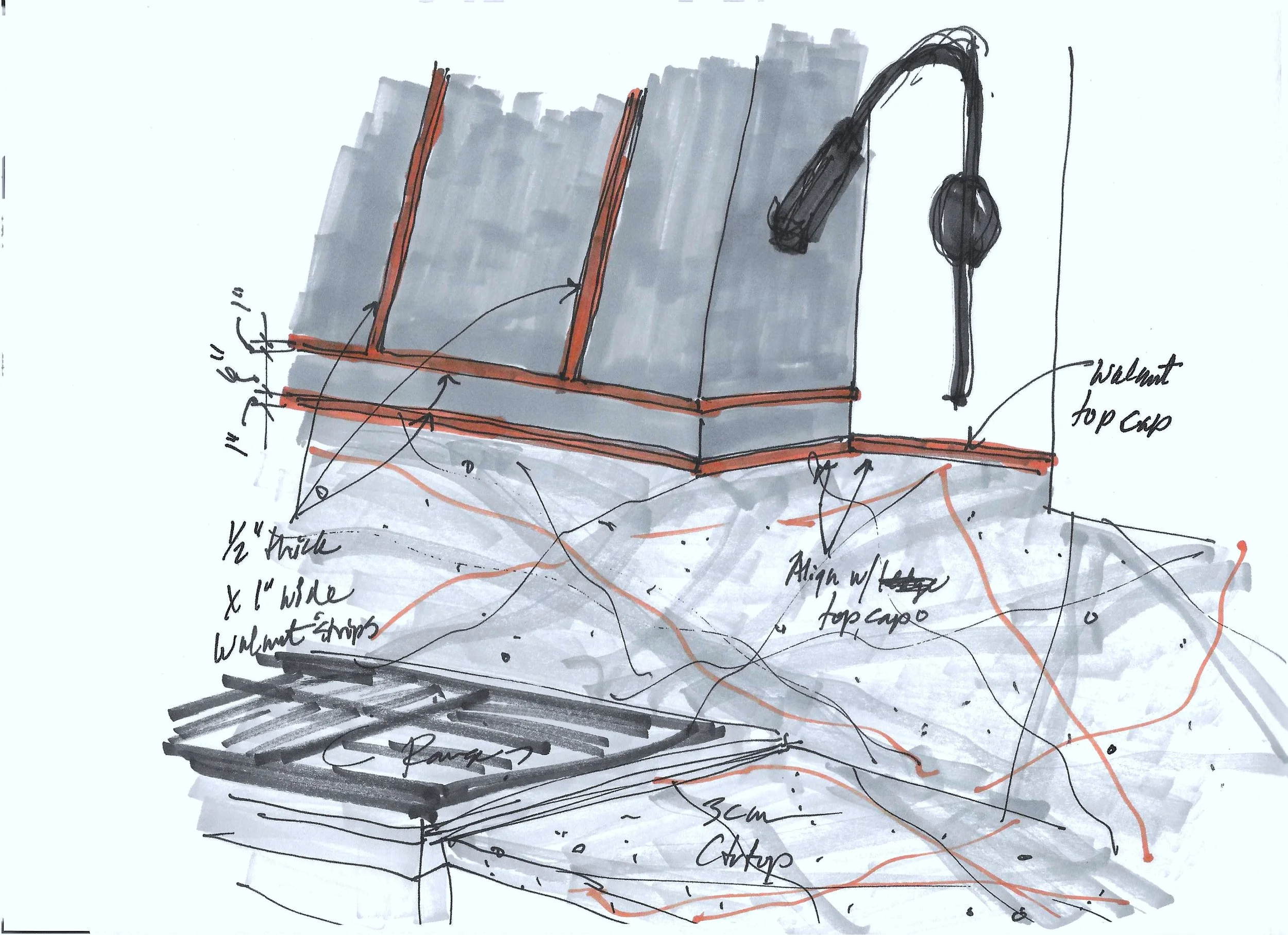
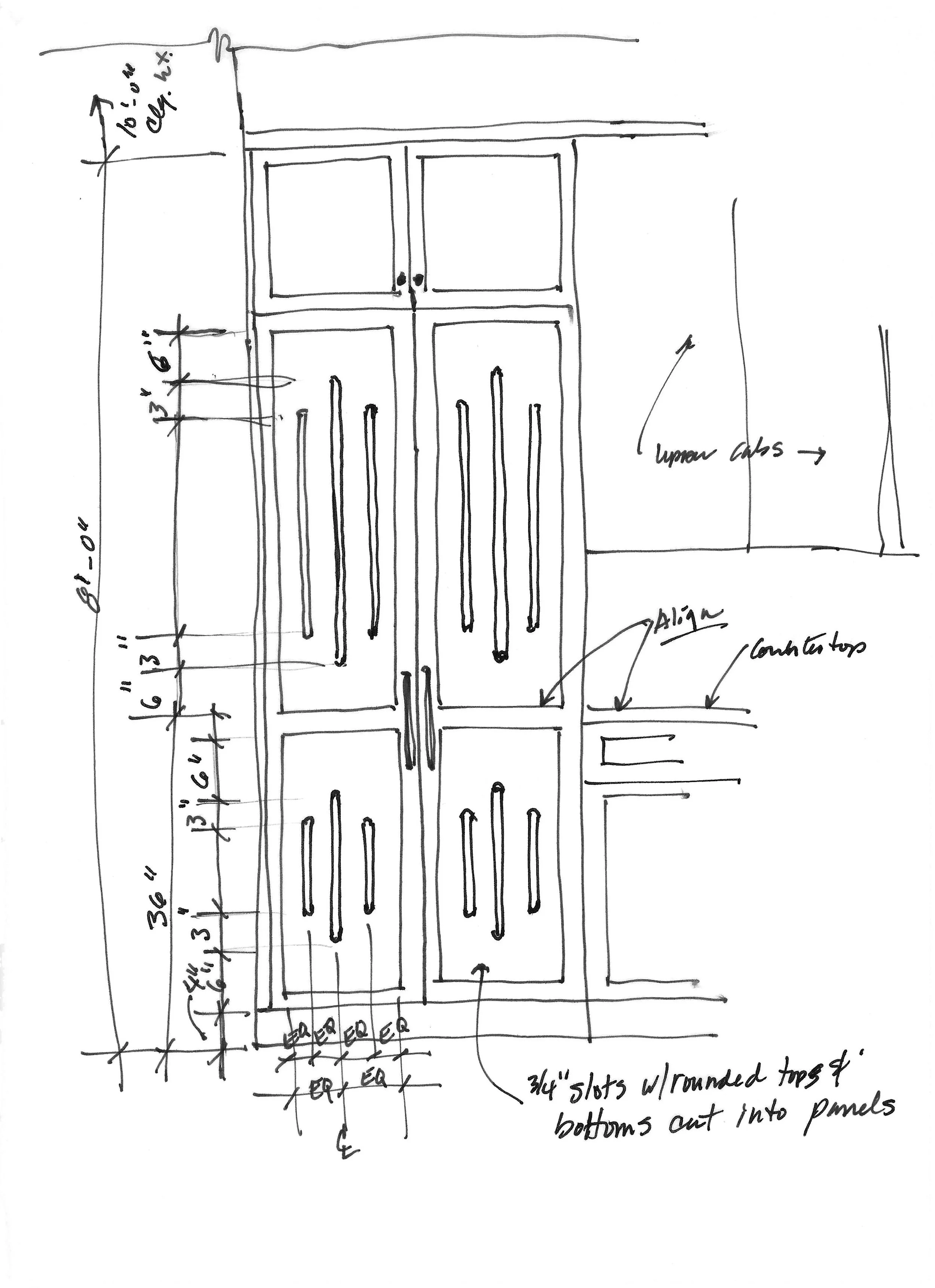
I didn’t leave the placement and size of these slots in a laundry room cabinet up to the carpenter on the job.
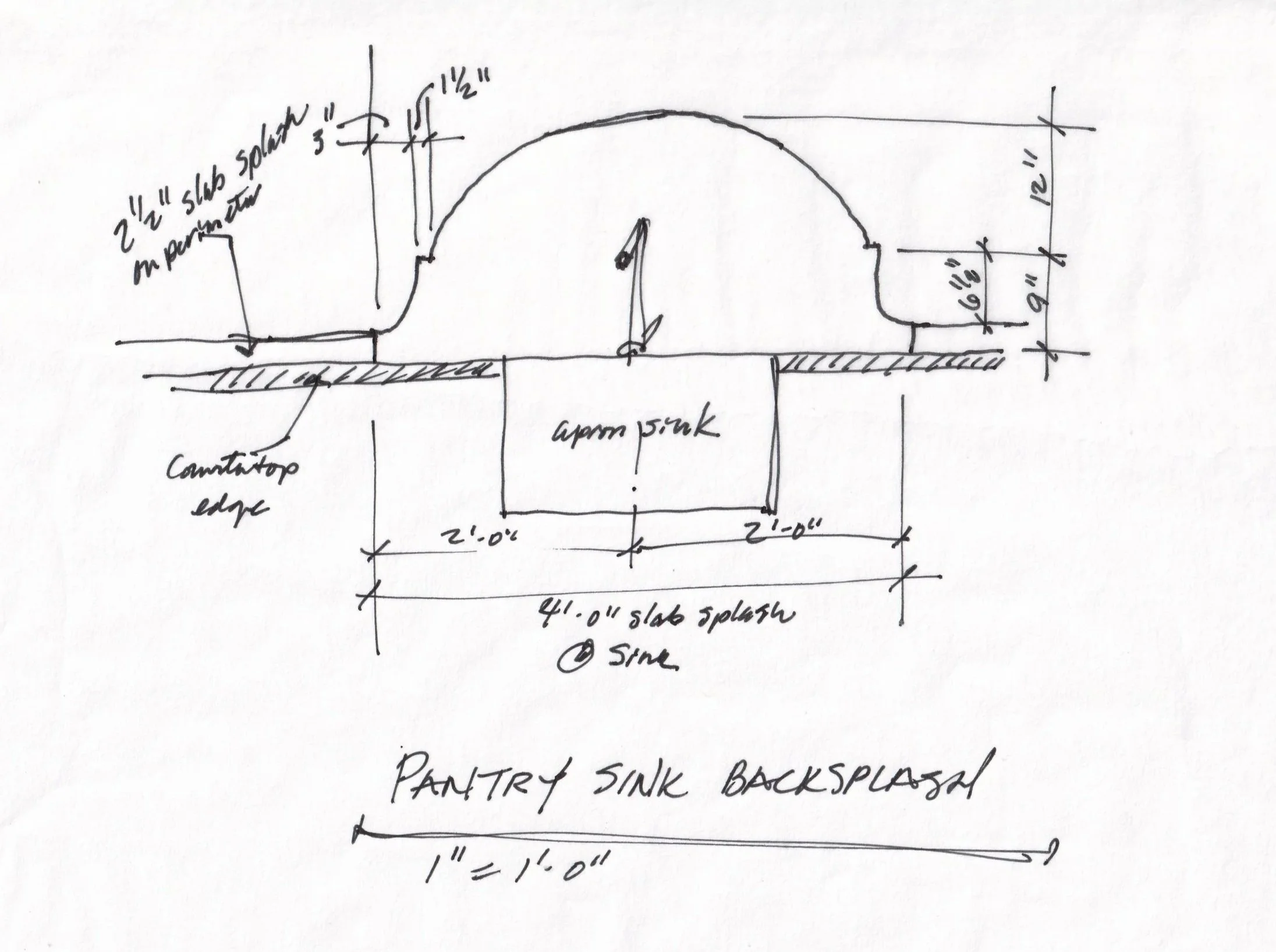
Every curve and notch is intentionally measured out in the design.
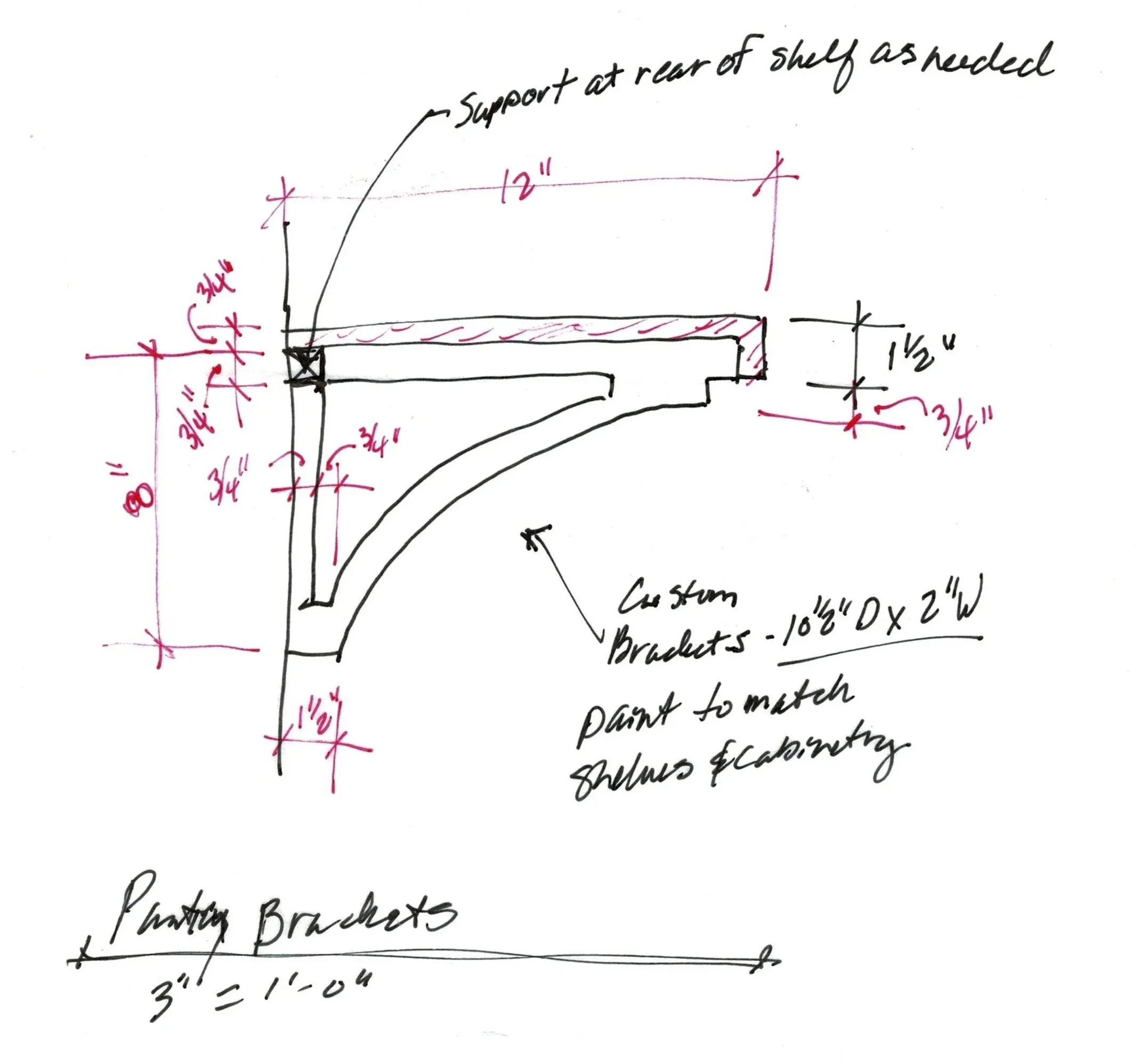
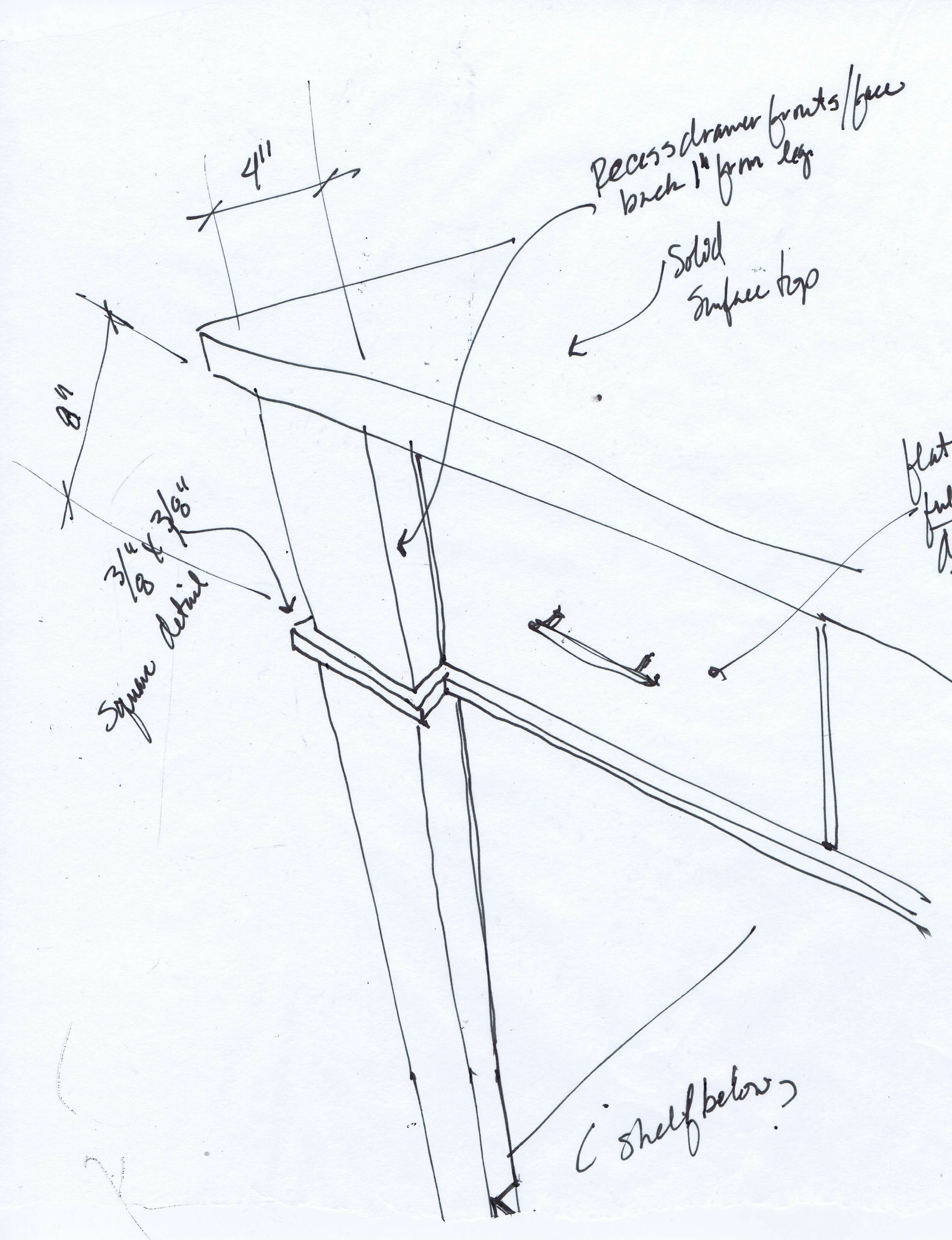
Perspective Room Sketches
I don’t always do an overall perspective sketch. Especially with bathrooms, elevations can work just fine. I do them when I’m inspired or need to on any project to help sell the concept or get the points across I’m trying to show.
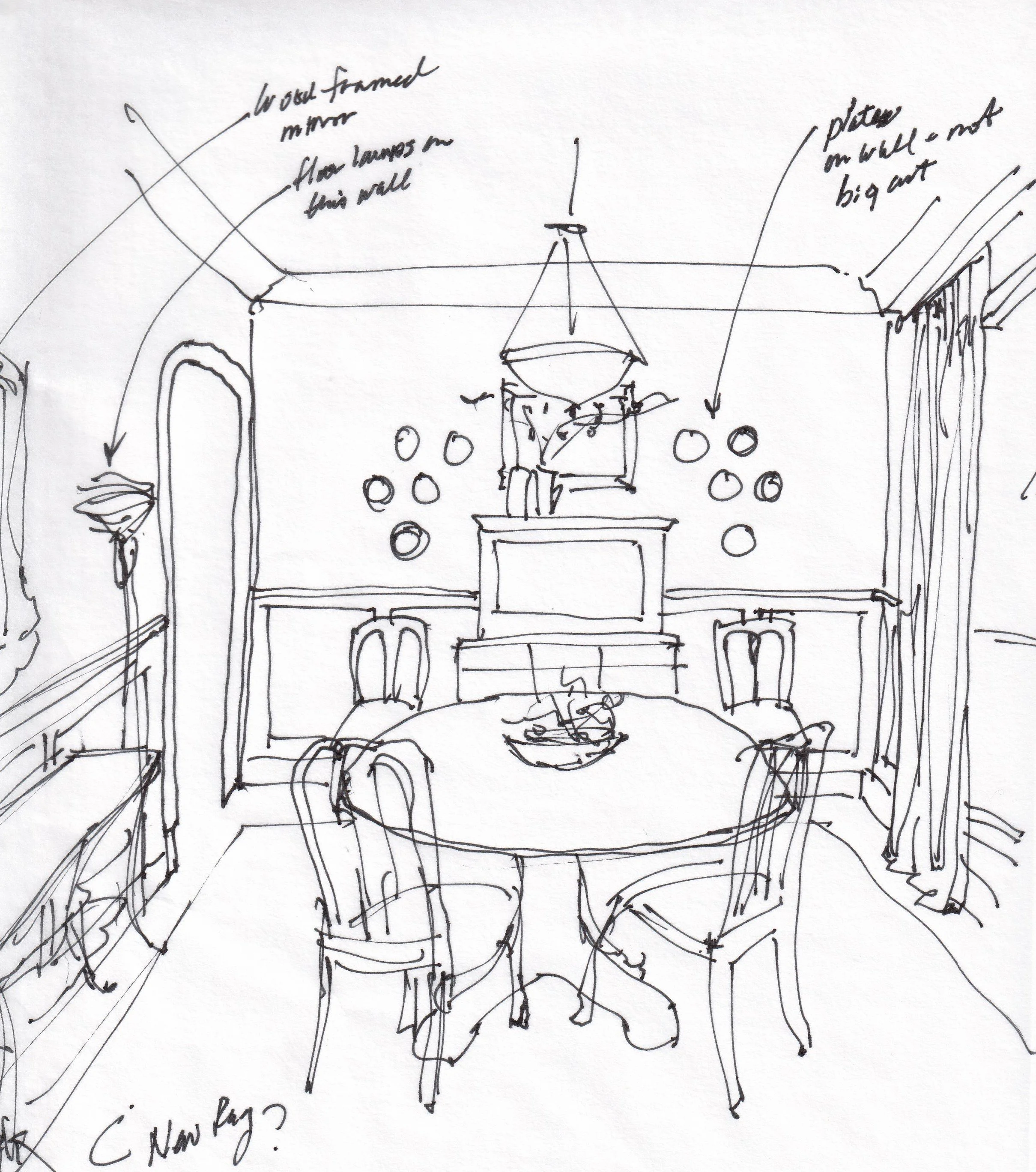
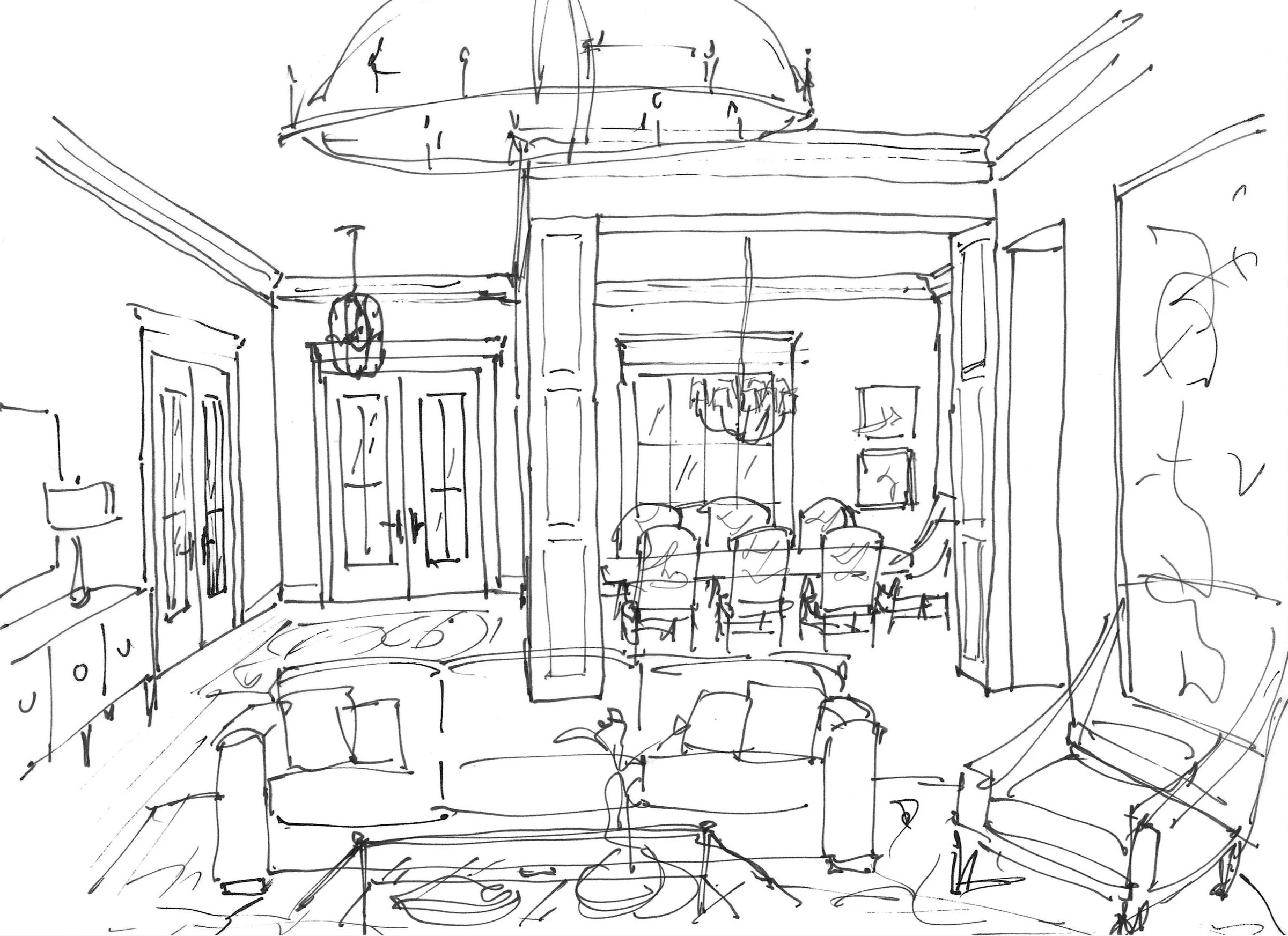
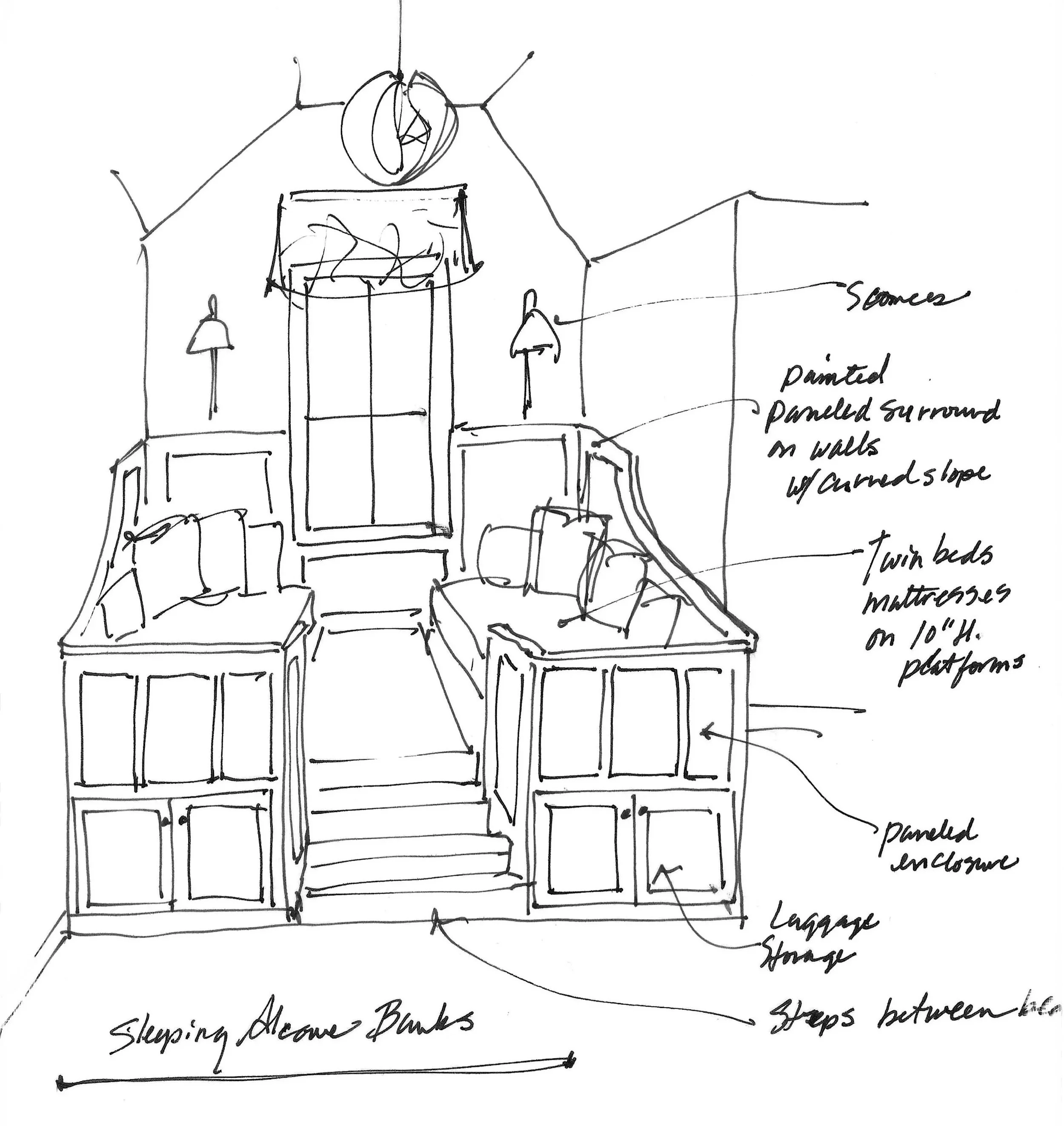
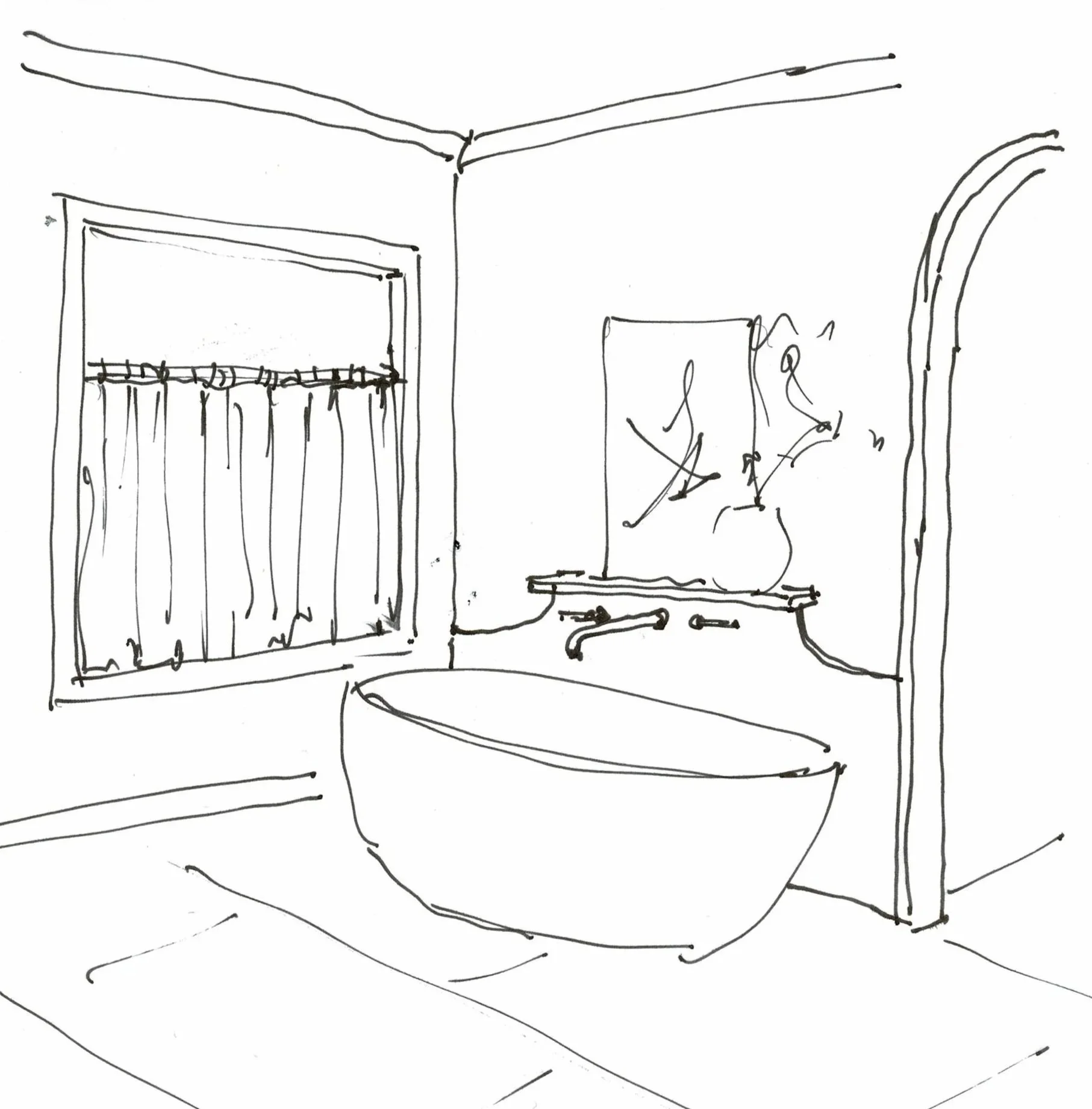
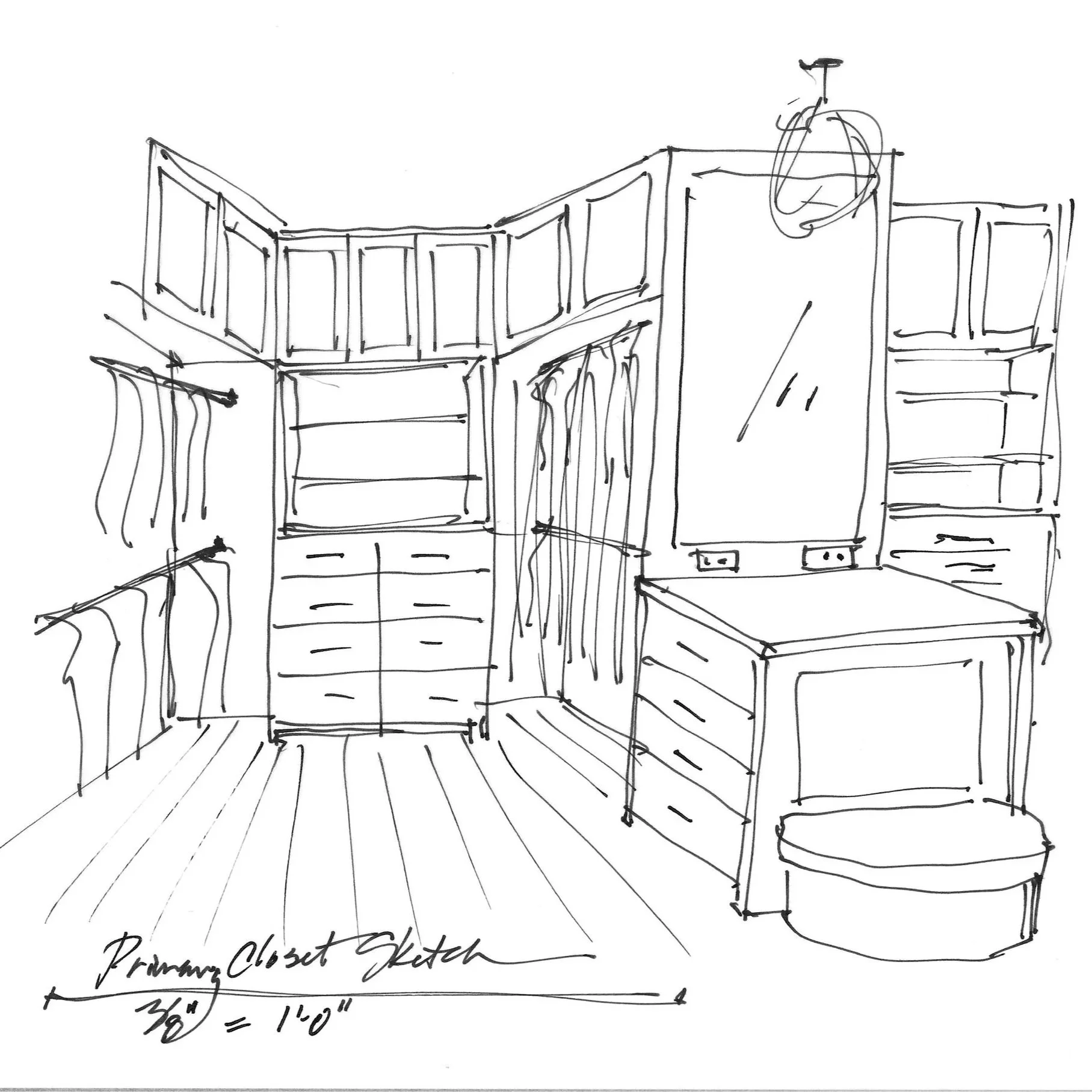
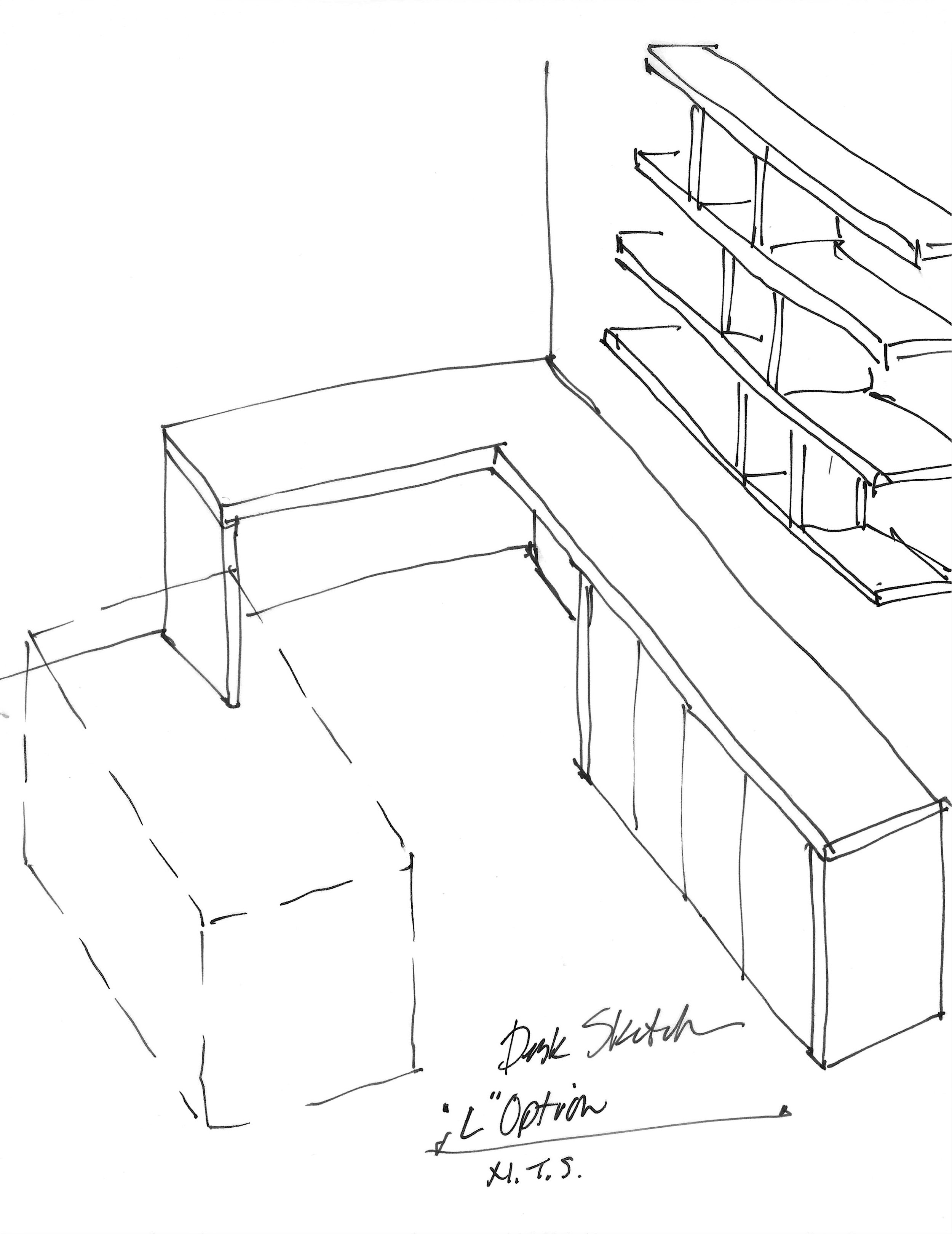
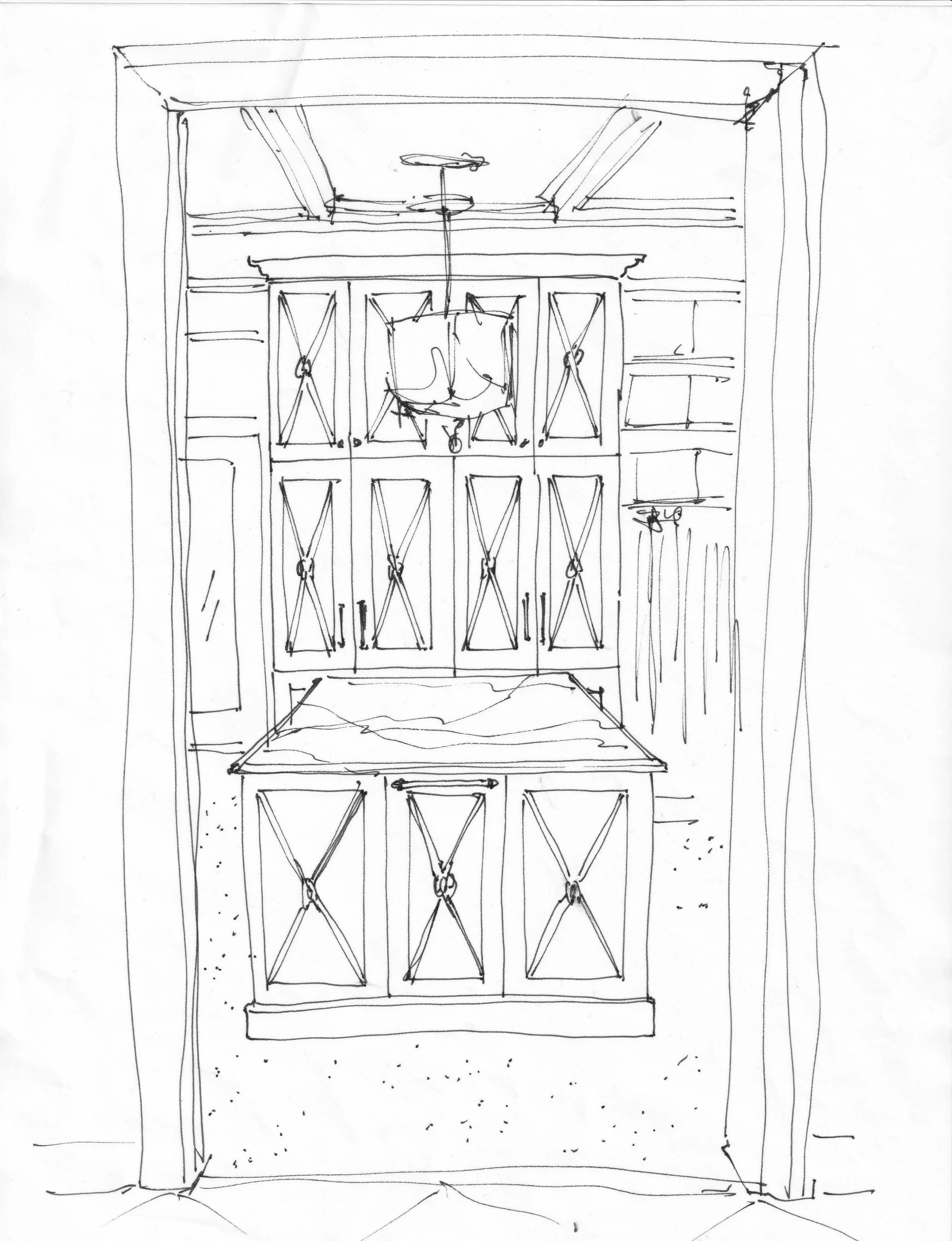
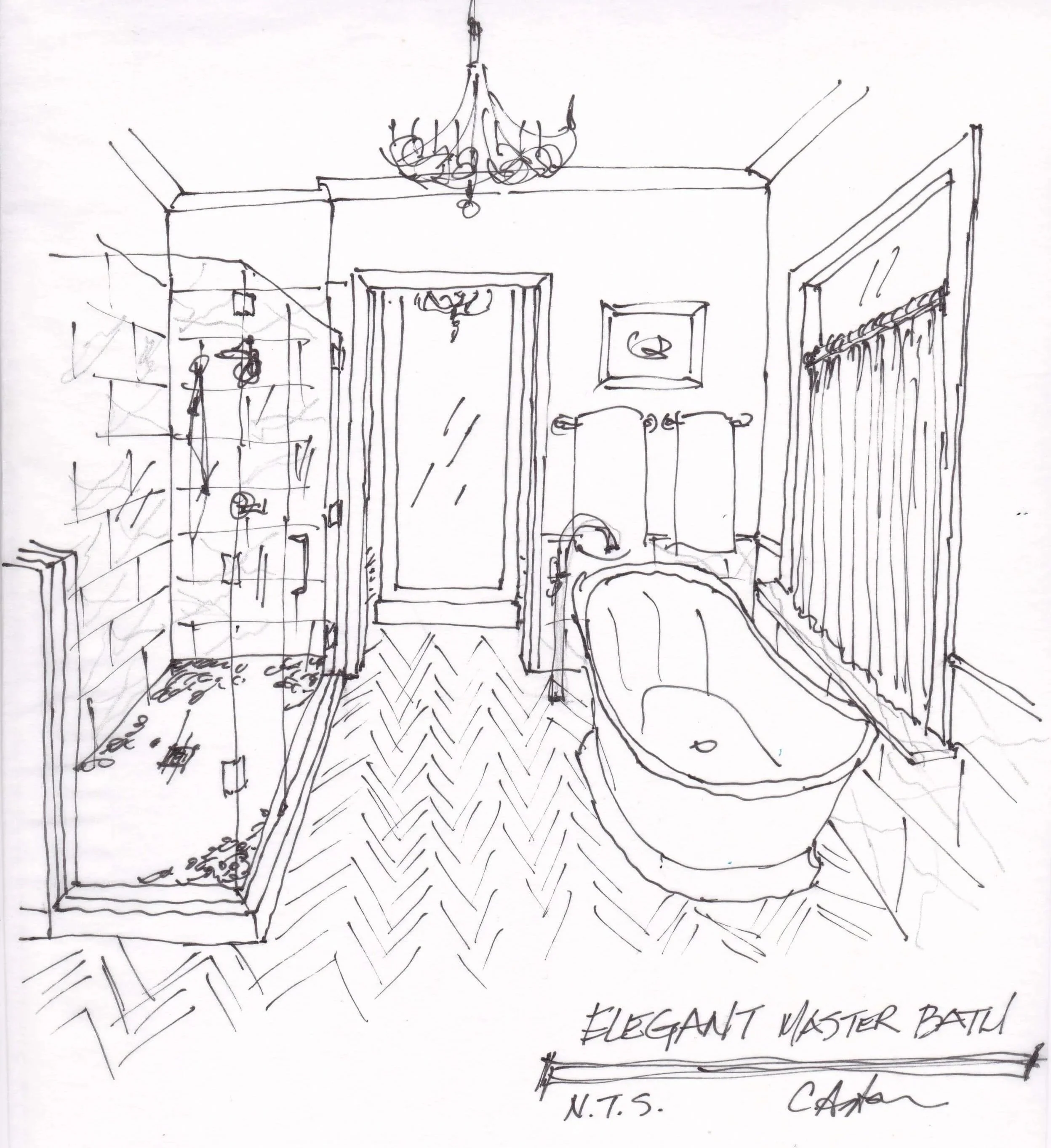
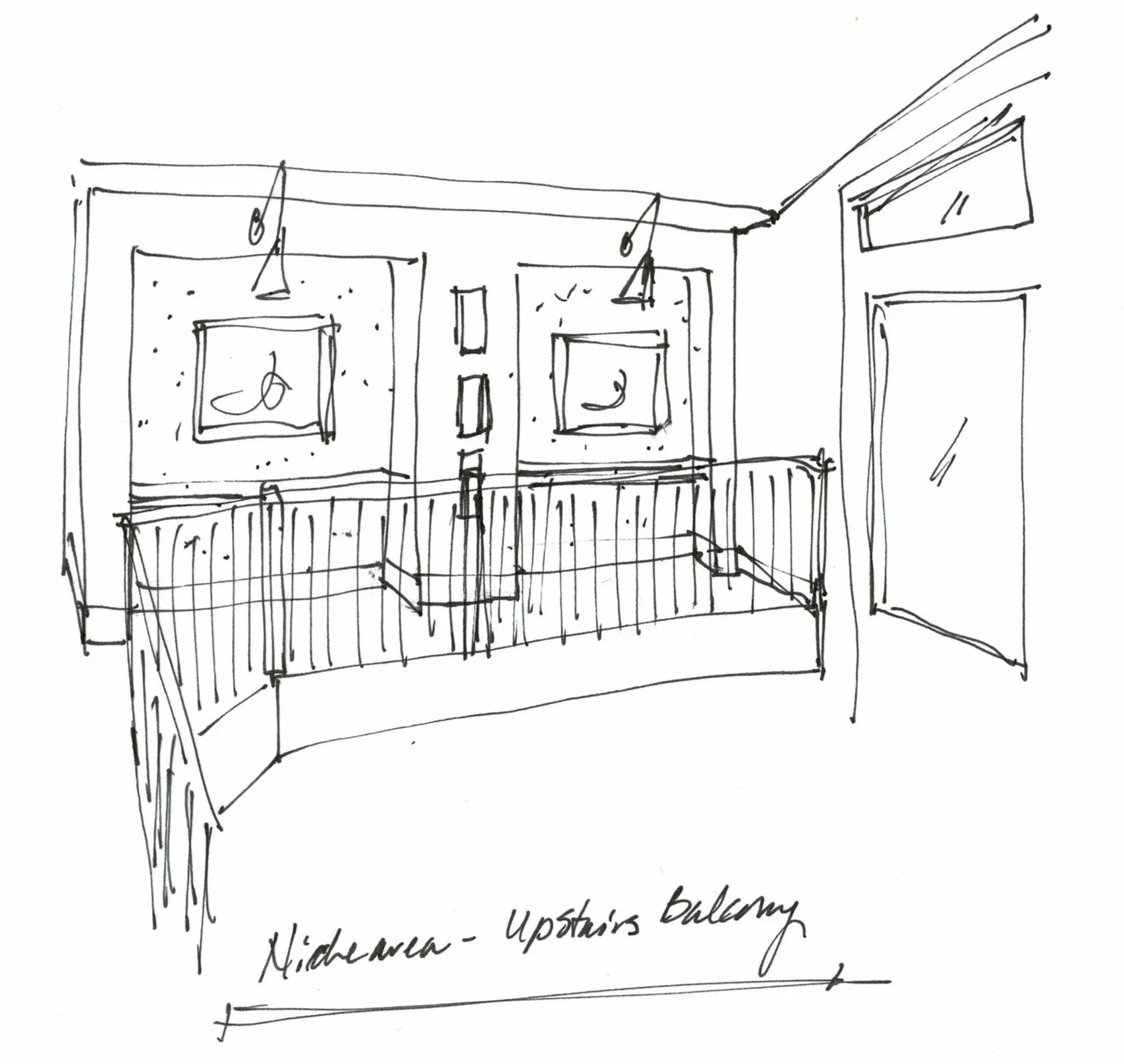
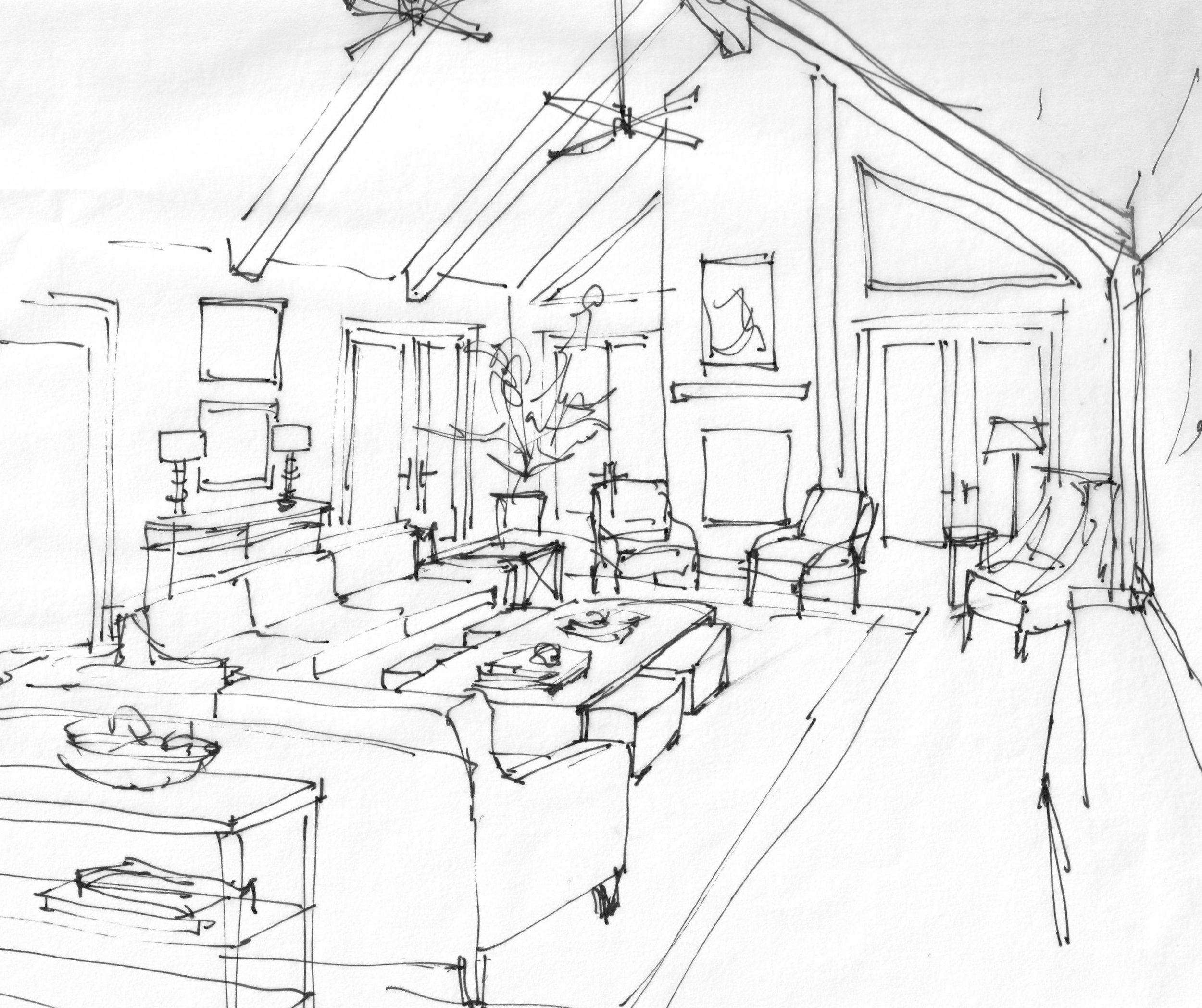
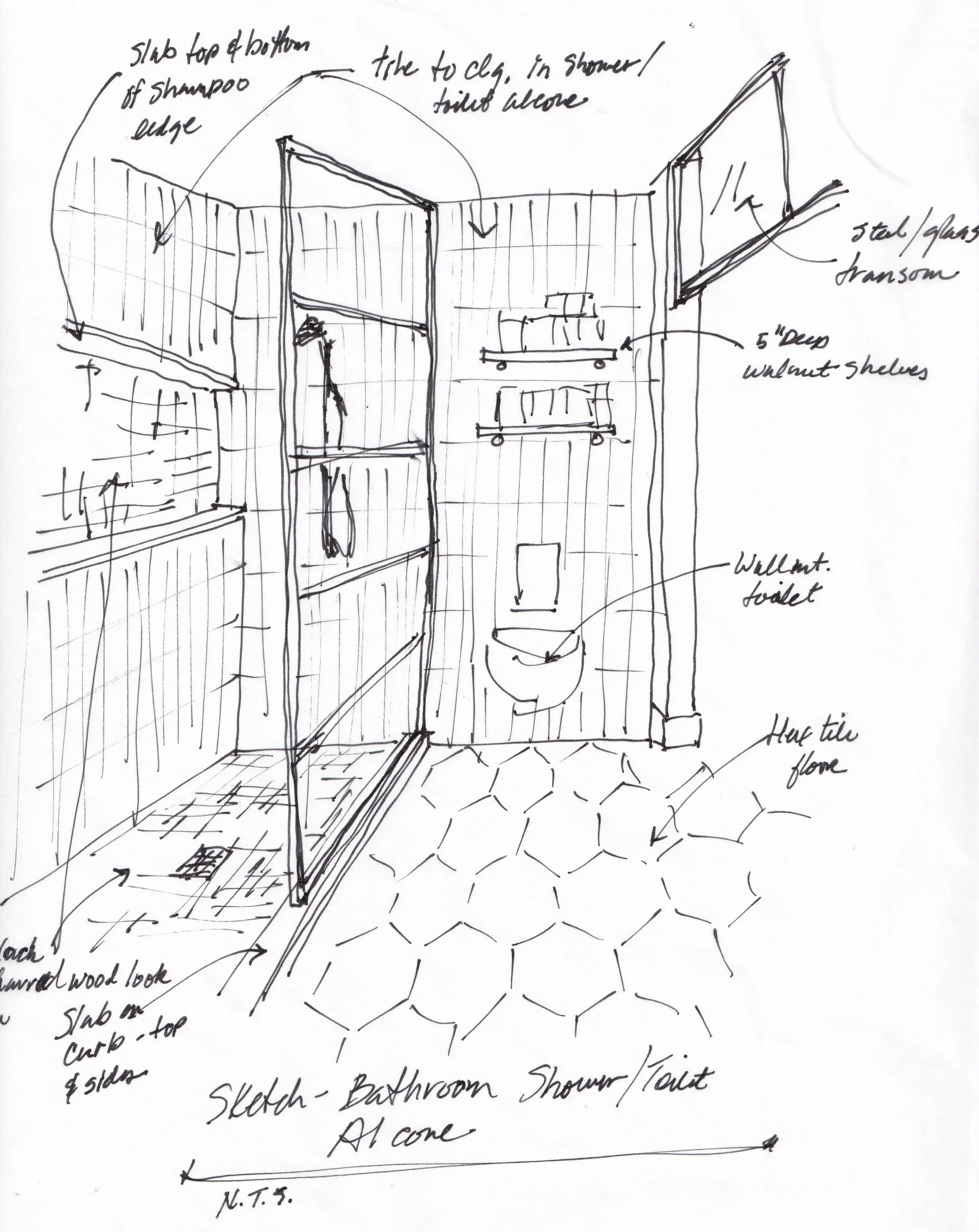
I use hand sketches many times in my Designed in a Click™ consultations. I often will do storyboards as well if I am sharing some furnishings too. Here are examples of those consultations, below.


Today’s interior design Q&A has to do with furnishing a foyer in a coastal home. This homeowner has moved in for full time living and wants help tying it all together with a more finished look.
Yay! This will be fun.